
Ignite Imagination: Creative Writing Prompts for Elementary Homeschoolers
Creative writing is a fantastic way to unlock your elementary homeschooler’s imagination, boost their vocabulary, and improve their overall communication skills. But sometimes, getting started can be the hardest part! That’s where creative writing prompts come in. These prompts act as springboards, launching your child into a world of storytelling, poetry, and imaginative expression. This article is packed with exciting and engaging prompts designed to spark creativity and make writing fun for your young learner. Get ready to see their imaginations soar!
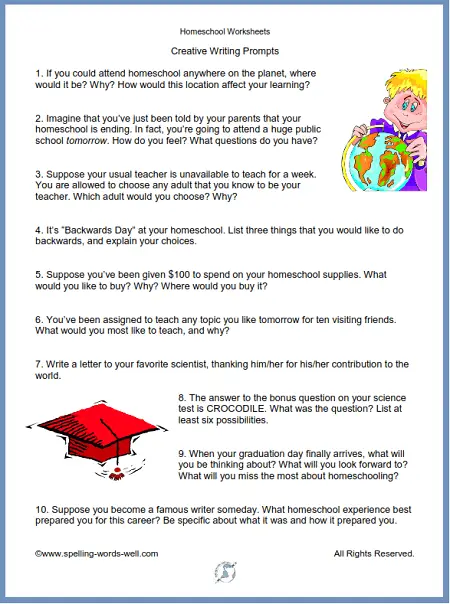
Why Creative Writing Matters for Elementary Homeschoolers
Creative writing isn’t just about crafting stories; it’s a powerful tool that benefits children in numerous ways. It fosters critical thinking, encourages empathy, and helps them develop a unique voice. Let’s explore some of the key advantages:
- Boosts Imagination and Creativity: Creative writing allows children to explore fantastical scenarios, invent characters, and build their own worlds. This process nurtures their imagination and helps them think outside the box.
- Improves Vocabulary and Language Skills: When children write, they actively use and expand their vocabulary. They learn to experiment with different words and sentence structures, improving their overall language proficiency.
- Enhances Critical Thinking: Crafting a story requires planning, problem-solving, and decision-making. Children learn to think critically about plot development, character motivations, and the overall message they want to convey.
- Develops Empathy and Perspective-Taking: Writing from the perspective of different characters helps children understand and appreciate diverse viewpoints. This fosters empathy and promotes social-emotional development.
- Strengthens Communication Skills: Creative writing provides an outlet for children to express their thoughts and feelings in a clear and engaging manner. This strengthens their communication skills, both written and verbal.
- Builds Confidence: As children see their stories come to life on paper, they gain confidence in their abilities and develop a sense of accomplishment. This boosts their self-esteem and encourages them to continue writing.
- Story Starters: These prompts provide the beginning of a story, and the child must continue it.
- Character Prompts: These prompts focus on creating a unique character with specific traits and a backstory.
- Setting Prompts: These prompts describe a particular place or environment, and the child must write a story set there.
- “What If?” Prompts: These prompts present a hypothetical situation and ask the child to explore the possible outcomes.
- Poetry Prompts: These prompts encourage children to experiment with different poetic forms and themes.
- Image Prompts: These prompts use a picture as inspiration for a story or poem.
- “The old wooden chest in the attic held a secret…” This prompt encourages mystery and adventure. Where did the chest come from? What’s inside?
- “One day, the animals in the zoo decided they had had enough…” This prompt is perfect for a humorous and imaginative tale. What do the animals do? How do they escape?
- “Sarah woke up one morning and discovered she could talk to plants…” This prompt explores themes of nature and communication. What does Sarah learn from the plants? How does she use her new ability?
- “The little robot had always dreamed of seeing the ocean…” This prompt combines technology and nature. What challenges does the robot face? What does it discover on its journey?
- “It wasn’t just any ordinary day, because…” This open-ended prompt allows for endless possibilities. Encourage your child to be creative and unexpected.
- ” The map led to a place no one expected, it was…” This prompt is excellent for adventure and mystery. Does it lead to treasure or something else?
- “The day the sky turned green…” This prompt sparks imagination and encourages children to think about how people might react to unusual events.
- “Once upon a time, in a land made of candy…” This prompt is perfect for younger children and encourages them to create a whimsical and sweet world.
- “If animals could talk, the first thing they would say is…” This prompt leads to funny and creative scenarios. What would different animals say?
- “The magic key unlocked a door to…” This prompt opens the door to fantasy and adventure. Where does the door lead?
- Create a character who is afraid of something unusual, like butterflies or the color blue. What is their name? Why are they afraid? How does their fear affect their life?
- Imagine a character who has a secret superpower, but it’s not very useful. What is their name? What is their superpower? How do they try to use it?
- Design a character who lives in a unique and unusual place, like a giant treehouse or a city under the sea. What is their name? What is their home like? What challenges do they face?
- Create a character who is always getting into trouble, but they have a good heart. What is their name? What kind of trouble do they get into? Why do they do it?
- Imagine a character who is incredibly talented at something unexpected, like juggling cats or making sculptures out of socks. What is their name? How did they discover their talent? What do they do with it?
- A brave knight who is afraid of heights. This prompt explores the idea of overcoming fears. How does the knight deal with their fear while trying to save the day?
- A friendly dragon who doesn’t want to breathe fire. This prompt challenges the typical dragon stereotype. What does the dragon do instead of breathing fire?
- A talking animal who becomes a detective. This prompt combines the animal world with a mystery. What kind of cases does the animal solve?
- A child who discovers they can travel through books. This prompt encourages imagination and a love of reading. Where does the child travel?
- An inventor who creates gadgets that always go wrong. This prompt leads to humorous and inventive stories. What are some of the gadgets they create?
- Describe a hidden village nestled deep within a rainforest. What kind of plants and animals live there? What is the culture like?
- Imagine a city floating in the clouds. How do people travel around? What are the buildings made of? What are the challenges of living in the sky?
- Create a world where it always snows, even in the summer. How do people adapt to the constant cold? What kind of animals live there?
- Describe a school located on a spaceship traveling to a distant planet. What are the classes like? What kind of technology do they use? What are the challenges of living in space?
- Imagine a library filled with books that come to life when you open them. What kind of stories would you find? What adventures would you have?
- A candy factory where everything is edible. This prompt is perfect for younger children. What kinds of sweets are made there?
- A forest where the trees whisper secrets. What secrets do they whisper? Who can hear them?
- A museum where the exhibits come alive at night. What do the exhibits do? What kind of adventures do they have?
- An underwater city made of coral. Who lives there? How do they breathe?
- A planet made entirely of bouncy castles. What is life like on this planet? What are the challenges and the fun?
- What if you could have any superpower for a day? What superpower would you choose? How would you use it? What would you do with your newfound abilities?
- What if animals could talk? What would they say? How would it change the world?
- What if you found a time machine? Where would you go? What would you do? What would you change?
- What if you woke up one morning and discovered you were invisible? What would you do? How would you use your invisibility?
- What if you could travel to any fictional world? Where would you go? What would you do? Who would you meet?
- What if you could shrink down to the size of an ant? What would you do? How would you survive?
- What if you could control the weather? What kind of weather would you create? How would you use your powers?
- What if you found a magic lamp with a genie inside? What would you wish for?
- What if you could live on the moon? What would life be like? What challenges would you face?
- What if you could have any job in the world? What job would you choose? Why?
- Write a poem about your favorite season. What do you like about it? What does it smell like, look like, and feel like?
- Write a poem about your favorite animal. What do you admire about it? What does it look like, sound like, and act like?
- Write a poem about a place you love. What makes it special? What do you see, hear, and feel when you’re there?
- Write a poem about a feeling, such as happiness, sadness, or anger. What does the feeling feel like? What makes you feel that way?
- Write a poem about a dream you had. What happened in the dream? What did it feel like?
- Write a haiku about nature. (Haiku is a three-line poem with a 5-7-5 syllable structure.)
- Write a poem using similes to describe a storm. (A simile compares two things using “like” or “as.”)
- Write a poem about friendship. What does friendship mean to you?
- Write a poem using alliteration. (Alliteration is the repetition of the same sound at the beginning of words.)
- Write a poem about your favorite food. Describe its taste, smell, and texture.
- Show a picture of a mysterious forest. What creatures live there? What secrets does it hold?
- Show a picture of a bustling city street. What are the people doing? Where are they going?
- Show a picture of a beautiful sunset. How does it make you feel? What does it remind you of?
- Show a picture of a child looking out a window. What are they thinking about? What are they looking at?
- Show a picture of an abandoned house. What happened there? Who used to live there?
- Make it Fun: The most important thing is to make writing enjoyable. Don’t put too much pressure on your child to produce perfect work. Focus on the process of creating and exploring.
- Provide a Variety of Prompts: Offer a range of different types of prompts to keep things interesting and cater to your child’s individual interests and learning styles.
- Encourage Brainstorming: Before your child starts writing, encourage them to brainstorm ideas. What characters will they create? What will the setting be like? What will happen in the story?
- Set a Timer: If your child is struggling to get started, try setting a timer for a short period of time (e.g., 10-15 minutes) and challenge them to write as much as they can in that time.
- Provide Feedback: Offer constructive feedback on your child’s writing. Focus on what they did well and offer suggestions for improvement.
- Celebrate Success: Celebrate your child’s accomplishments, no matter how small. Display their work, share it with family and friends, or create a writing portfolio.
- Be a Writing Role Model: Let your child see you writing! Whether it’s journaling, writing stories, or even just making a grocery list, showing them that you value writing will encourage them to do the same.
- Create a Writing-Friendly Environment: Make sure your child has a comfortable and inspiring place to write. This could be a desk in their bedroom, a cozy corner in the living room, or even a spot outside in nature.
- Read Aloud: Reading aloud exposes children to different writing styles, vocabulary, and story structures. This can inspire them and help them develop their own writing skills.
- Don’t Be Afraid to Adapt: Feel free to adapt the prompts to suit your child’s interests and abilities. You can also encourage them to come up with their own prompts.
Key Takeaway: Creative writing is not just about writing stories; it’s a holistic activity that nurtures imagination, improves language skills, enhances critical thinking, develops empathy, strengthens communication, and builds confidence.

Types of Creative Writing Prompts for Elementary Students
To keep things interesting, it’s helpful to vary the types of prompts you use. Here are a few categories to consider:
Remember: The goal is to spark creativity, so encourage your child to interpret the prompts in their own unique way. There are no right or wrong answers!

Engaging Story Starter Prompts
Story starters are excellent for overcoming writer’s block. They provide a foundation upon which your child can build their own narrative.
Internal Link Suggestion: For more ideas on overcoming writer’s block, link to another article on your website about “Creative Writing Exercises for Kids” using the anchor text “Creative Writing Exercises.”

Captivating Character Prompts
Character prompts help children develop compelling personalities and backstories for their characters.
External Link Suggestion: Link to a reputable website like “ReadWriteThink” (using anchor text “ReadWriteThink”) for further resources on character development.

Stimulating Setting Prompts
Setting prompts encourage children to create vivid and imaginative environments for their stories.
Internal Link Suggestion: Link to a previous blog post on your website about “Descriptive Writing Techniques” using the anchor text “Descriptive Writing Techniques.”
Intriguing “What If?” Prompts
“What if?” prompts encourage children to think critically and explore different possibilities.
Key Takeaway: “What if?” prompts encourage children to think creatively and explore the possibilities of different scenarios.
Inspiring Poetry Prompts
Poetry prompts encourage children to express their feelings and emotions in a creative and artistic way.
External Link Suggestion: Link to the Poetry Foundation website (using anchor text “Poetry Foundation”) for examples of different poetic forms and styles.
Visual Image Prompts
Visual image prompts use pictures to spark creativity and inspire stories or poems. Find interesting images online or in magazines and ask your child to write something inspired by the image.
Remember: Encourage your child to look closely at the image and notice the details. What colors do they see? What shapes? What emotions does the image evoke?
Tips for Using Creative Writing Prompts Effectively
Here are some tips to help you make the most of creative writing prompts with your elementary homeschooler:
Key Takeaway: Make creative writing fun, provide a variety of prompts, encourage brainstorming, set a timer, offer constructive feedback, celebrate success, and be a writing role model.
Conclusion: Unleash the Power of Creative Writing
Creative writing prompts are a valuable tool for nurturing your elementary homeschooler’s imagination, improving their language skills, and fostering a love of writing. By providing engaging and inspiring prompts, you can help your child unlock their creative potential and develop a unique voice. Remember to make it fun, offer encouragement, and celebrate their accomplishments. So, grab a pen and paper (or a keyboard!), explore the prompts in this article, and watch your child’s imagination take flight!
Call to Action: Download our free printable list of creative writing prompts for elementary homeschoolers! [Link to downloadable PDF]


0 Comments