
Mastering the Art of Composting: A Beginner's Guide to Nutrient-Rich Soil
Composting can seem like a mystical process reserved for gardening gurus, but the truth is, it's a simple, effective way to reduce waste, enrich your soil, and contribute to a healthier planet. Think of it as turning your kitchen scraps and yard waste into black gold for your garden! In this guide, we'll break down the composting process into easy-to-understand steps, providing you with the knowledge and confidence to start your own compost pile. Whether you're a seasoned gardener or a complete beginner, get ready to unlock the secrets of composting and reap the rewards of this eco-friendly practice.We'll cover everything from the essential ingredients to the best composting methods, troubleshooting common issues, and even how to use your finished compost. By the end of this article, you'll have a solid understanding of how to create nutrient-rich compost that will transform your garden and reduce your environmental footprint. Let's dive in and discover the wonderful world of composting!

Understanding the Basics: What is Composting?
At its core, composting is nature's way of recycling. It's the biological process where organic matter decomposes and breaks down into a humus-like substance known as compost. This "black gold" is a nutrient-rich amendment that can be added to your garden soil, providing essential nutrients for plant growth, improving soil structure, and retaining moisture.Think of your compost pile as a bustling city for microorganisms – bacteria, fungi, and other tiny creatures that work tirelessly to break down organic materials. By providing the right conditions, you can create a thriving environment for these decomposers and accelerate the composting process.
The beauty of composting lies in its simplicity and its environmental benefits. By composting, you're diverting organic waste from landfills, reducing methane emissions (a potent greenhouse gas), and creating a valuable resource for your garden. Composting is not just good for your plants; it's good for the planet!
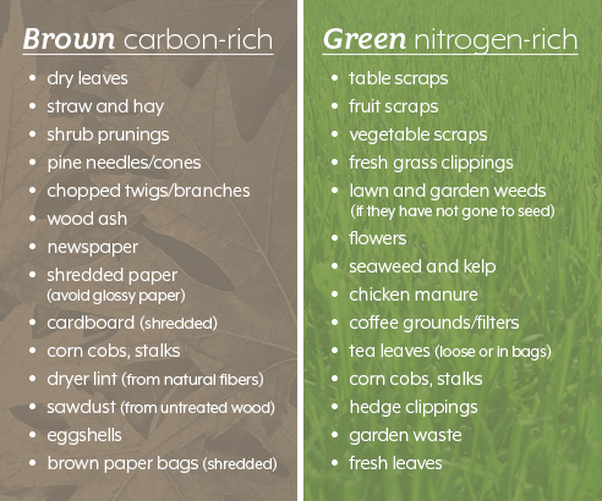
The Key Ingredients: "Greens" and "Browns"
To create a successful compost pile, you need a balanced mix of "greens" and "browns." These terms refer to the types of organic materials you'll be adding to your compost, and they play different but equally important roles in the decomposition process.- Greens: These are nitrogen-rich materials that provide the essential food source for the microorganisms. They tend to be moist and decompose quickly. Examples of greens include:
- Vegetable scraps
- Fruit peels and cores
- Coffee grounds and filters
- Grass clippings
- Fresh leaves
- Manure (from herbivores like cows, horses, or chickens)
- Browns: These are carbon-rich materials that provide the structure and aeration for the compost pile. They tend to be dry and decompose more slowly. Examples of browns include:
- Dried leaves
- Shredded paper and cardboard
- Straw
- Sawdust (from untreated wood)
- Wood chips
- Pine needles
- Pros: Neat and tidy, keeps pests out, retains moisture, can be aesthetically pleasing.
- Cons: Can be more expensive than other methods, may require more turning, can be bulky.
- Pros: Easy to turn, speeds up composting, keeps pests out, contained.
- Cons: Can be expensive, may require more frequent monitoring, can be heavy when full.
- Pros: Inexpensive, easy to set up, can handle large volumes of waste.
- Cons: Can be messy, attracts pests, slower decomposition, requires more space.
- Pros: Great for small spaces, produces high-quality compost, odorless when done correctly.
- Cons: Requires specific worm species, needs careful monitoring of moisture and temperature, can be sensitive to certain foods.
- Pros: Can compost all types of food waste, reduces odors, pre-composts waste for faster decomposition in soil.
- Cons: Requires bokashi bran, needs a two-stage process (fermentation and then composting or burying), leachate needs to be drained.
- Start with a base layer of browns. This will provide aeration and drainage for the pile.
- Add a layer of greens. This will provide the nitrogen that the microorganisms need to get started.
- Continue layering greens and browns, alternating between the two.
- Moisten the pile as you go. The compost should be damp, like a wrung-out sponge.
- Turn the pile regularly to aerate it and speed up decomposition.
- To check the moisture level: Squeeze a handful of compost. It should feel damp, like a wrung-out sponge.
- To add moisture: Water the pile with a hose or watering can.
- To reduce moisture: Add more browns to the pile or turn it to allow excess moisture to evaporate.
- How often to turn: Turn the pile every few days to once a week, depending on your composting method and the size of your pile.
- How to turn: Use a pitchfork or shovel to turn the pile, moving the materials from the outside to the inside and vice versa.
- How to measure temperature: Use a compost thermometer to check the temperature of the pile.
- To increase temperature: Add more greens to the pile or insulate it with a layer of straw or leaves.
- To decrease temperature: Turn the pile more frequently to allow heat to escape.
- Problem: The compost pile smells bad.
- Solution: The pile is likely anaerobic due to too much moisture or not enough aeration. Turn the pile more frequently and add more browns to absorb excess moisture.
- Problem: The compost pile is not heating up.
- Solution: The pile may be too dry or lacking in nitrogen. Add water and more greens to the pile.
- Problem: The compost pile is attracting pests.
- Solution: Avoid adding meat, dairy, and oily foods to the pile. Cover the pile with a layer of browns and consider using a compost bin with a lid.
- Problem: The compost is taking too long to decompose.
- Solution: Make sure you have a good balance of greens and browns, and that the pile is moist and aerated. Chop up larger materials into smaller pieces to speed up decomposition.
- Appearance: The compost should be dark brown or black in color and have a crumbly texture.
- Smell: The compost should have a earthy, pleasant smell.
- Temperature: The compost should be cool to the touch.
- Decomposition: The original materials should be unrecognizable.
- Soil amendment: Mix compost into your garden soil to improve its structure, drainage, and fertility.
- Mulch: Spread a layer of compost around your plants to suppress weeds, retain moisture, and regulate soil temperature.
- Potting mix: Mix compost with other ingredients like peat moss and perlite to create a nutrient-rich potting mix for containers.
- Compost tea: Steep compost in water to create a liquid fertilizer that can be used to feed your plants.
- Anchor Text: different methods for composting
- Link to: The section "Setting Up Your Compost System: Choosing the Right Method"
- Anchor Text: vermicomposting
- Link to: The subsection "Vermicomposting (Worm Composting)"
- Anchor Text: bokashi composting
- Link to: The subsection "Bokashi Composting"
- Anchor Text: soil amendment
- Link to: The section "Using Your Compost: Enriching Your Garden"
- Link: https://www.epa.gov/recycle/composting-home
- Anchor Text: Environmental Protection Agency's composting guide
- Rationale: Provides additional information and resources on composting from a reputable source.
- Link: https://extension.umn.edu/yard-and-garden-news/composting-basics
- Anchor Text: University of Minnesota Extension composting basics
- Rationale: Offers detailed, research-based information on composting from a trusted academic institution.
- Link: <a href="https://www.nrcs.usda.gov/wps/portal/nrcs/detailfull/soils/health/compost/?cid=nrcs142p2084753">https://www.nrcs.usda.gov/wps/portal/nrcs/detailfull/soils/health/compost/?cid=nrcs142p2084753
- Anchor Text: USDA Natural Resources Conservation Service guide to composting
- Rationale: Provides a comprehensive guide to composting from a government agency focused on soil health.
The ideal ratio of greens to browns is approximately 1:2 or 1:3. This means you should have roughly one part greens for every two or three parts browns. This balance ensures that the microorganisms have the right amount of food (nitrogen) and structure (carbon) to thrive.

Setting Up Your Compost System: Choosing the Right Method
There are several different methods for composting, each with its own advantages and disadvantages. The best method for you will depend on your space, budget, and the amount of time and effort you're willing to invest.
1. Compost Bins
Compost bins are enclosed containers that help to contain the compost pile, retain moisture, and regulate temperature. They come in a variety of shapes, sizes, and materials, from simple plastic bins to more elaborate wooden structures.When choosing a compost bin, consider the size of your yard and the amount of waste you generate. Look for bins with good ventilation and drainage, as well as a lid to keep out rain and pests.

2. Compost Tumblers
Compost tumblers are rotating drums that make it easy to turn and aerate the compost pile. They're a great option for those who want to speed up the composting process and avoid the physical labor of turning a traditional pile.Look for tumblers with good ventilation and a sturdy base. Some models have two chambers, allowing you to compost in one chamber while curing in the other.
3. Open Compost Piles
Open compost piles are the simplest and most traditional method of composting. They involve piling organic materials in a designated area of your yard, without any enclosure.If you choose an open compost pile, be sure to locate it in a well-drained area, away from your house and any water sources. You'll also need to turn the pile regularly to aerate it and speed up decomposition.
4. Vermicomposting (Worm Composting)
Vermicomposting uses worms to break down organic matter. It's a great option for those who live in apartments or have limited outdoor space. Worms efficiently convert food scraps into nutrient-rich castings, which are an excellent soil amendment.Red wigglers (Eisenia fetida) are the most common type of worm used for vermicomposting. You can purchase them online or from local garden centers.
5. Bokashi Composting
Bokashi composting is an anaerobic (oxygen-free) fermentation process that uses inoculated bran to pickle food waste. It's a great option for composting all types of food scraps, including meat, dairy, and oily foods.The fermented waste needs to be either buried in the garden or added to a traditional compost pile to fully decompose.
Building Your Compost Pile: Layering and Balancing
Once you've chosen your composting method, it's time to start building your compost pile. The key to success is to layer your greens and browns in the correct proportions.Tip: Chop up larger materials into smaller pieces to help them decompose faster.
Maintaining Your Compost Pile: Moisture, Aeration, and Temperature
To keep your compost pile thriving, you'll need to monitor and adjust the moisture, aeration, and temperature.Moisture
The compost pile should be consistently moist, but not soggy. If it's too dry, the microorganisms will die. If it's too wet, the pile will become anaerobic and start to smell.Aeration
Microorganisms need oxygen to break down organic matter. Turning the compost pile regularly provides the aeration they need to thrive.Temperature
The ideal temperature for composting is between 130°F and 160°F (54°C and 71°C). This "hot composting" process kills weed seeds and pathogens, and it speeds up decomposition.Troubleshooting Common Composting Problems
Even with the best intentions, composting can sometimes present challenges. Here are some common problems and how to solve them:Knowing When It's Ready: Harvesting Your Compost
After several weeks or months of composting, your organic waste will transform into rich, dark compost. Here's how to tell when it's ready to harvest:To harvest your compost, simply sift it through a screen or hardware cloth to remove any large, undecomposed pieces. These pieces can be returned to the compost pile to continue decomposing.
Using Your Compost: Enriching Your Garden
Now that you have a batch of beautiful, nutrient-rich compost, it's time to put it to use in your garden. Here are some ways to use your compost:Remember: A little compost goes a long way! Start by adding a thin layer to your soil and observe how your plants respond.
Internal Linking Opportunities
Here are some suggestions for internal links to incorporate into the article:External Linking Opportunities
Here are some suggestions for external links to incorporate into the article:Conclusion: Start Composting Today!
Composting is a rewarding and sustainable practice that can benefit your garden, your wallet, and the environment. By following the simple steps outlined in this guide, you can transform your kitchen scraps and yard waste into a valuable resource for your plants. Don't be intimidated by the process; start small, experiment, and learn as you go.Whether you choose a simple open pile or a sophisticated compost tumbler, the most important thing is to get started. Every bit of organic waste you divert from the landfill is a step towards a healthier planet. So, gather your greens and browns, find a suitable spot in your yard, and embark on your composting journey today! Your garden (and the Earth) will thank you.


0 Comments