
Unlock Your Potential: A Friendly Guide to Lifelong Learning and Growth
Learning isn't just about textbooks and classrooms; it's a lifelong adventure that opens doors to new possibilities, sparks creativity, and helps you become the best version of yourself. This guide is designed to be your friendly companion on this exciting journey, offering practical tips and inspiring stories to fuel your passion for learning and growth. We'll explore how to cultivate a growth mindset, discover effective learning strategies, and find joy in the process of continuous improvement. So, grab a cup of coffee, settle in, and let's embark on this enriching exploration together!
The Power of a Growth Mindset: Believing in Your Potential
One of the most significant factors influencing your learning journey is your mindset. A growth mindset, as popularized by Carol Dweck, is the belief that your abilities and intelligence can be developed through dedication and hard work. This is in contrast to a fixed mindset, which assumes that your talents are innate and unchangeable.Adopting a growth mindset can be truly transformative. Instead of shying away from challenges, you embrace them as opportunities to learn and grow. Instead of being discouraged by setbacks, you see them as valuable lessons that help you improve.
Here's how to cultivate a growth mindset:
- Embrace Challenges: Don't be afraid to step outside your comfort zone. Challenging yourself is the best way to learn and develop new skills.
- Value Effort: Recognize that effort and hard work are essential for growth. Celebrate your progress, no matter how small.
- Learn from Feedback: View feedback as a gift. Use it to identify areas where you can improve and adjust your approach.
- Persist Through Setbacks: Don't give up when things get tough. See setbacks as temporary obstacles and opportunities to learn from your mistakes.
- Celebrate the Success of Others: Be inspired by the achievements of others. Learn from their experiences and use them as motivation to reach your own goals.
- Visual Learners: Learn best through visual aids such as diagrams, charts, videos, and demonstrations.
- Auditory Learners: Learn best through listening, such as lectures, discussions, and audio recordings.
- Reading/Writing Learners: Learn best through reading and writing, such as taking notes, reading textbooks, and writing essays.
- Kinesthetic Learners: Learn best through hands-on experiences, such as experiments, projects, and physical activities.
- If you're a visual learner, try using mind maps, flashcards, and videos to study.
- If you're an auditory learner, try listening to podcasts, attending lectures, and discussing topics with others.
- If you're a reading/writing learner, try taking detailed notes, writing summaries, and creating outlines.
- If you're a kinesthetic learner, try doing hands-on projects, building models, and engaging in physical activities.
- Active Recall: Instead of passively rereading material, actively recall information from memory. This can be done through self-testing, flashcards, or simply trying to explain the material to someone else.
- Spaced Repetition: Review material at increasing intervals over time. This helps to reinforce learning and improve long-term retention. Apps like Anki are great for implementing spaced repetition.
- Interleaving: Mix up different subjects or topics when studying. This can help you to better understand the relationships between different concepts and improve your problem-solving skills.
- Elaboration: Connect new information to what you already know. This can help you to make sense of the material and remember it more easily.
- The Feynman Technique: A method of learning that involves explaining a concept in simple terms, identifying gaps in your knowledge, and then revisiting the source material to fill those gaps. This technique helps you to deeply understand and retain information.
- Choose Topics You're Passionate About: When you're interested in a topic, you're more likely to be motivated to learn.
- Set Realistic Goals: Don't try to learn everything at once. Break down your learning goals into smaller, manageable steps.
- Celebrate Your Progress: Acknowledge and celebrate your achievements, no matter how small.
- Find a Learning Community: Connect with others who share your interests. Learning with others can be more fun and motivating.
- Make it a Game: Turn learning into a game by using quizzes, challenges, or rewards.
- Incorporate Variety: Mix up your learning activities to keep things interesting. Try reading, watching videos, listening to podcasts, and doing hands-on projects.
- Lack of Time: Prioritize learning and schedule time for it in your daily routine. Even small amounts of time can make a difference.
- Distractions: Create a quiet and distraction-free learning environment. Turn off notifications, put away your phone, and let others know that you need uninterrupted time.
- Procrastination: Break down tasks into smaller, more manageable steps. Set deadlines for yourself and reward yourself for completing tasks.
- Fear of Failure: Remember that failure is a part of the learning process. Don't be afraid to make mistakes. Learn from them and keep moving forward.
- Lack of Motivation: Find ways to make learning more enjoyable and engaging. Connect with others who share your interests and set realistic goals for yourself.
- Read Widely: Read books, articles, and blogs on a variety of topics.
- Take Online Courses: There are many free and affordable online courses available on platforms like Coursera, edX, and Udemy.
- Attend Workshops and Conferences: Attend workshops and conferences to learn from experts and connect with others in your field.
- Join Professional Organizations: Join professional organizations to stay up-to-date on the latest trends and developments in your industry.
- Volunteer: Volunteering is a great way to learn new skills and make a difference in your community.
- Travel: Traveling can broaden your horizons and expose you to new cultures and perspectives.
- Learn a New Language: Learning a new language can open up new opportunities and help you to connect with people from different cultures.
- Online Learning Platforms: Coursera, edX, Udemy, Khan Academy, Skillshare
- Educational Websites: Wikipedia, Project Gutenberg, TED Talks
- Productivity Tools: Trello, Asana, Evernote, Google Calendar
- Note-Taking Apps: Evernote, OneNote, Notion
- Language Learning Apps: Duolingo, Babbel, Rosetta Stone
- Mind Mapping Tools: MindMeister, XMind, Coggle
Key Takeaway: Embrace challenges, value effort, and learn from feedback to unlock your full potential with a growth mindset.
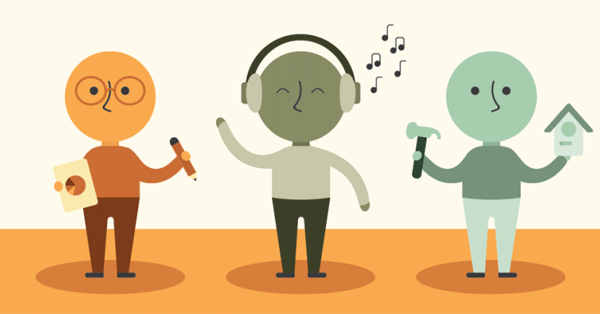
Discovering Your Learning Style: Tailoring Your Approach
Everyone learns differently. What works for one person may not work for another. Understanding your learning style can help you tailor your approach to learning and make the process more effective and enjoyable.There are several different learning style models, but one of the most common is the VARK model, which identifies four primary learning styles:
To discover your learning style, consider taking a VARK questionnaire or simply reflecting on how you learn best. Once you know your learning style, you can adapt your learning strategies to match your preferences.
For example:
Internal Link Suggestion: For more tips on identifying your learning style, check out our article on "Effective Study Habits for Different Learning Styles"
Example: Sarah struggled with math until she realized she was a kinesthetic learner. She started using physical objects like blocks and beads to visualize mathematical concepts, and her grades improved dramatically.

Effective Learning Strategies: Maximizing Your Learning Potential
Once you've identified your learning style, you can start implementing effective learning strategies to maximize your learning potential. Here are some proven techniques:External Link Suggestion: Explore the science behind learning strategies on websites like "Learning Scientists" for more in-depth information.
Example: John used to cram for exams, but he switched to spaced repetition and active recall. He found that he retained the information much better and felt less stressed during exams.

Finding Joy in Learning: Making it a Fun and Rewarding Experience
Learning shouldn't feel like a chore. It should be a fun and rewarding experience. Here are some tips for finding joy in learning:Key Takeaway: Make learning a fun and rewarding experience by choosing topics you're passionate about, setting realistic goals, and celebrating your progress.

Overcoming Learning Obstacles: Turning Challenges into Opportunities
Everyone faces obstacles in their learning journey. It's important to recognize these obstacles and develop strategies for overcoming them. Common learning obstacles include:Internal Link Suggestion: For additional strategies on time management, see our article "Effective Time Management Techniques for Students and Professionals"
Example: Maria struggled with procrastination until she started using the Pomodoro Technique. She found that breaking her work into 25-minute intervals with short breaks helped her to stay focused and motivated.
Lifelong Learning: Embracing Continuous Growth
Learning is not something that stops when you finish school. It's a lifelong journey of continuous growth and development. Embracing lifelong learning can help you to stay relevant in a rapidly changing world, expand your horizons, and live a more fulfilling life.Here are some ways to embrace lifelong learning:
External Link Suggestion: Explore numerous online learning platforms such as "Coursera" for a wide range of courses and specializations.
Example: David, after retiring, decided to learn Spanish. He found that it not only kept his mind sharp but also allowed him to connect with new people and enjoy travel in a different way.
Resources for Learners: Tools and Platforms to Support Your Journey
There are countless resources available to support you on your learning journey. Here are some of the most helpful:Call to Action: Sign up for our newsletter to receive regular updates on new learning resources, tips, and strategies!
Conclusion: Your Journey to Lifelong Learning Starts Now
Learning is a lifelong adventure that has the power to transform your life. By cultivating a growth mindset, discovering your learning style, implementing effective learning strategies, finding joy in the process, overcoming obstacles, and embracing continuous growth, you can unlock your full potential and live a more fulfilling life. Remember, the journey of a thousand miles begins with a single step. Start your learning journey today, and watch as your world expands and your possibilities become limitless. Embrace the challenge, celebrate the progress, and never stop learning!Social Sharing Optimization: Share this article with your friends and family to inspire them to embrace lifelong learning and growth! Use hashtags like #lifelonglearning #growthmindset #education #personalgrowth.


0 Comments