
Hands-On STEM Fun: Interactive Coloring Pages for Young Scientists at Home
Bring science, technology, engineering, and math to life with creative, hands-on coloring activities that turn ordinary pages into interactive experiments. This friendly guide shows parents, caregivers, and educators how to use printable STEM coloring pages to spark curiosity, build foundational skills, and create memorable at-home learning experiences for young children.

Introduction: Why Interactive Coloring Pages Work for Young Scientists
Coloring is more than a calm, creative pastime. For preschool and early elementary children, coloring supports fine motor development, pattern recognition, and vocabulary growth. When combined with simple STEM concepts and hands-on extensions, coloring pages become a low-cost, high-impact way to introduce scientific thinking.
In this article you'll learn practical ways to use interactive coloring pages at home: from choosing the right themes and printables to pairing them with mini-experiments, engineering challenges, and math games. You'll find supply lists, step-by-step activity plans, learning objectives, differentiation tips for multiple ages, and suggestions for tracking progress—all optimized to help you create a rich, playful STEM environment without expensive kits.

Core Benefits of STEM Coloring Pages
Interactive coloring pages are an adaptable tool that align with at-home learning goals and early childhood development milestones. Major benefits include:
- Accessible STEM introduction: Low barrier to entry—materials you already have at home.
- Multisensory learning: Combining coloring, tactile play, and simple experiments supports different learning styles.
- Language and vocabulary growth: STEM-themed pages introduce age-appropriate terms (e.g., "habitat," "circuit," "predator").
- Problem-solving and creativity: Engineering prompts or open-ended coloring challenges foster divergent thinking.
- Executive function practice: Following step sequences and sorting colors help build planning and attention.
- Pages: forest, pond, desert habitats; life cycle wheels (butterfly, frog); animal anatomy diagrams.
- Activity pairings: habitat diorama in a shoebox; match animal tracks cut-outs to colored animals; life-cycle sequencing cards.
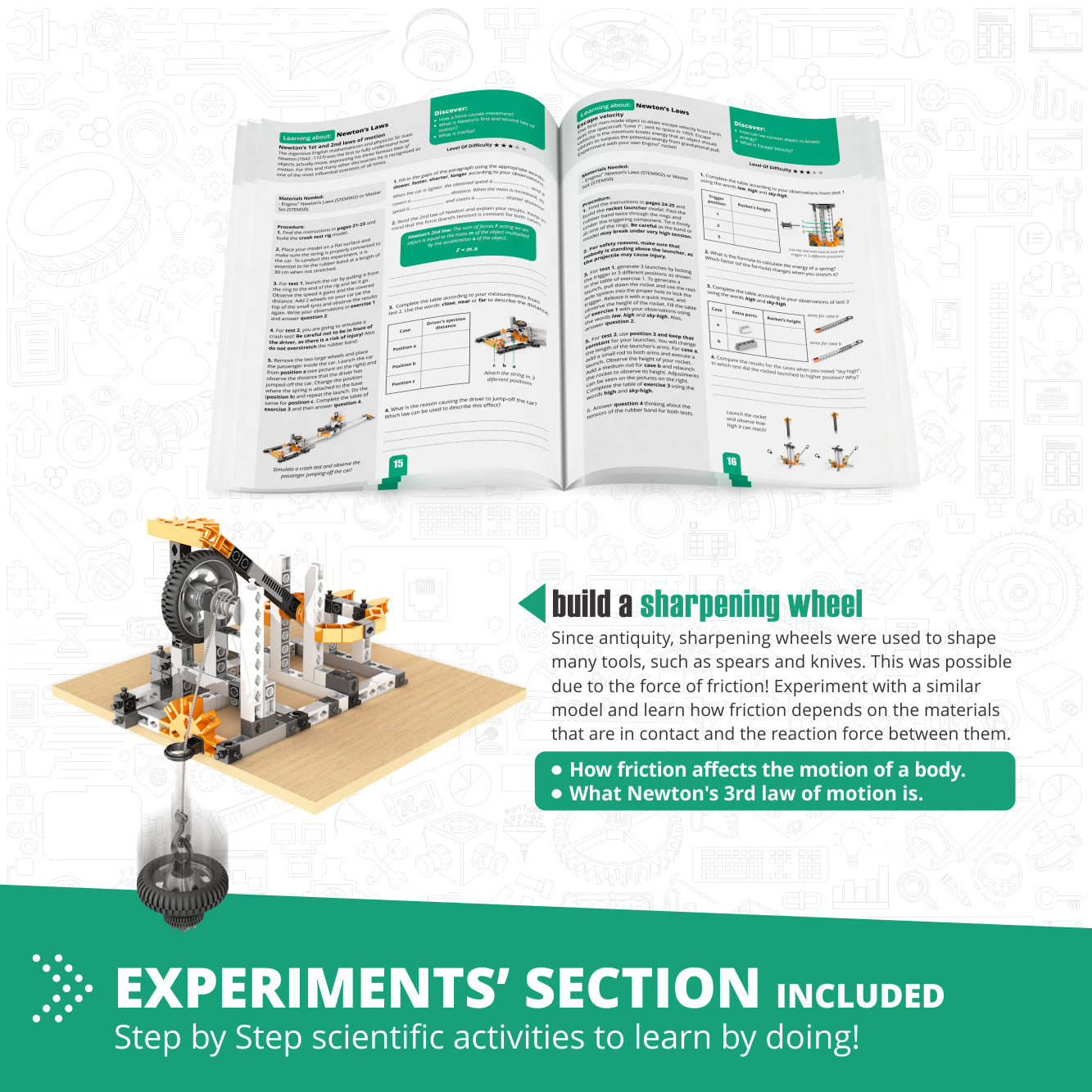
- Pages: ramps and vehicles, pulley diagrams, balloon rockets, rolling balls through obstacle courses.
- Activity pairings: build different incline ramps and test toy cars; color and then test balloon rocket speeds using a string runway.
- Pages: bridge templates, tower blueprints, build-your-robot face sheets.
- Activity pairings: color and then construct bridges from straws or popsicle sticks to hold weight; robot design to solve a task (carry a marble).
- Pages: number coloring by code, shape mosaics, symmetry butterflies.
- Activity pairings: color-by-number scavenger hunt; create bar graphs using colored stickers matched to a coloring page.
- Pages: circuit diagrams with color-coding for wires, make-your-own light-up card template.
- Activity pairings: color and assemble a simple LED card using copper tape and coin cells; test which materials conduct electricity.
- Print habitat pages and let the child color them.
- Cut out animal pictures and have the child place each animal in the correct habitat.
- Turn the landing into a mini-diorama by gluing the habitat page into a shoebox and arranging animal cut-outs inside.
- Color the ramp diagram together, labeling "incline" and "run" sections.
- Build a real ramp from cardboard and test cars down different inclines.
- Record times and discuss how angle and surface change speed.
- Color the blueprint page and discuss different bridge types (beam, arch, suspension).
- Choose a design and build it using sticks and glue.
- Test weight capacity by adding coins until it fails; iterate on the design.
- Color the template, noting where the LED will be placed.
- Apply copper tape along the positive and negative traces on the page.
- Attach LED, tape down battery, and complete the circuit to light the LED.
- Education websites and teacher resource marketplaces (look for CC-licensed files)
- Children’s museums and science centers (often offer downloadable activity packs)
- STEM subscription services that include themed printable bundles
- Choose the learning objective (e.g., life cycle, simple machine, counting).
- Sketch an outline that leaves labeled areas for coloring and space for notes or predictions.
- Include prompts on the page—questions, checkboxes, or mini-graphs to record observations.
- Digitize with a scanner or design program (Canva, Inkscape) and export as printable PDF.
- Keep instructions short and use concrete language.
- Focus on coloring, matching, and simple cause-and-effect experiments.
- Use larger coloring shapes and chunky crayons for fine motor support.
- Introduce basic measurement and recording—timing runs, counting totals.
- Use open-ended engineering challenges with simple constraints.
- Encourage labeling and use of vocabulary words from the page.
- Add hypothesis-prediction-record-reflect cycles to experiments.
- Introduce schematic symbols, simple calculations, and iteration planning.
- Encourage independent design and written observations.
- Science notebook: glue the colored page and have the child add one sentence about what they learned.
- Observation checklists: circles to tick off skills practiced (e.g., "used measurement", "made a prediction").
- Photo journal: take before/after photos of projects and compile in a digital album.
- What did you predict would happen? What actually happened?
- How did you change your design when it didn’t work?
- What was your favorite part and why?
- Always supervise activities involving small parts or batteries.
- Provide easy-grip tools (large crayons, spring scissors) for children with fine motor difficulties.
- Offer multisensory options (textures, stickers, scented markers) to engage children with different sensory needs.
- Use clear visual cues and step-by-step picture instructions for non-readers and ELL learners.
- “Printable STEM activity kits” — link to your site's resources/products page
- “Early childhood science resources” — link to related blog posts or curriculum guides
- “Makerspace ideas for kids” — link to a projects or classroom ideas page
- National Science Teaching Association (NSTA) — for best practices in K–8 science education
- Zero to Three — for early childhood development research
- Smithsonian’s Learning Lab or a local children’s museum resource page for downloadable STEM activities
Which Printable Coloring Pages to Choose (Themes & Learning Goals)
Choose pages that align to specific learning goals. Below are theme suggestions with intended outcomes and example activities.

1. Ecosystems & Life Science (Ages 3–8)
Learning goals: classification, habitats, life cycles, observational skills.
2. Simple Physics & Motion (Ages 4–9)
Learning goals: force, gravity, friction, cause-and-effect.
3. Engineering & Design Challenges (Ages 4–10)
Learning goals: design thinking, iteration, measurement.
4. Math & Pattern Recognition (Ages 3–8)
Learning goals: counting, shapes, symmetry, graphing basics.
5. Technology Basics & Circuits (Ages 6–10)
Learning goals: simple circuits, problem-solving, terminology (battery, conductor, insulator).
How to Create Interactive Coloring Activities: Step-by-Step Plans
Each activity below pairs a printable coloring page with a hands-on extension. Use the supply lists and time estimates to plan sessions that fit your child’s attention span.
Activity 1: Habitat Match-Up (Ages 3–6)
Goal: Teach habitat-animal relationships and sorting skills.
Time: 20–30 minutes
Supplies: habitat coloring pages (forest, ocean, desert), animal cut-outs, glue stick, crayons, shoebox (optional).
Learning tip: Ask open-ended questions—"Why does this animal live here?"—to encourage critical thinking and vocabulary use.
Activity 2: Ramp Races (Ages 4–9)
Goal: Explore gravity and friction through experimentation.
Time: 30–45 minutes
Supplies: ramp coloring page, cardboard, toy cars, tape, books to change incline, stopwatch or phone timer.
Extension: Make a simple data chart on a coloring page to plot results—great early graphing practice.
Activity 3: Build-a-Bridge Challenge (Ages 5–10)
Goal: Apply engineering design and measurement skills.
Time: 45–60 minutes (plus drying time if glue used)
Supplies: bridge coloring/blueprint page, popsicle sticks, glue, rubber bands, small weights (coins).
Assessment idea: Have the child sketch improvements on the blueprint and predict how modifications will change strength.
Activity 4: Light-Up Card — Simple Circuit Coloring (Ages 6–10)
Goal: Introduce basic circuitry while adding a creative element.
Time: 30 minutes
Supplies: circuit coloring page template, 3V LED, coin cell battery, copper tape, clear tape, crayons.
Safety note: Supervise use of small batteries and LEDs; explain that metal items can short batteries and cause heat.
Printable Resources & How to Make Your Own Pages
Free and premium printable resources are widely available, but you can also create custom coloring pages tailored to your child's interests.
Where to Find High-Quality Printables
How to Design Custom STEM Coloring Pages
Image alt text suggestion: "Printable STEM coloring page showing a butterfly life cycle with labeled stages."
Scaffolding & Differentiation Strategies for Multiple Ages
Coloring and hands-on extensions can be adapted to a range of ages and abilities by adjusting language complexity, task structure, and challenge level.
For Younger Children (3–5 years)
For Early Elementary (6–8 years)
For Older Children (9–10 years)
Assessment, Tracking Progress, and Encouraging Scientific Habits
Use simple, child-friendly methods to document learning and encourage reflection. Keep records brief and positive to build confidence.
Quick Tracking Tools
Simple Assessment Prompts
Supplies Checklist: Affordable Essentials for Home STEM Coloring
Most activities use basic, low-cost materials. Stock a small bin with the items below to make spontaneous learning easy.
| Item | Why it helps |
|---|---|
| Crayons, markers, colored pencils | Coloring and fine motor control |
| Construction paper, cardstock | Durable bases for building and dioramas |
| Scissors, glue stick, tape | Cut-and-paste activities and construction |
| Popsicle sticks, straws, rubber bands | Prototyping materials for engineering tasks |
| Small LED, coin cell batteries, copper tape | Simple circuits and light-up crafts |
| Stopwatch or timer (phone) | Timing experiments and recording data |
Safety Tips & Accessibility Considerations
Maintain a safe and inclusive environment when doing hands-on STEM coloring activities.
Real-World Examples & Mini Case Studies
These short examples show how families and educators have used STEM coloring pages successfully at home and in small-group settings.
Case Study: The Weekend Science Club (Home)
A parent created weekly themed packets—coloring pages plus one hands-on experiment. Over six weeks, the child showed improved vocabulary and an eagerness to record observations in a notebook. The parent noted that the combination of coloring and activity reduced resistance to "learning time."
Case Study: Classroom Makerspace Integration
An early elementary teacher used coloring-based blueprint pages during makerspace time. Students colored their designs, built prototypes from recycled materials, and presented results to peers. Peer feedback and iteration became a meaningful part of the curriculum.
Frequently Asked Questions (FAQ)
Are printable coloring pages effective for teaching science concepts?
Yes—when paired with hands-on extensions, prompts, and reflection, coloring pages provide a scaffolded way to introduce and reinforce science concepts while developing related language and motor skills.
How often should we do STEM coloring activities?
Short, frequent sessions (15–30 minutes, 2–4 times a week) often work best for young children. For deeper projects, plan a single longer session or multiple short sessions over several days.
Can these activities work for mixed-age siblings?
Absolutely. Differentiate by assigning age-appropriate roles: younger children color and sort, while older kids design, measure, and record data. Collaborative projects build communication and mentorship skills.
Do I need special software to create printables?
No. Free tools like Canva, Google Slides, or simple PDF editors let you add labels, prompts, and spaces for recording observations without advanced skills.
SEO & Content Promotion Recommendations
To maximize reach and engagement, here are specific suggestions for internal and external linking, meta elements, and shareable assets.
Internal link suggestions (anchor text recommendations)
External authoritative links to include
Meta & keyword guidance
Primary keyword: "STEM coloring pages" (aim for ~1–2% density). Secondary/LSI keywords: "printable STEM activities," "hands-on science for kids," "STEM at home," "interactive coloring pages," "early childhood STEM."
Suggested meta title: Hands-On STEM Fun: Interactive Coloring Pages for Young Scientists at Home
Suggested meta description: Spark curiosity with printable STEM coloring pages and hands-on activities for kids. Find themes, step-by-step plans, supply lists, and assessment tips for ages 3–10.

0 Comments