
Math Playtime: Reinforce Number Skills with Creative Games and Activities
Meta description: Make math fun! Discover playful, research-backed activities and games to reinforce number skills for preschoolers through elementary students. Practical lesson ideas, printable activity suggestions, classroom and at-home tips, and assessment ideas included.

Introduction
Do kids groan when you say “math homework”? Turn that sigh into excited shrieks by bringing play into number practice. Math Playtime is about using engaging, hands-on activities to reinforce number sense, counting, addition and subtraction, place value, and basic problem-solving. In this article you’ll learn creative games, simple lesson plans, and assessment strategies you can use at home or in the classroom to build confident, flexible number thinkers.
Whether you’re a parent, teacher, or caregiver, this guide lays out age-appropriate activities, materials lists, differentiation tips, and ways to measure progress. With a friendly tone, step-by-step examples, and ideas for adapting each activity to multiple skill levels, you’ll have everything you need to make number practice feel like play.
Why Play Matters for Number Skills
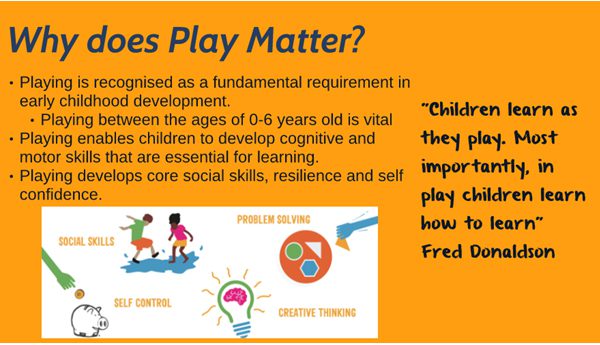
Play isn’t just “fun”; it’s an evidence-based way children learn math. Through games and hands-on experiences, learners develop number sense—the intuitive understanding of numbers, how they relate, and how they can be manipulated. Play supports engagement, reduces math anxiety, and allows repeated practice in meaningful contexts.
- Active learning: Manipulatives and movement help children internalize abstract concepts.
- Motivation: Games turn repetition into challenge and reward, increasing practice time.
- Social skills: Cooperative play develops communication about strategies and reasoning.
- Formative assessment: Play reveals thinking—teachers and parents can observe strategies and misconceptions.
- Preschool (3–5 years): Counting, one-to-one correspondence, comparing quantities, recognizing numerals 0–20.
- Early elementary (K–2): Addition and subtraction within 20, number bonds, place value to 100, comparing and ordering numbers.
- Upper elementary (3–5): Multiplication basics, factors, place value to thousands, multi-step problem solving, fractions introduction.
- Counting cubes or linking cubes
- Base-ten blocks
- Number cards and dot cards
- Dice and spinners
- Play money and counters
- Small toys or thematic objects (cars, animals, pom-poms)
- Whiteboards and dry-erase markers
- Printable boards and task cards
- Each player rolls a die, moves forward, and says the new total aloud.
- When a player lands on a “math challenge” square, they solve a quick addition or subtraction card (e.g., 7 + 6).
- First to exactly 20 wins; if a roll would pass 20, the player must subtract instead.
- Checklists aligned to grade-level standards (e.g., counting to 100, addition fluency to 20)
- Running records of strategy use (e.g., counting on, decomposition, use of manipulatives)
- Short exit tasks: two or three problems after a game to see independent transfer
- Student reflection prompts: “How did you solve that? Could you do it a different way?”
- Tiered tasks: Offer three levels of cards (easy, medium, challenge) and let students self-select or be assigned by teacher observation.
- Scaffold with visuals: Use number lines, ten frames, or anchor charts for students who need visual support.
- Enrichment: For advanced learners, add open-ended extensions like “create your own puzzle” or multi-step word problems.
- Peer tutoring: Pair students so stronger strategists can model and explain thinking while the other practices.
- Clear learning objective displayed before play begins.
- Quick modeling of one round and expected behaviors.
- Timed rotations (10–15 minutes per station) and visible timers.
- Exit tasks to check learning and reset the room.
- Use roles in group games (reader, recorder, checker) to keep students engaged.
- Number bond cards and recording sheets
- Dot cards, ten frames, and spinner templates
- Game boards (Race to 20, place-value pizza board)
- QR-coded clues for Mystery Number Escape rooms
- National Council of Teachers of Mathematics (NCTM) — research-based teaching strategies and standards
- Institute of Education Sciences (IES) — summaries of instructional interventions
- Education blogs and printable repositories — for ready-to-use printables and extension ideas
- Increased speed and accuracy on target tasks (e.g., addition within 20)
- Use of efficient strategies (counting on, decomposing numbers) rather than slow finger counting
- Ability to explain reasoning with appropriate vocabulary
- Transfer of skills to independent worksheets or word problems
- Positive attitudes toward math and willingness to attempt challenging tasks
- early literacy activities — link from “play supports engagement” or “kindergarten routines”
- classroom management tips — link from Classroom Management Tips section
- printable math games — link from Printable and Digital Resources
- National Council of Teachers of Mathematics (NCTM)
- Institute of Education Sciences (IES)
- EducationWorld — for ready-to-use classroom activities
- Photo: Preschoolers playing a counting game — alt: “Preschool children counting objects during a hands-on math activity.”
- Photo: Students at math centers with manipulatives — alt: “Elementary students using manipulatives at math centers to practice addition.”
- Graphic: Place-value pizza printable — alt: “Printable place-value pizza showing tens and ones for building numbers.”
- Infographic: Number sense progression by grade — alt: “Infographic illustrating number sense milestones from preschool to grade 5.”
- Suggested share text for Facebook/Instagram: “Turn math practice into play! 20+ games and activities to build number skills at home or school.”
- Suggested tweet: “Math Playtime: Creative games to strengthen counting, addition, and number sense. #MathGames #EdTech”
- Open Graph image: Bright photo of children engaged in a math game with headline overlay “Math Playtime.”
Primary Keywords to Target
Math playtime, number skills, counting activities, number sense games, math games for kids, hands-on math activities.

Overview: Developmental Targets by Age
Understanding what to target at each stage helps you pick the right activities.
Core Materials and Manipulatives
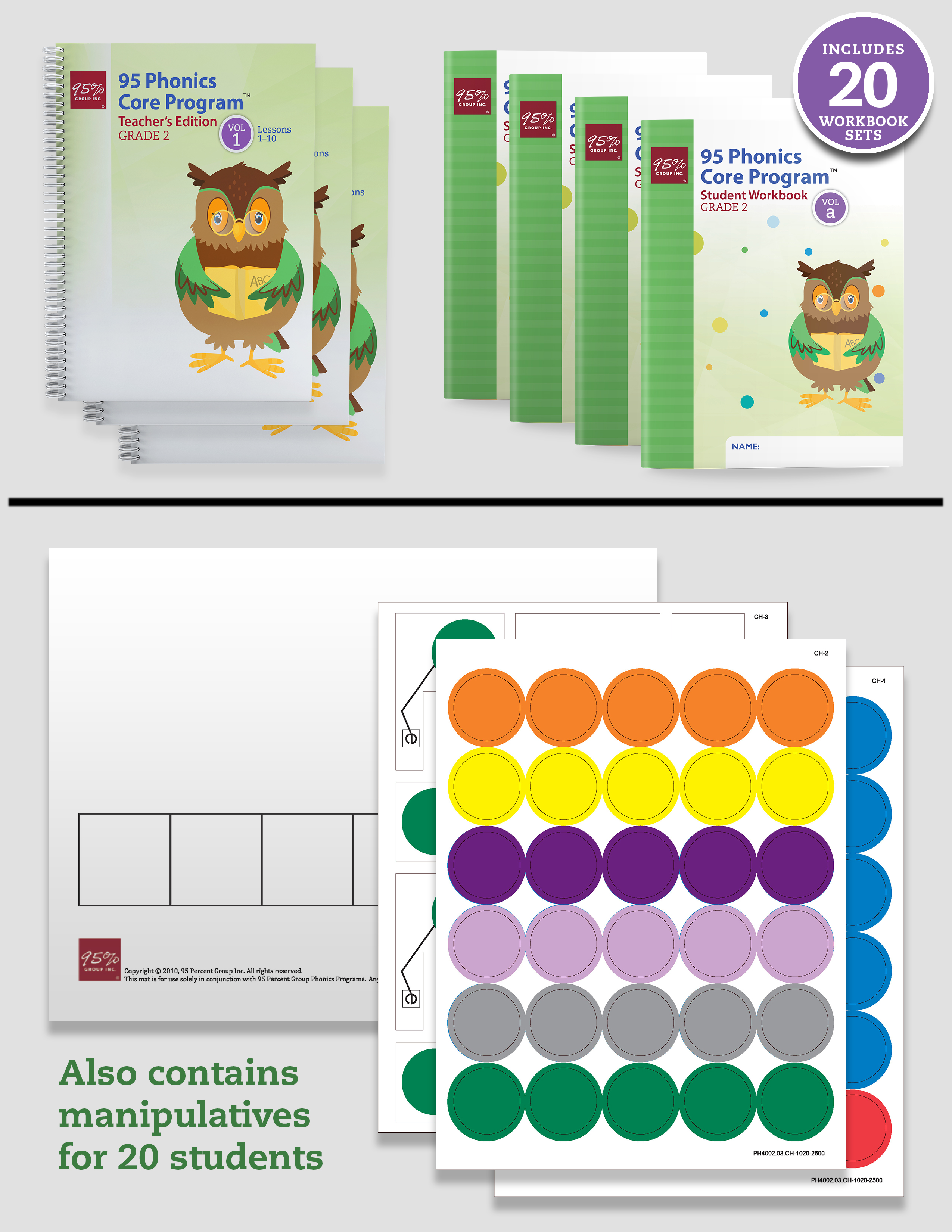
Most activities require inexpensive, reusable materials. Build a math play kit with:
Preschool Activities: Building Early Number Sense
1. Treasure Hunt Counting
What it teaches: One-to-one correspondence, counting to 10–20, numeral recognition.
How to play: Hide 10–15 small objects around the room. Give the child a numbered treasure map or picture list. The child finds objects and places them in a numbered tray or egg carton slot, counting as they go.
Differentiate: For advanced learners, use two-digit numbers on the map or ask children to group finds in tens and ones.
2. Snack Math: Compare and Sort
What it teaches: Comparing quantities, vocabulary (more/less/fewer), simple addition and subtraction.
How to play: Use crackers or fruit pieces. Give two plates and ask kids to make groups with more, fewer, or equal amounts. Prompt simple story problems: “If you eat 2 crackers, how many left?”
3. Number Hop
What it teaches: Number recognition, sequencing, gross motor connections to number order.
How to play: Tape numbers 1–10 on the floor in a random pattern. Call out a number and have kids hop to it. Add “jump forward 2” or “skip back 1” to practice simple operations.
Kindergarten–2nd Grade Activities: Addition, Subtraction, and Number Bonds
4. Race to 20 (Board Game)
What it teaches: Addition within 20, strategic thinking, counting on.
Materials: Game board with spaces 0–20, dice, counters.
Adaptations: Use two dice for sums to 12 or spinners for targeted skill practice.
5. Number Bond Puzzles
What it teaches: Part-part-whole relationships, mental math strategies.
How to play: Create puzzle pieces that pair two addends with a whole (e.g., 8 = 5 + 3). Children match pieces and explain their reasoning. Turn it into a timed challenge or partner game where one child hides pieces and the other finds matches.
6. Place-Value Pizza
What it teaches: Tens and ones, composing numbers up to 100.
How to play: Create a “pizza” with ten slices labeled as tens and pepperoni stickers representing ones. Students build numbers (e.g., 34 = 3 tens + 4 ones) using slices and stickers. Use play money to “buy” toppings to represent addition and subtraction of tens and ones.
Grades 3–5 Activities: Multiplication, Division, and Place Value Deepening
7. Arrays in a Jar
What it teaches: Multiplication as repeated addition, area models.
How to play: Provide jars and beads. Present multiplication problems and have students create arrays in rows inside jars (e.g., 4 rows of 6 beads for 4 × 6). Photograph arrays and write matching number sentences.
8. Mystery Number Escape
What it teaches: Multi-step reasoning, use of operations, estimation.
How to play: Create an escape-room-style sequence of puzzles where students solve calculation-based clues to unlock the next stage. Clues could include place value riddles, multiplication tasks, and fraction comparisons. Time the teams and encourage strategy reflection after completion.
9. Fraction Pizza Party
What it teaches: Fractions as parts of a whole, equivalent fractions, simple addition of fractions with like denominators.
How to play: Use paper pizzas divided into slices. Pose real-world problems (e.g., “If 3 friends eat 2/8 + 3/8 of a pizza, how much is left?”). Encourage students to combine slices and simplify answers.
Simple Assessments and Progress Tracking
Play-based assessment should be informal, ongoing, and formative. Watch how children solve problems, what strategies they use, and where they hesitate. Use quick tools to document progress:
Differentiation Strategies
Make activities accessible and challenging for mixed-ability groups.
Classroom Management Tips for Playful Math
Playful activities can be lively. Keep them productive with simple routines:
At-Home Math Play: Low-Prep Ideas for Busy Families
10. Grocery Store Math
What it teaches: Money sense, addition, estimation.
How to play: Give kids a small budget and a “shopping list.” They estimate costs, add item prices, and calculate change. Use real receipts for post-shopping discussion.
11. Cooking with Numbers
What it teaches: Measuring, fractions, sequencing.
How to play: Involve children in measuring ingredients and doubling/halving recipes. Ask them to explain how they adjusted quantities.
12. Road-Trip Counting Challenges
What it teaches: Patterning, skip counting, sustained attention.
How to play: Count red cars, or every 5th license plate number, or practice skip counting by 2s, 5s, or 10s. Keep a tally and compare results at the end of the trip.
Printable and Digital Resources
To streamline planning, prepare or download printables and digital assets:
Suggested external resources to reference in your planning:
Assessing Effectiveness: What Success Looks Like
Look for these indicators that your math playtime is working:
Case Study: From Frustration to Fluency
Background: A second-grade teacher noticed many students relied on counting all for addition and were slow to retrieve number facts.
Intervention: She implemented three 15-minute play centers per week: a number-bond matching station, a fast-paced Race to 20 board game, and a “mental math” whisper challenge where students solved shouted problems without manipulatives.
Outcome: Within six weeks, formative checks showed improved fluency: 80% of students moved from counting-all to counting-on or using number bonds. Students reported math felt faster and more fun. The teacher used short reflections after each session to consolidate strategy talk.
Frequently Asked Questions (FAQ)
Is play enough to teach math facts?
Play should be part of a balanced approach that includes explicit instruction, targeted practice, and spaced review. Playful games increase engagement and provide meaningful contexts that accelerate fluency when combined with short focused lessons.
How often should I use math play activities?
Daily short bursts (10–20 minutes) are ideal for younger children. For classrooms, include 2–3 play-based centers weekly plus daily math meeting routines. Consistency beats marathon sessions.
How do I measure growth without worksheets?
Use observational checklists, quick exit tasks, video samples of student explanations, and short oral fluency probes. These give real-time insights into strategy development and accuracy.
SEO & Linking Recommendations
Internal link suggestions (anchor text recommendations):
External link recommendations (open in new window):
Image Suggestions & Alt Text
Schema Markup Recommendation
Use Article schema with the following properties: headline, description, author, datePublished, image, publisher, mainEntityOfPage. Include keywords in the headline and description and ensure the URL matches the slug (e.g., /math-playtime-reinforce-number-skills).
Social Sharing Optimization
Practical Weekly Plan (Sample)
| Day | Activity | Skills Targeted | Time |
|---|---|---|---|
| Monday | Number Hop + Counting Warm-up | Number recognition, sequencing | 10–15 min |
| Tuesday | Race to 20 centers | Addition fluency to 20 | 20–30 min |
| Wednesday | Place-Value Pizza | Tens and ones | 20 min |
| Thursday | Array Jars or Multiplication Games | Multiplication concepts | 20–30 min |
| Friday | Math Reflection & Quick Exit Tasks | Assessment, metacognition | 15 min |


0 Comments