
Teaching the Alphabet Through Art: Creative, Effective Strategies for Early Learners
Learning the alphabet is a foundational milestone for young children, and teaching it through art offers a joyful, multisensory path that builds memory, creativity, and fine motor skills all at once. This comprehensive guide explores research-backed strategies, hands-on activities, lesson plans, and assessment ideas that help educators and parents turn alphabet learning into an engaging artistic adventure. You’ll find practical step-by-step projects for each letter, classroom-ready templates, tips for differentiating instruction, and suggestions for integrating literacy standards. Whether you’re a preschool teacher, early elementary educator, or a parent seeking purposeful play, this article provides everything you need to teach the alphabet through art with confidence and creativity.
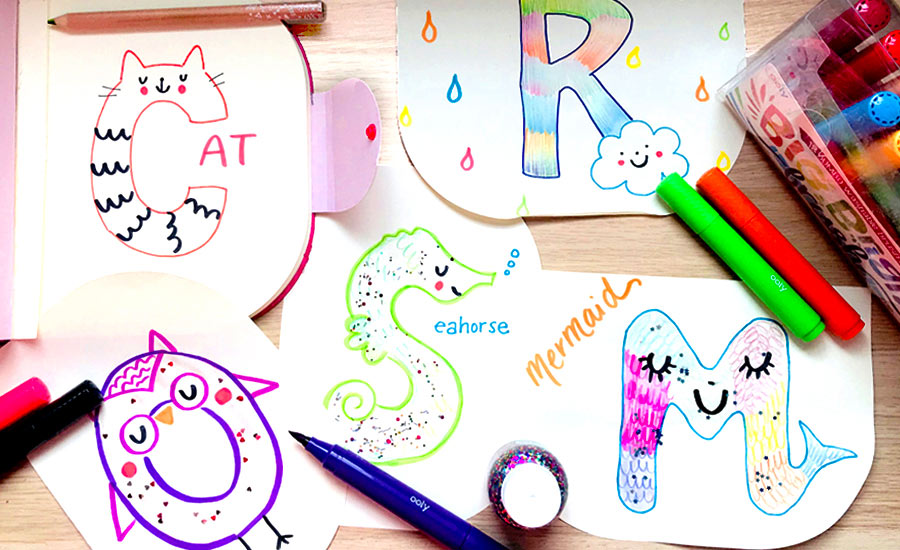
Why Teach the Alphabet Through Art?
Teaching the alphabet through art leverages visual, tactile, and kinesthetic learning channels to support deeper letter recognition and retention. Children are more likely to remember letters when they associate them with meaningful, creative experiences that involve sensory input and emotional engagement.
- Multisensory memory boost: Combining sight, touch, movement, and sound strengthens neural pathways for letter recall.
- Fine motor development: Cutting, gluing, painting, and drawing help the hand-eye coordination needed for writing.
- Vocabulary and phonemic awareness: Art projects introduce words, textures, and concepts tied to each letter sound.
- Motivation and engagement: Creative projects increase attention span and eagerness to participate.
- Improved letter-sound mapping through multimodal activities
- Enhanced expressive language from discussing art projects
- Opportunities for formative assessment through observation of art-based tasks
- Letter recognition (upper- and lowercase)
- Letter-sound correspondence
- Fine motor skills for pre-writing
- Vocabulary development related to each letter
- Creative expression and following multi-step directions
- Discuss the letter A and its sound. Show printed A and a.
- Dip apple halves in paint and stamp onto paper to create apple shapes shaped like an uppercase A or form a collage.
- Add stems and leaves with markers and paper cutouts; glue on seeds or small brown paper pieces.
- Label the artwork “A is for apple” and display with the printed letter.
- Cut bubble wrap into B-shaped stamps (upper/lowercase).
- Paint bubble wrap and press onto paper to create textured B shapes.
- Invite children to trace the B with crayons and add pictures of bubble-related items (bubbles, ball, bear).
- Demonstrate forming a C shape with clay and rolling small balls to connect into a caterpillar body.
- Add eyes, legs, and antennae using pipe cleaners.
- Label each caterpillar with a written C and say words like “caterpillar,” “cat,” and “car.”
- D — Dot-paint dinosaur footprints (puff paint)
- E — Egg carton eggs decorated for “E is for egg” collage
- F — Foil fish mosaic using crumpled aluminum foil
- G — Glitter glue “G” gnome houses
- H — Handprint houses (trace handprints to make roofs)
- I — Ice-resist painting for “I is for ice” sensory art
- J — Jellyfish painting using streamers and paper bowls
- K — Kite collage with textured materials
- L — Leaf rubbings to create an “L” nature mural
- M — Marble painting for “M is for marble” art
- N — Newspaper collages to spell N words
- O — Onion print “O” shapes or foam O-shaped stamps
- P — Paper plate puppets for letter P characters
- Q — Quilted paper squares glued into a Q
- R — Resist crayon rainbow with rice glued for texture
- S — Salt-dough snakes shaped like S
- T — Tissue paper t-rex for T
- U — Underwater watercolor with U-shaped waves
- V — Van collage using recycled boxes and colored papers
- W — Watercolor wash whales
- X — X-ray fish prints using stick prints crossing to form X
- Y — Yarn-letter weaving for tactile Y
- Z — Zigzag zipper art or zentangle Z patterns
- Morning circle: Introduce the letter and sound (5–7 minutes).
- Art activity: Hands-on project connected to the letter (20–30 minutes).
- Phonemic play: Sound sorting or blending using art pieces (10–15 minutes).
- Writing/Tracing center: Practice letter formation with a sensory medium (10–15 minutes).
- Closing: Share and display; review with a quick formative check (5 minutes).
- Label bins with pictures and words for easy access.
- Keep a “daily art kit” with staple items: glue sticks, scissors, markers, tempera palettes, brushes, aprons, and wipes.
- Use clear trays for individual student materials to reduce passing and sharing issues.
- Pre-cut common shapes (leaves, circles) ahead of time for younger learners.
- Use paint-pour or stamp stations to rotate small groups while others work independently.
- Create display space to rotate student work weekly, building a classroom alphabet gallery.
- Choose non-toxic, washable materials and check for allergies.
- Offer adapted tools (spring-loaded scissors, thicker crayons) for children with fine motor challenges.
- Provide alternate sensory options (play dough letters) for children who avoid paint or glue.
- ELLs: Pair visuals with labeled vocabulary, use gestures and consistent routines, and incorporate home languages where possible.
- Students with motor delays: Emphasize gross-motor letter formation (sky writing, sand trays) and use assistive tools for grip support.
- Advanced learners: Add layered challenges—writing a short story about their letter creature, creating a stop-motion video of a letter-themed scene.
- Observation checklists: Track letter identification, sound association, and motor skills during activities.
- Portfolios: Collect photos, labeled art pieces, and brief student reflections to show growth over time.
- Performance tasks: Ask students to find classroom items that start with a given letter or create a mini-presentation of their letter art.
- Digital photo portfolios: Document student work and share with families via secure classroom platforms.
- Interactive whiteboard: Display letter animations and allow children to trace letters digitally before doing tactile activities.
- Stop-motion apps: Older preschoolers and kindergarteners can photograph stages of a project to build storytelling and sequencing skills.
- Monthly letter art calendar with one easy home activity per letter.
- “Art at Home” bags containing a small craft and labeled vocabulary cards.
- Family gallery nights where children present their favorite letter artworks.
- Challenge: Mess and cleanup time. Solution: Establish routine, use washable materials, and employ individual trays.
- Challenge: Limited materials budget. Solution: Use recycled materials, community donations, and inexpensive substitutes (newspaper, cardboard, yogurt cups).
- Challenge: Varying skill levels. Solution: Provide tiered tasks within each activity and small-group instruction for targeted support.
- Alphabet stencils and foam letter sets for tactile tracing
- Washable tempera paint and large trays for group use
- Clipboards and cameras for documentation
- “Early literacy activities” — link to an existing page on your site about early literacy strategies
- “Preschool curriculum planning” — link to a curriculum resources page
- “Classroom management tips” — link to a teacher resources or classroom strategies article
- National Association for the Education of Young Children (NAEYC) — for developmentally appropriate practice: https://www.naeyc.org/
- Reading Rockets — articles on phonics and alphabet instruction: https://www.readingrockets.org/
- Zero to Three — resources on early development and family engagement: https://www.zerotothree.org/
- Include high-quality photos of children engaged in art activities with parental permission.
- Image alt text examples: “Child stamping apple shapes to learn letter A”, “Group of preschoolers creating clay caterpillars for letter C”.
- Provide printable PDFs of templates and a text transcript of any multimedia content for accessibility.

Research Foundations and Educational Benefits
Educational research supports arts-integrated instruction in early literacy. Studies show that children exposed to arts-rich curricula demonstrate stronger letter recognition, narrative skills, and vocabulary. The arts also foster executive functioning—planning, focus, and self-regulation—which are critical for classroom success.
Key benefits include:

How to Plan an Alphabet-Through-Art Curriculum
Successful implementation requires intentional planning. Below is a step-by-step framework to create a sequence that is developmentally appropriate, standards-aligned, and manageable.

Step 1: Set Clear Learning Goals

Step 2: Sequence the Letters
While the traditional A-Z order works, consider sequencing by instructional priority: start with high-frequency letters (e.g., s, a, t, i, p, n) or cluster letters with similar shapes or sounds. This approach can accelerate early reading skills.
Step 3: Choose Project Types and Materials
Vary activities to cover different modalities and keep engagement high. Keep a core set of materials on hand for consistency and ease.
| Activity Type | Skills Targeted | Examples |
|---|---|---|
| Collage | Letter recognition, fine motor | Tissue paper mosaics for A, leaf collage for L |
| Painting | Large motor, letter formation | Finger paint “S” snakes |
| Printmaking | Pattern recognition, creativity | Vegetable stamps for “O” |
| 3D Art | Fine motor, spatial skills | Clay letters, pipe-cleaner letters |
| Mixed Media | Vocabulary building, storytelling | Letter puppets, storyboards |
Step 4: Align with Standards and Assessment
Map each art activity to literacy standards: letter identification, phonemic awareness, and writing readiness. Use checklists, photo portfolios, and work samples to assess growth. Quick formative checks—such as asking a child to identify or trace a letter after an activity—provide immediate feedback.
Practical Alphabet Art Activities: Letter-by-Letter Examples
The following section offers replicable, classroom-tested activities for teaching each letter. Each entry includes objective, materials, step-by-step directions, differentiation tips, and extension ideas.
Letter A — Apple Stamping Collage
Objective: Recognize A/a and associate the /a/ sound with apple.
Materials: Apples cut in half, tempera paint, paper, markers, glue, paper leaves.
Directions:
Differentiation: For children with fine motor delays, pre-cut apple shapes or use sponge stamps. For advanced students, write a short sentence about apples or sort apple stamps by color and count totals.
Letter B — Bubble Wrap Painting
Objective: Recognize B/b and link the /b/ sound with “bubble” or “ball.”
Materials: Bubble wrap, paint, paper, scissors, markers.
Directions:
Extension: Use bubble-blowing as a sensory break while practicing the /b/ sound.
Letter C — Clay Caterpillars
Objective: Form C/c and practice the /k/ sound through a tactile sculpture.
Materials: Modeling clay, googly eyes, pipe cleaners, letter cards.
Directions:
Assessment: Ask children to identify objects in the classroom that start with /k/ and add images to a class chart.
Sample Activities for D–Z (Quick Ideas)
Lesson Plan Examples: Weekly and Unit Plans
Below are two ready-to-use lesson-plan outlines: a 1-week intensive unit on six letters and a 4-week letter-by-letter unit. Both plans include objectives, materials, step sequences, assessment, and adaptations.
One-Week Mini-Unit: Letters S, A, T, I, P, N
Rationale: This cluster is commonly used in early reading programs (e.g., synthetic phonics) and allows children to begin forming simple CVC words.
Structure (Daily):
Assessment: Daily observation checklist, photos for portfolio, and a final “reading” task where children build CVC words using letter art cards.
Four-Week Unit: Alphabet Art Exploration
Structure: Teach 6–7 letters per week, rotating project types so children experience collage, painting, printmaking, and 3D art each week.
Outcomes: By the end of four weeks children will recognize 24–28 letters, demonstrate improved fine motor skills, and participate in shared literacy conversations.
Assessment tools: Portfolio of artworks, teacher checklist, parent communication sheet showing target letters and home activities.
Classroom Management and Materials Organization
Managing art-based alphabet instruction in a classroom requires forethought to keep activities smooth, safe, and productive.
Materials Station Setup
Time-Saving Tips
Safety and Accessibility
Differentiation Strategies
Art-based alphabet instruction is naturally adaptable. The following strategies help meet diverse learner needs, including English language learners (ELLs), children with special needs, and gifted students.
Assessment and Documentation
Formative and summative assessment can occur naturally through observation and student products. Use a combination of methods for a full picture of progress.
Integrating Technology and Multimedia
Technology can enhance art-based alphabet learning without replacing hands-on experiences.
Family Engagement and Home Activities
Extend learning beyond the classroom by involving families. Provide take-home kits, simple project instructions, and ideas to reinforce letter learning with everyday materials.
Sample Home Activity: Letter Scavenger Art Walk
Instructions for families: Walk around the neighborhood with a paper shaped like a chosen letter. Collect or photograph items that resemble parts of the letter (e.g., sticks for T, stones for O). At home, glue items to the paper and label them. Share a photo with the teacher.
Case Studies and Real-World Examples
Example 1 — Urban Preschool Classroom
A community preschool implemented a year-long alphabet-art wall where each class created a 24″x24″ canvas for two letters per month. Student artwork was displayed in the hallway, and teachers reported increased letter recognition and pride in student work. Formative assessments showed gains in letter identification for 85% of students after six months.
Example 2 — Parent-Led Home Program
A parent-run alphabet-art club met weekly for 12 weeks. Using low-cost materials and rotating letters, children practiced letter sounds, created art, and shared stories. Parents noticed improved vocabulary and a greater willingness to attempt writing at home.
Common Challenges and Solutions
Resources, Templates, and Printables
Recommended classroom resources:
Printable templates to prepare: letter tracing sheets, art project instruction cards, parent communication letter with home activity suggestions.
SEO & Internal/External Linking Recommendations
Suggested internal links (anchor text):
Suggested authoritative external links (open in new window):
Image and Accessibility Recommendations
Social Sharing and Meta Elements
Suggested meta title: Teaching the Alphabet Through Art: Creative Activities & Lesson


0 Comments