
Math Made Fun: Unleash Creativity and Learning with Coloring Activities
Learning math doesn’t have to be a chore! In fact, by integrating art and creativity, you can transform math lessons into engaging and enjoyable experiences. Coloring, a beloved activity for all ages, offers a fantastic way to reinforce mathematical concepts, boost problem-solving skills, and foster a positive attitude towards learning. This article explores the wonderful world of math-related coloring activities, providing you with practical ideas, resources, and tips to make math fun for children and adults alike. Get ready to unleash your inner artist and mathematician!

Why Combine Math and Coloring? The Benefits Unveiled
Combining math and coloring offers a multitude of benefits that extend beyond mere entertainment. Let’s delve into why this dynamic duo works so well:
- Enhanced Engagement: Coloring naturally captures attention and sparks interest. When integrated with math problems, it transforms a potentially tedious task into an exciting challenge.
- Improved Memory Retention: The act of coloring requires focus and concentration, which helps solidify mathematical concepts in memory. Visual learners especially benefit from this approach.
- Reduced Math Anxiety: Coloring provides a relaxed and non-threatening environment for learning. This can significantly reduce anxiety associated with math, making it more approachable and enjoyable.
- Development of Fine Motor Skills: Coloring activities require precise hand-eye coordination, which helps develop and refine fine motor skills, crucial for writing and other essential tasks.
- Creative Expression: Coloring allows individuals to express their creativity and personalize their learning experience. This fosters a sense of ownership and encourages active participation.
- Reinforcement of Key Concepts: Whether it’s fractions, multiplication, or geometry, coloring activities can be designed to reinforce specific mathematical concepts in a fun and memorable way.
- Multi-Sensory Learning: Combining visual (coloring) and cognitive (math) elements creates a multi-sensory learning experience, which caters to different learning styles and enhances comprehension.
- Addition and Subtraction: Simple addition and subtraction problems can be assigned to different colors, making basic arithmetic practice fun and engaging.
- Multiplication and Division: Color by number worksheets can also be used to reinforce multiplication and division facts.
- Fractions and Decimals: More advanced worksheets can incorporate fractions and decimals, providing a visual representation of these concepts.
- Symmetry Coloring: These activities involve coloring symmetrical shapes and patterns, reinforcing the concept of symmetry.
- Tessellations: Tessellations are repeating patterns of shapes that fit together without gaps or overlaps. Coloring tessellations can be a fascinating and artistic way to explore geometric concepts.
- Shape Recognition: Coloring pages can feature various geometric shapes (squares, circles, triangles, etc.), helping students identify and differentiate them.
- Coloring Fractions of Shapes: Students can color in specific fractions of shapes (e.g., coloring 1/4 of a circle).
- Equivalent Fractions: Worksheets can feature different shapes divided into different numbers of sections, requiring students to identify and color equivalent fractions.
- Symmetry and Patterns: Mandalas naturally incorporate symmetry and repeating patterns, providing opportunities to reinforce these concepts.
- Geometric Shapes: Mandalas often feature various geometric shapes, allowing students to practice shape recognition and spatial reasoning.
- Number Sequences: Number sequences can be incorporated into the design of the mandala, requiring students to identify and continue the patterns.
- First Quadrant: Start with simple pictures in the first quadrant (positive x and y values).
- All Four Quadrants: Gradually introduce pictures that span all four quadrants, increasing the complexity.
- Choose Age-Appropriate Content: Select mathematical concepts and problems that are appropriate for the age and skill level of the students.
- Provide Clear Instructions: Ensure that the instructions are clear, concise, and easy to understand.
- Use Visually Appealing Designs: Choose designs that are visually appealing and engaging.
- Incorporate Variety: Offer a variety of different types of coloring activities to keep students interested.
- Offer Choices: Allow students to choose their own colors and personalize their creations.
- Connect to Real-World Applications: Whenever possible, connect the mathematical concepts to real-world applications.
- Provide Feedback: Offer positive feedback and encouragement to students.
- Make it Collaborative: Encourage students to work together on coloring activities, fostering collaboration and teamwork.
- Websites:
- Math-Drills.com: Offers a vast collection of free math worksheets, including color by number and geometric coloring pages.
- Education.com: Provides a variety of printable math worksheets and coloring activities for different grade levels.
- TeachersPayTeachers.com: A marketplace where teachers can buy and sell original educational resources, including math coloring activities.
- Pinterest: A great source for finding inspiration and links to free math coloring pages.
- Books:
- Search for “math coloring book” on Amazon or at your local bookstore. There are many options available for different age groups and skill levels.
- Elementary School: A first-grade teacher used color by number worksheets to help her students learn basic addition facts. She reported that her students were more engaged and enthusiastic about math than ever before.
- Middle School: A middle school math teacher used geometric coloring pages to help his students visualize geometric shapes and patterns. He found that this activity helped his students develop a deeper understanding of geometric concepts.
- High School: A high school math teacher used coordinate graphing pictures to help her students understand coordinate systems and spatial reasoning. She reported that this activity was particularly helpful for students who struggled with abstract concepts.
- Time Constraints: Some teachers may feel that they don’t have enough time to incorporate coloring activities into their already packed curriculum. To address this, try using coloring activities as a warm-up or review activity, or integrate them into existing lessons.
- Lack of Resources: Some schools may not have access to the necessary materials, such as coloring pencils or crayons. To address this, consider asking parents to donate supplies, or look for free printable coloring pages online.
- Student Resistance: Some students may be resistant to coloring activities, especially if they perceive them as being childish. To address this, choose age-appropriate designs and activities, and emphasize the educational value of the activities.
- Preschool (Ages 3-5):
- Focus: Basic shape recognition, counting, and color identification.
- Activities: Simple coloring pages with large shapes, color by number worksheets with numbers 1-10.
- Example: A coloring page with a large circle, square, and triangle. The instructions ask children to color the circle red, the square blue, and the triangle green.
- Elementary School (Ages 6-11):
- Focus: Addition, subtraction, multiplication, division, fractions, and basic geometry.
- Activities: Color by number worksheets with arithmetic problems, fraction coloring pages, geometric coloring pages.
- Example: A color by number worksheet featuring a picture of a dog. Each section of the dog is labeled with an addition problem (e.g., 5 + 3). The instructions state that if the answer is 8, the section should be colored brown.
- Middle School (Ages 12-14):
- Focus: Algebra, geometry, fractions, decimals, percentages, and ratios.
- Activities: Coordinate graphing pictures, mandala math, complex geometric coloring pages.
- Example: A coordinate graphing picture featuring a picture of a sailboat. Students plot points on a coordinate plane and then connect the points in order to reveal the picture.
- High School (Ages 15-18):
- Focus: Advanced algebra, trigonometry, calculus, and statistics.
- Activities: Complex coordinate graphing pictures, mandala math with algebraic equations, coloring activities that involve geometric proofs.
- Example: A mandala coloring page with algebraic equations incorporated into the design. Students solve the equations and then use the solutions to determine the colors to use.
Key Takeaway: Integrating coloring into math lessons creates a positive and engaging learning environment, leading to improved understanding, retention, and a more favorable attitude towards mathematics.
.jpg)
Types of Math Coloring Activities: A Kaleidoscope of Options
The possibilities for math-related coloring activities are virtually endless. Here are some popular and effective options to explore:
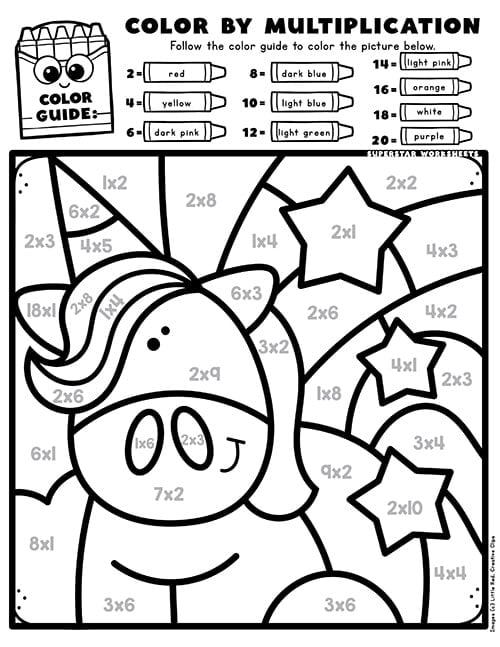
Color by Number Math Worksheets
Color by number worksheets are a classic and versatile option. They involve solving math problems, with each answer corresponding to a specific color. Students then use the designated color to fill in the corresponding sections of the picture.
Example: A worksheet features a picture of a cat. Each section of the cat is labeled with an addition problem (e.g., 3 + 2). The instructions state that if the answer is 5, the section should be colored orange.
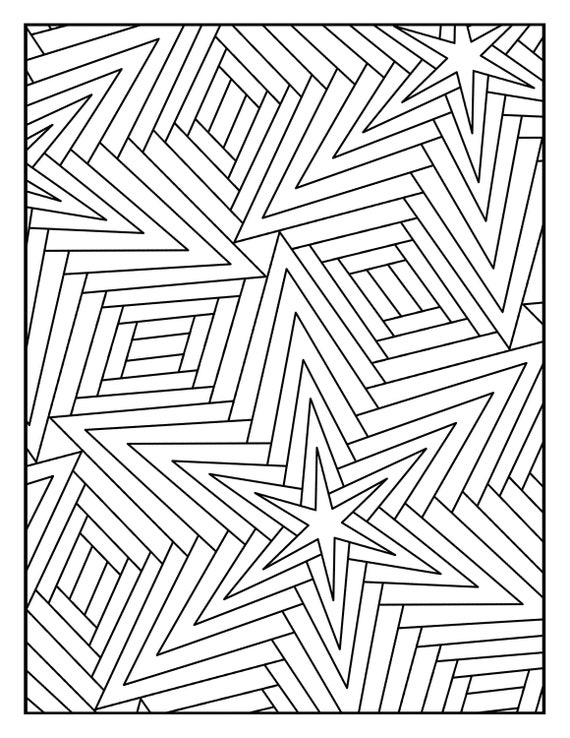
Geometric Coloring Pages
Geometry lends itself beautifully to coloring activities. Geometric coloring pages can help students visualize shapes, patterns, and spatial relationships.
Example: A worksheet features a tessellation pattern of hexagons. Students can choose different colors to create a visually appealing and mathematically interesting design.

Fraction Coloring
Fractions can be a challenging concept for many students. Fraction coloring activities provide a visual and hands-on way to understand and represent fractions.
Example: A worksheet features a rectangle divided into 8 equal sections. Students are asked to color 3/8 of the rectangle.
Mandala Math
Mandalas are intricate circular designs that are often used in meditation and art therapy. Integrating math into mandala coloring can create a calming and engaging learning experience.
Example: A mandala coloring page features a repeating pattern of triangles and squares. Students are asked to color the triangles red and the squares blue, while also identifying the number of triangles and squares in the design.
Coordinate Graphing Pictures
Coordinate graphing pictures involve plotting points on a coordinate plane and then connecting the points to create a picture. This activity reinforces understanding of coordinate systems and spatial reasoning.
Example: A worksheet provides a list of coordinate pairs (e.g., (2, 3), (4, 5), (6, 3)). Students plot these points on a coordinate plane and then connect the points in order to reveal a picture of a star.
Tips for Creating Engaging Math Coloring Activities
Creating effective and engaging math coloring activities requires careful planning and consideration of the target audience. Here are some tips to help you create activities that are both fun and educational:
Actionable Advice: When creating your own math coloring pages, start with a simple design and gradually increase the complexity. Test the activity with a small group of students to get feedback and make adjustments.
Resources for Finding Math Coloring Activities
Fortunately, you don’t have to create all of your math coloring activities from scratch. There are numerous online resources that offer a wide variety of free and paid worksheets and coloring pages. Here are some popular options:
Internal Link Suggestion: For more ideas on making math engaging, check out our article on “Creative Math Games for Kids“.
External Link Suggestion: Explore Khan Academy for comprehensive math lessons and resources.
Real-World Examples: Success Stories in Math Education
Many educators have successfully integrated math coloring activities into their classrooms, with remarkable results. Here are a few examples:
Case Study: A study published in the Journal of Educational Psychology found that students who participated in math coloring activities showed significant improvement in their math scores compared to students who did not participate in these activities. The study concluded that math coloring activities can be an effective way to enhance math learning and reduce math anxiety.
Overcoming Challenges: Addressing Common Concerns
While math coloring activities offer numerous benefits, there are also some challenges to consider. Here are some common concerns and how to address them:
Transition Sentence: Now that we’ve covered the benefits, types, and tips for creating math coloring activities, let’s look at how to adapt them for different age groups.
Adapting Math Coloring Activities for Different Age Groups
The beauty of math coloring is its adaptability. Here’s how to tailor activities to different age groups:
Key Insight: The key to adapting math coloring activities for different age groups is to choose activities that are challenging but not overwhelming, and that are relevant to the students’ current learning objectives.
The Future of Math Education: Embracing Creativity and Innovation
Math education is constantly evolving, with a growing emphasis on creativity, innovation, and student engagement. Math coloring activities represent a valuable tool for educators who are looking to create a more positive and engaging learning environment. By integrating art and math, we can help students develop a deeper understanding of mathematical concepts, reduce math anxiety, and foster a lifelong love of learning.
Call to Action: Start incorporating math coloring activities into your lessons today! Explore the resources mentioned in this article, experiment with different types of activities, and adapt them to meet the needs of your students. Let’s work together to make math fun for everyone! Sign up for our newsletter to receive more creative math teaching ideas!
Conclusion: Unlock the Power of Math Coloring
Math coloring activities are a powerful tool for making math fun, engaging, and accessible for learners of all ages. By combining the creative appeal of coloring with the rigor of mathematical concepts, we can unlock a whole new world of learning possibilities. From simple color by number worksheets to complex coordinate graphing pictures, the options are endless. So, grab your coloring pencils, unleash your creativity, and get ready to experience the joy of learning math through art! Embrace the power of math coloring and watch as your students’ enthusiasm for math soars.
Social Sharing Optimization: Share this article with your friends and colleagues on social media! Use the hashtags #MathColoring #MathFun #Education #STEM #CreativeLearning.

0 Comments