
Title: Building Early Literacy: Engaging CVC Word Activities for Young Readers
Meta Description: Discover effective CVC word activities and printable worksheets for kindergarten and homeschool. Build essential early literacy skills like blending sounds and decoding with these fun, practical strategies.
—
Building Early Literacy: Engaging CVC Word Activities for Young Readers
Early literacy is the foundation for lifelong reading success. For kindergarten teachers and homeschooling parents, targeted activities that develop phonemic awareness and decoding skills are essential. One of the most effective starting points is CVC words — consonant-vowel-consonant words like “cat,” “dog,” and “sun.” These simple, regular-spelled words help children practice blending sounds, segmenting words, and gaining confidence as emerging readers.
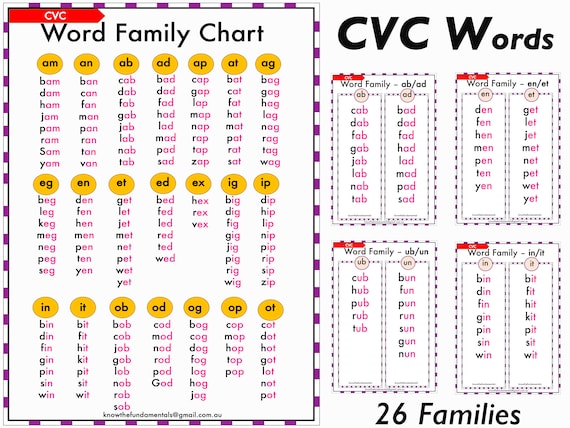
Why CVC Words Matter for Early Literacy
CVC words are crucial because they align with the alphabetic principle: letters represent sounds and sounds form words. When children practice CVC words they learn to:
- Identify individual phonemes (phonemic awareness)
- Blend sounds to form words
- Segment words into sounds for spelling and writing
- Build reading fluency and confidence
- Sound Identification: Isolating initial, medial, and final sounds
- Blending Practice: Combining individual sounds into a whole word
- Decoding: Applying letter-sound relationships to read new CVC words
- Encoding: Writing words by spelling the sounds heard
- Visual Discrimination: Matching pictures to words
- Model: Demonstrate blending three sounds into a CVC word (e.g., /c/ /a/ /t/ → cat).
- Guided Practice: Complete a worksheet together, pointing to each letter and sound.
- Independent Practice: Let students complete a worksheet or activity station independently.
- Apply: Use games or reading books with CVC word patterns to reinforce transfer.
- Providing picture supports and fewer choices for students who need more scaffolding
- Challenging advanced readers with word families, short-vowel pattern sorting, or adding consonant blends
- Using multisensory approaches (sandwriting letters, air-writing, tactile letter cards) for kinesthetic learners
- Incorporating frequent, short practice sessions for students with attention difficulties
- A timed (or untimed) CVC word reading list to monitor fluency gains
- One-on-one sound segmentation checks using Elkonin boxes
- Writing dictation: say a CVC word and have the student spell it aloud or in writing
- Warm-up (3 minutes): Phoneme isolation game (clap for each sound).
- Model (4 minutes): Teacher models blending three sounds into a CVC word.
- Guided Activity (6–8 minutes): Students complete a printable read-and-color CVC worksheet in pairs.
- Independent Practice (4–5 minutes): Students build a CVC word with magnetic letters and read it aloud.
- Featured Image Alt Text: A young child smiles while working on a CVC word worksheet at a table.
- In-Post Image Suggestions: “Magnetic letters forming CVC words on a whiteboard”, “Close-up of a child’s hand using tokens on Elkonin sound boxes”.
- Category/Tags: Early Literacy, Phonics Activities, Kindergarten, Homeschooling, Reading Worksheets, CVC Words.
- Schema Recommendation: Implement Article schema with relevant fields (headline, description, author, datePublished, keywords: printable cvc worksheets for kindergarten, early literacy, blending sounds, homeschool phonics, reading practice).
These skills are especially valuable in kindergarten and homeschool phonics programs where structured, systematic practice leads to measurable progress.
Key Skills Targeted by Printable CVC Worksheets for Kindergarten
Printable CVC worksheets for kindergarten can be powerful tools when they focus on specific skills. Look for or design worksheets that work on:
Engaging CVC Word Activities (for Classroom and Homeschool)
Make early reading practice fun and multisensory. Here are proven activities that pair perfectly with printable worksheets.
1. Sound Boxes (Elkonin Boxes)
Use three-box templates for children to push a token into as they say each sound in a CVC word. This visual and kinesthetic method supports segmenting and blending.
2. Magnetic Letter Blends
Provide magnetic letters and picture cards. After students identify the picture (e.g., “bat”), they build the CVC word on a magnetic board. This activity reinforces letter-sound association and spelling.
3. CVC Word Puzzles
Create puzzles where the picture connects to three letter-piece segments (b – a – t). Puzzles encourage problem solving and help struggling readers visually link sounds to letters.
4. Roll-a-Word Games
Students roll a die to select beginning, middle, and ending sounds (or choose from cards) to create CVC words. Turn it competitive with teams — perfect for centers and homeschool co-ops.
5. Read-and-Color Worksheets
Printable worksheets that ask children to read a CVC word and color the matching picture combine reading practice with a motivating art activity — great for differentiation and individual practice.
How to Use Printable CVC Worksheets Effectively
Worksheets are most effective when embedded in a routine that includes modeling, guided practice, and independent application. Follow this simple teaching cycle:
For homeschool phonics, adapt pacing to the child’s mastery level. Some students may need multiple days on one pattern; others will move quickly through several vowel families.
Differentiation Tips for Diverse Learners
Kindergarten classrooms and homeschools include a wide range of learners. Differentiate your CVC activities by:
Assessment and Progress Monitoring
Use quick, informal assessments to track growth. Examples include:
Record results weekly or biweekly to show progress and inform instruction, especially in homeschool settings where individualized pacing is easier to implement.
Resources and Best Practices
Choose printable CVC worksheets for kindergarten that are clear, visually appealing, and scaffolded. Pair worksheets with hands-on activities and books that reinforce short-vowel patterns. Use consistent language — for example, always say “sound” instead of “letter name” during blending practice — to avoid confusion.
For further guidance, consider exploring a phonics scope and sequence and our collection of literacy center ideas. For research-backed strategies, excellent external resources include the National Reading Panel’s findings on phonemic awareness and the practical classroom resources from Reading Rockets.
Quick Lesson Plan Example (15–20 minutes)
Conclusion
Building early literacy with targeted CVC word activities is a practical, effective way to help young readers become confident decoders. By combining printable CVC worksheets for kindergarten with multisensory games, systematic teaching routines, and ongoing assessment, teachers and homeschooling parents can accelerate reading progress and make learning enjoyable.
Ready to get started? Download our printable CVC worksheets for kindergarten today and boost reading skills! Use them in centers, small groups, or at home to strengthen blending sounds, phonics fluency, and reading confidence.
—
For Publication:


0 Comments