
Making Math Fun: A Parent’s Guide to Helping Early Learners at Home
Math can sometimes feel like a daunting subject, but it doesn’t have to be! As parents, you play a vital role in shaping your child’s attitude towards learning, especially in those crucial early years. By making math engaging and relevant to their daily lives, you can help your early learners build a strong foundation and develop a lifelong love for numbers. This guide provides practical tips, fun activities, and helpful resources to transform your home into a math-rich environment. Get ready to embark on a mathematical adventure with your child!
Why Early Math Skills Matter
Developing strong math skills early on is more than just learning to count. It lays the groundwork for critical thinking, problem-solving, and logical reasoning. These skills are essential not only for academic success but also for navigating everyday situations.
- Cognitive Development: Math helps children develop their cognitive abilities, such as memory, attention, and spatial reasoning.
- Problem-Solving: Early math experiences encourage children to think critically and find solutions to problems.
- Future Success: A solid foundation in math is linked to success in higher education and various career paths.
- Everyday Life: Math is everywhere! From measuring ingredients while baking to understanding time, math skills are essential for daily living.
- Counting: Count everything! Count steps while walking, toys during cleanup, or snacks before eating.
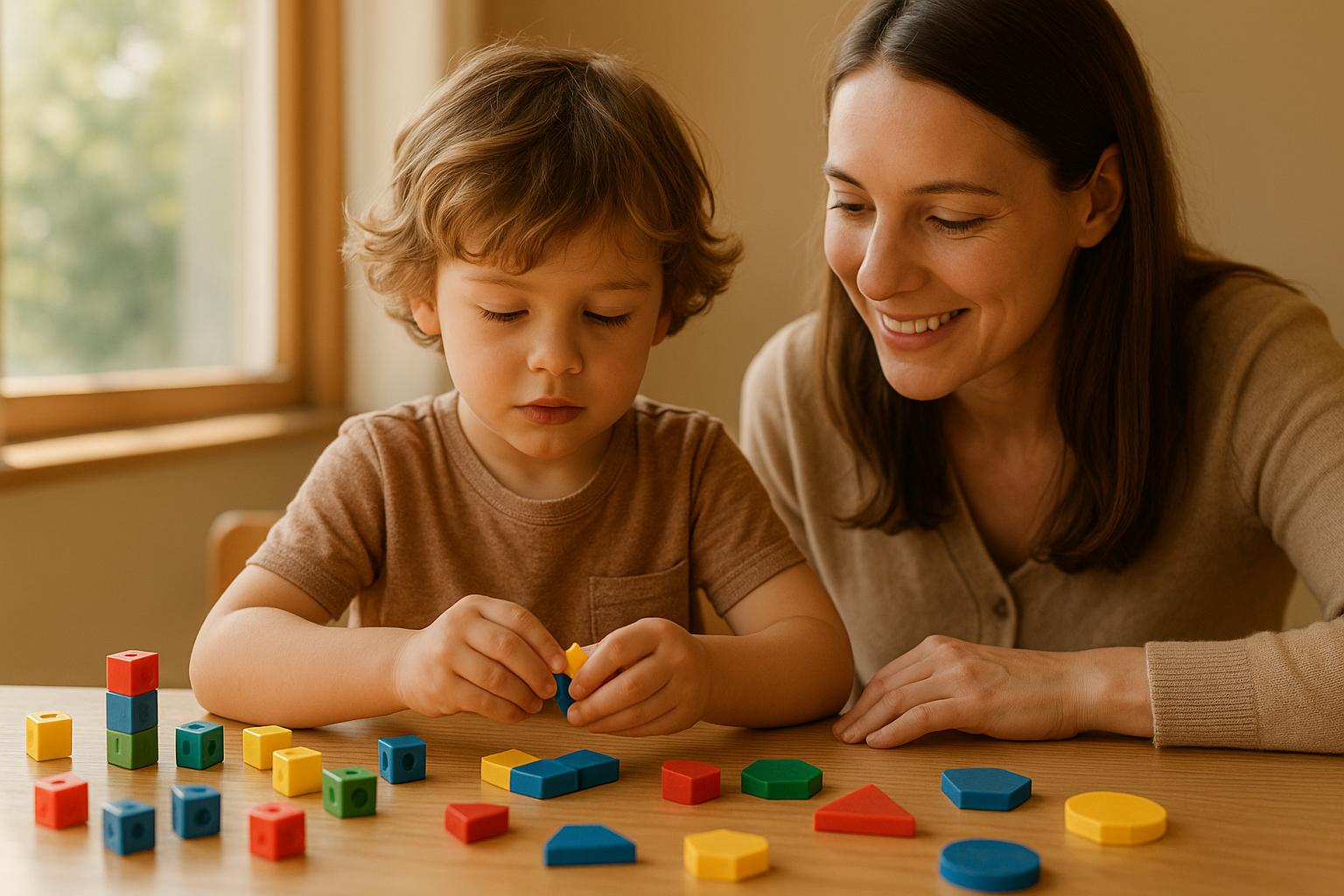
- Sorting: Sort toys by color, shape, or size. This helps develop categorization and logical thinking skills.
- Measuring: Involve your child in measuring ingredients while cooking or baking. Discuss units like cups, spoons, and ounces.
- Telling Time: Teach your child to read an analog clock. Start with telling time to the hour and then gradually introduce half-hours and quarter-hours.
- Money Matters: Use coins to teach basic addition and subtraction. Let your child help count change or calculate the cost of items at the store.
- Building Blocks: Building blocks are great for developing spatial reasoning and understanding shapes. Encourage your child to build towers, houses, or other structures.
- Puzzles: Puzzles help improve problem-solving skills and spatial awareness. Start with simple puzzles and gradually increase the difficulty.
- Board Games: Many board games, such as “Chutes and Ladders” or “Candy Land,” involve counting and number recognition.
- Card Games: Card games like “Go Fish” or “War” can help children learn about number recognition and comparison.
- Math Apps and Websites: There are many educational apps and websites that offer interactive math games and activities. (See resources below)
- Counting Bears: These colorful bears are perfect for counting, sorting, and pattern recognition.
- Number Flashcards: Use flashcards to help your child recognize and memorize numbers.
- Rulers and Measuring Tapes: These tools can be used to measure objects around the house and introduce the concept of length.
- Shape Sorters: Shape sorters help children learn about different shapes and develop fine motor skills.
- Math Workbooks: Choose age-appropriate workbooks that offer a variety of math activities and exercises.
- Counting: Practice counting forward and backward. Start with small numbers and gradually increase the range.
- Number Recognition: Help your child recognize and name numbers in different contexts.
- One-to-One Correspondence: Teach your child to match each object with one number.
- Subitizing: Subitizing is the ability to instantly recognize the number of objects in a small group without counting. Practice with dice or dot cards.
- Using Manipulatives: Use objects like blocks, counters, or fingers to demonstrate addition and subtraction.
- Number Lines: Use a number line to visualize addition and subtraction.
- Word Problems: Create simple word problems that relate to your child’s everyday experiences.
- Shape Recognition: Teach your child to identify and name basic shapes like circles, squares, triangles, and rectangles.
- Spatial Vocabulary: Use words like “above,” “below,” “inside,” and “outside” to describe the position of objects.
- Building with Shapes: Use building blocks or pattern blocks to create different shapes and structures.
- Non-Standard Measurement: Start by using non-standard units like blocks or toys to measure objects.
- Standard Measurement: Introduce standard units like inches, feet, and centimeters.
- Comparing Sizes: Ask your child to compare the sizes of different objects using words like “bigger,” “smaller,” “longer,” and “shorter.”
- Positive Reinforcement: Praise your child’s efforts and progress, even if they make mistakes.
- Focus on Understanding: Emphasize understanding concepts rather than memorizing formulas.
- Make it Fun: Use games, activities, and real-life examples to make math more engaging.
- Share Your Own Experiences: Talk about your own experiences with math, both positive and negative, to show your child that it’s okay to struggle.
- Visual Learners: Use pictures, diagrams, and videos to illustrate math concepts.
- Auditory Learners: Use songs, rhymes, and verbal explanations to teach math.
- Kinesthetic Learners: Use hands-on activities, manipulatives, and movement to engage kinesthetic learners.
- Start Simple: Begin with basic concepts and gradually introduce more complex ideas.
- Follow Your Child’s Lead: Pay attention to your child’s interests and abilities and tailor your lessons accordingly.
- Don’t Compare: Avoid comparing your child’s progress to that of other children. Every child learns at their own pace.
- ABCya!: Offers a variety of fun and engaging math games for different age groups. https://www.abcya.com/
- PBS Kids: Features math games and videos based on popular children’s shows. https://pbskids.org/
- Moose Math: An engaging app that teaches early math concepts through interactive games.
- Todo Math: A comprehensive math app that covers a wide range of topics for preschoolers and elementary school students.
- Positive Feedback: Provide specific and genuine praise for their efforts and accomplishments.
- Rewards: Offer small rewards for achieving milestones, such as stickers, extra playtime, or a special treat.
- Family Math Nights: Organize family math nights where you play math games and activities together.
- Showcase Their Work: Display your child’s math projects and artwork to celebrate their creativity and progress.
Key Takeaway: Nurturing early math skills sets the stage for a child’s overall development and future success.
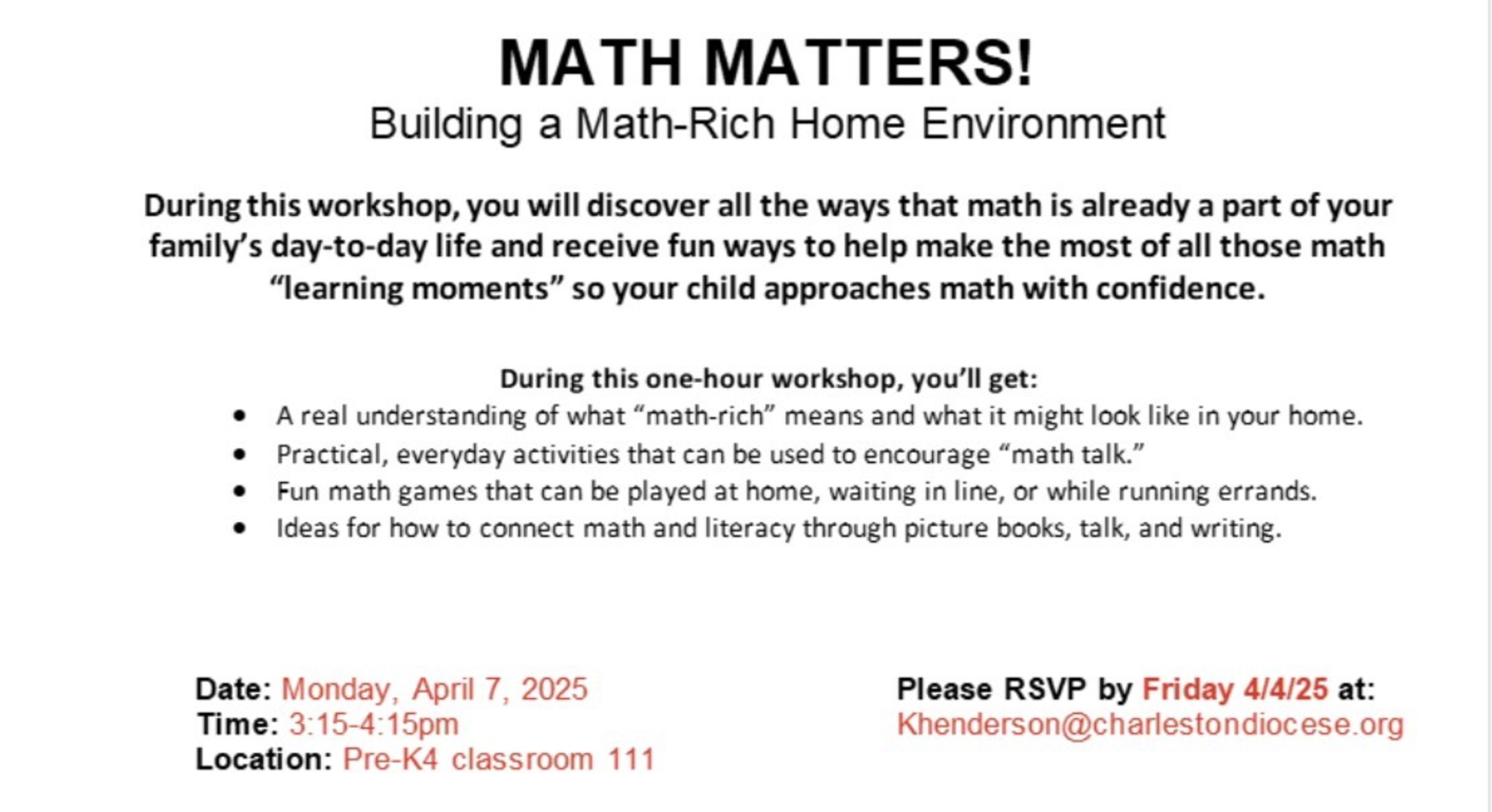
Creating a Math-Rich Home Environment
You don’t need to be a math expert to create a stimulating environment for your child. Simple changes to your daily routines and incorporating math into playtime can make a big difference.

Turning Everyday Activities into Math Lessons
The beauty of early math is that it can be seamlessly integrated into your daily activities. Here are some ideas:
Example: While setting the table, ask your child to count the number of plates, forks, and spoons needed for each family member.

Engaging in Math-Focused Playtime
Playtime is a perfect opportunity to introduce math concepts in a fun and relaxed way.
Pro Tip: Keep playtime fun and avoid making it feel like a chore. Focus on exploration and discovery rather than strict rules and right answers.

Stocking Up on Math-Friendly Resources
Having the right resources at home can make learning math more accessible and enjoyable.
Internal Link Suggestion: For more ideas on educational toys, check out our article on “Best Educational Toys for Preschoolers”.
Mastering Key Early Math Concepts
Early math education typically focuses on several key concepts. Understanding these concepts will help you guide your child’s learning journey.
Number Sense
Number sense is the foundation of all math skills. It involves understanding the meaning of numbers, their relationships, and how they are used.
Activity Idea: Play a “number hunt” around the house. Ask your child to find objects that have a specific number on them, such as a house number or a page number in a book.
Addition and Subtraction
Introducing addition and subtraction early on can help children develop a strong understanding of these fundamental operations.
Example: “You have 3 apples, and I give you 2 more. How many apples do you have in total?”
Geometry and Spatial Reasoning
Geometry is more than just memorizing shapes. It involves understanding spatial relationships, patterns, and properties of objects.
Activity Idea: Go on a shape scavenger hunt. Ask your child to find objects around the house that are shaped like circles, squares, triangles, etc.
Measurement
Understanding measurement involves comparing and quantifying different attributes like length, weight, and volume.
Example: Use a measuring tape to measure the height of your child and compare it to the height of other family members.
Key Takeaway: Focus on making these concepts concrete and relatable to your child’s experiences.
Addressing Common Challenges
While teaching math at home can be rewarding, it can also come with its challenges. Here are some common issues and how to address them.
Math Anxiety
Some children may develop math anxiety due to negative experiences or perceptions about the subject. It’s crucial to create a positive and supportive environment to help them overcome this fear.
Quote: “The only way to learn mathematics is to do mathematics.” – Paul Halmos. Encourage active participation and hands-on learning.
Different Learning Styles
Children learn in different ways. Some are visual learners, while others are auditory or kinesthetic learners. It’s important to identify your child’s learning style and adapt your teaching methods accordingly.
Pro Tip: Observe your child’s reactions to different teaching methods and adjust your approach based on what works best for them.
Keeping it Age-Appropriate
It’s important to introduce math concepts at an age-appropriate level. Pushing your child too hard or too fast can lead to frustration and discouragement.
Internal Link Suggestion: For age-appropriate activities, read our article on “Developmental Milestones in Early Childhood”.
Utilizing Online Resources and Tools
The internet is a treasure trove of math resources for early learners. Here are some popular websites and apps:
Websites
* Khan Academy Kids: A free educational app with a wide range of math activities for preschoolers and kindergartners. https://www.khanacademy.org/
Apps
* Math Games for Kids: A collection of math games and activities designed to make learning fun.
External Link Suggestion: Check out the National Council of Teachers of Mathematics (NCTM) website for resources and professional development opportunities for math educators: https://www.nctm.org/
Celebrating Success and Encouraging Continued Learning
Celebrating your child’s achievements, no matter how small, is essential for building their confidence and motivation.
Actionable Advice: Create a “math corner” in your home where you display math-related books, games, and activities.
Conclusion:
Helping your early learner with math at home is an incredible opportunity to foster a love for learning and build essential skills. By creating a math-rich environment, mastering key concepts, addressing common challenges, and utilizing online resources, you can empower your child to succeed in math and beyond. Remember to keep it fun, engaging, and tailored to your child’s individual needs and learning style. Embrace the journey and celebrate every milestone along the way. Your support and encouragement will make all the difference in shaping your child’s mathematical future. So, get ready to make math an exciting adventure for your little one!


0 Comments