
Beyond the Words: Fostering Reading Comprehension in Kindergarten
Reading in kindergarten is about far more than recognizing letters and sounding out words. It’s the moment young children begin to make meaning from text, ask questions about stories, and connect what they read to the world around them. For homeschooling parents and teachers, intentionally teaching comprehension skills at this early stage builds the foundation for confident, curious readers. This article offers practical, research-informed strategies, playful activities, and assessment tips to help kindergarten learners move beyond decoding to true understanding—while keeping learning joyful and developmentally appropriate.
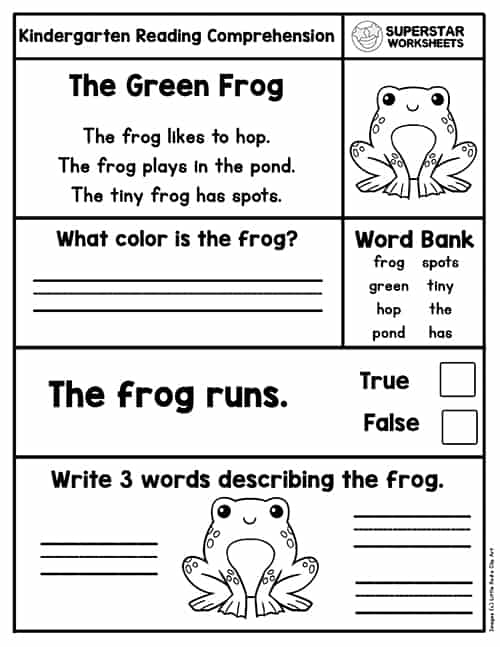
Why Comprehension Matters in Kindergarten
Kindergarten is a critical window for developing language-rich foundations. While phonemic awareness and letter recognition are essential, comprehension skills determine whether a child becomes a fluent, engaged reader. Early comprehension abilities support vocabulary growth, listening skills, critical thinking, and later academic success. Fostering comprehension early helps children:
- Make meaning from text rather than just decoding
- Build vocabulary through context and conversation
- Develop oral language and narrative skills
- Learn to ask and answer questions about stories
- Connect reading to personal experiences and knowledge
- Listening Comprehension: Understanding stories read aloud
- Story Structure Awareness: Knowing beginning, middle, and end; recognizing characters, setting, and major events
- Vocabulary Acquisition: Learning and using new words
- Making Predictions: Anticipating what happens next
- Retelling and Sequencing: Recounting events in order
- Making Connections: Relating stories to personal experience (text-to-self), other texts (text-to-text), and the world (text-to-world)
- Asking and Answering Questions: Using who/what/where/when/why/how to deepen understanding
- Literal: “Who is the main character?”
- Inferential: “Why do you think she did that?”
- Evaluative: “What would you have done?”
- Puppet Theatre: Children act out the story with puppets to retell and explore motives.
- Story Stones: Paint stones with characters, settings, and objects; children sequence stones to retell.
- Reader’s Theater: Short, repetitive scripts give practice with expression and comprehension.
- Interactive Anchor Charts: Visual charts for vocabulary, story elements, and question stems that grow with the child.
- Choice Boards: Offer activities (draw the ending, act it out, write a sentence) to let children show comprehension in preferred ways.
- For Early Communicators: Use single-image retells, gestures, and yes/no or choice questions.
- For English Learners: Pre-teach vocabulary, use visuals, and allow responses in home language plus English.
- For Advanced Learners: Ask deeper inferential questions, introduce longer texts, and encourage creative extensions (write an alternate ending).
- For Children with Attention Differences: Short, engaging activities, sensory supports, and clear routines help maintain focus.
- “Brown Bear, Brown Bear, What Do You See?” by Bill Martin Jr. & Eric Carle — patterns and predictable text ideal for participation and retell
- “Where the Wild Things Are” by Maurice Sendak — character feelings and imaginative sequences
- “The Very Hungry Caterpillar” by Eric Carle — sequencing and counting integration
- “Llama Llama Red Pajama” by Anna Dewdney — emotional vocabulary and cause/effect
- “A Chair for My Mother” by Vera B. Williams — problem/solution and community themes
- Reading Rockets (readingrockets.org) — research-based strategies and book lists
- Colorín Colorado (colorincolorado.org) — bilingual resources for English learners
- Interactive story apps that emphasize narrative comprehension (choose apps that are low on flashy distractions)
- During Snack: Read a short poem or discuss sequence steps for a simple recipe
- During Play: Narrate children’s actions and encourage storytelling
- During Transitions: Ask prediction or recall questions about the book you read earlier
- Keep sessions short and interactive—kindergarten attention spans benefit from brief, high-quality interactions.
- Follow the child’s interests—books about dinosaurs, family, or animals will spark natural engagement.
- Celebrate small wins; use praise specific to comprehension (“I noticed you used three story events in your retell!”).
- Rotate materials and incorporate props to keep routines fresh.
Key Comprehension Skills for Kindergarteners
Kindergarten comprehension focuses on oral and emergent literacy skills that prepare students to understand written text. Essential skills include:
Practical Strategies to Teach Comprehension
These strategies are classroom-tested and easily adapted for homeschool settings. Use them during read-alouds, shared reading, small groups, or one-on-one time.
1. Purposeful Read-Alouds
Read aloud daily with intention. Choose engaging, age-appropriate books and announce a simple purpose before you begin (e.g., “Listen for how the character feels,” or “See if you can guess what will happen next”). Pause to model thinking aloud and invite children to share predictions or reactions.
2. Ask High-Quality Questions
Balance literal, inferential, and evaluative questions. Use open-ended prompts to encourage richer responses:
Wait time is crucial—give children several seconds to think and answer.
3. Teach Story Structure with Simple Diagrams
Visual supports help children internalize narrative structure. Use a three-part chart (Beginning, Middle, End) or story map with icons for characters, setting, problem, and solution. Make it interactive: after reading, have children place picture cards or draw to show each part.
4. Build Vocabulary Through Context and Play
Introduce 3–5 new words per session. Use gestures, pictures, and physical objects. Encourage children to use new words in sentences and role-play situations that feature the vocabulary. Revisit words across days and contexts to reinforce retention.
5. Model Retelling and Summarizing
After reading, model a brief retell using clear sequence words (first, next, last). Then invite children to retell using props, puppets, or picture cards. For emerging speakers, offer a sentence starter: “First, the character…”
6. Encourage Prediction and Visualization
Before and during reading, prompt children to predict outcomes and picture scenes in their minds. Use guiding prompts like, “What do you think will happen next?” or “Close your eyes—what does the house look like?” Follow up by comparing predictions to the actual story.
7. Make Connections Explicit
Help children connect stories to their lives and other books. Use phrases like, “This reminds me of…” or “Have you seen something like this?” These connections deepen comprehension and foster transfer of learning.
8. Use Repeated Readings
Reading the same book multiple times supports deeper comprehension. Each read can focus on a different skill—first for enjoyment, second for vocabulary, third for character feelings or plot details.
Hands-On Activities to Reinforce Comprehension
Kinesthetic and creative activities help young learners demonstrate understanding in varied ways.
Assessment: Informal, Frequent, and Useful
Assessment in kindergarten should be low-stress and formative, guiding instruction rather than judging ability.
Observation Checklists
Use brief checklists during read-alouds and activities to note abilities like retelling, answering questions, using vocabulary, and making connections.
Running Records and Anecdotal Notes
Capture children’s oral retells and responses in short notes. These give insight into comprehension strategies and language growth.
Quick Performance Tasks
Short tasks—like sequencing picture cards or answering three key questions after a story—provide quick snapshots of understanding and are easy to repeat over time.
Differentiation Tips for Diverse Learners
Kindergarten classrooms and homeschool groups often include a wide range of abilities. Differentiate thoughtfully:
Recommended Books and Resources for Kindergarten Comprehension
Choose books with strong narrative structure, rich illustrations, and age-appropriate themes. A few dependable options:
Online and teacher resources:
Integrating Comprehension Across the Day
Comprehension instruction doesn’t need to be confined to story time. Embed it across routines:
These brief, repeated opportunities reinforce habits of thinking about text and language throughout the day.
Practical Schedule: A Weekly Plan for Busy Homeschoolers and Teachers
A simple, repeatable weekly routine ensures balanced instruction without burnout.
| Day | Focus | Activity (15–25 minutes) |
|---|---|---|
| Monday | Listen & Predict | Read-aloud with prediction prompts and illustrations |
| Tuesday | Vocabulary & Visuals | Introduce 3 words; act them out and draw |
| Wednesday | Retell & Sequence | Story stones or picture card sequencing |
| Thursday | Connections & Discussion | Text-to-self connections and shared conversation |
| Friday | Wrap-up & Assessment | Quick retell, 3-question check, choice board activity |
Tips for Maintaining Engagement and Motivation
Measuring Progress and Next Steps
Track growth through periodic informal assessments and portfolios of children’s retells, drawings, and responses. Look for gains in vocabulary use, length and coherence of retells, and ability to answer inferential questions. As skills solidify, gradually introduce more complex texts, longer listening tasks, and written responses to transition toward first-grade expectations.
FAQ (Quick Answers for Busy Parents and Teachers)
Q: How long should a comprehension-focused read-aloud be for kindergarteners?
A: Aim for 10–20 minutes depending on the child’s attention span; multiple short sessions across the day work well.
Q: How often should I assess comprehension?
A: Informally every week (quick checks) and more structured portfolio reviews every 4–6 weeks.
Q: Can emergent readers benefit from comprehension instruction even if they can’t read independently?
A: Absolutely—listening comprehension, vocabulary, and story structure are strong predictors of later reading success.
Conclusion: Making Meaning Is the Goal
Fostering reading comprehension in kindergarten is about nurturing thinking, language, and curiosity—not rushing children through levels. With intentional read-alouds, targeted questions, playful activities, and regular low-stress assessment, homeschooling parents and teachers can help young learners move beyond decoding to deep, joyful understanding. Start small, follow the child’s interests, and celebrate the meaningful moments when a child connects a story to their world. Those moments are the true markers of reading success.
Call to Action: Subscribe to our newsletter for weekly kindergarten reading activities, printable story maps, and book picks tailored to young learners.


0 Comments