
Beyond the Words: Fostering Reading Comprehension in Young Readers (Kindergarten)
Introduction
Reading is more than decoding letters and sounding out words — it’s making meaning. For kindergarten children, the leap from recognizing words to understanding stories shapes their long-term academic success, curiosity, and confidence as learners. This article provides homeschooling parents and teachers with friendly, research-informed, and practical strategies to nurture deep comprehension in young readers. You’ll learn how to build foundational skills, design intentional read-alouds, encourage active conversation, use play and writing to deepen understanding, assess progress without pressure, and create a home or classroom environment where children love to think about stories. Expect concrete routines, activity ideas, and quick tips you can start using today to help kindergartners go beyond the words on the page and become thoughtful, engaged readers.
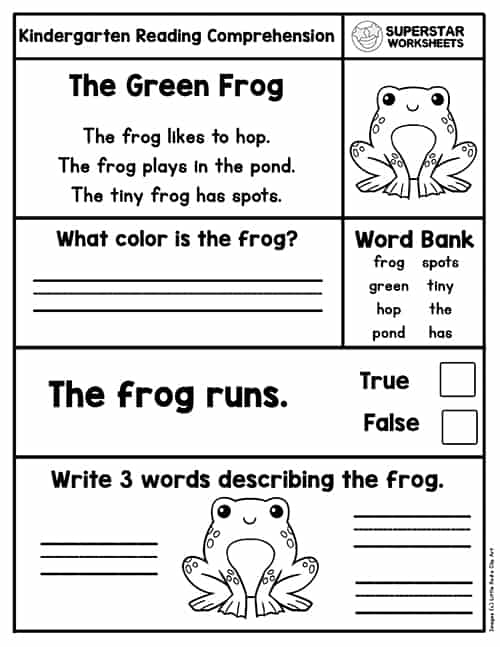
Why Comprehension Matters in Kindergarten
Kindergarten is a critical window when children form literacy habits. Early comprehension supports vocabulary growth, critical thinking, memory, and later reading fluency. When children understand what they read, they are more motivated to read, they retain vocabulary more effectively, and they transfer strategies across texts and subjects. Focusing on comprehension at this stage prevents the “decoding-only” trap and builds the cognitive foundation for lifelong learning.
Key Components of Reading Comprehension for Kindergarteners
* Background knowledge: Familiarity with topics and everyday experiences helps kids connect text to meaning.
- Vocabulary: Knowing word meanings supports understanding of sentences and story events.
- Oral language skills: Conversation, storytelling, and expressive language all feed comprehension.
- Narrative skills: Recognizing characters, settings, problems, and solutions helps children follow stories.
- Inferencing and prediction: Making “smart guesses” based on clues improves engagement and critical thinking.
- Monitoring and self-questioning: Simple strategies to notice confusion and seek clarification.
- Before reading: Introduce the book with a short picture walk. Ask open prompts: “What do you think this story might be about?” or “What do you notice on this cover?”
- During reading: Use think-alouds to model comprehension. Say things like, “I wonder why the rabbit looks worried…” Pause to ask one or two prediction or connection questions.
- After reading: Ask children to retell the story in their own words, using gestures or picture sequence cards. Pose targeted questions: “What was the problem? How did the character solve it?”
- Choose a mix of predictable, cumulative, and rich narrative texts.
- Include non-fiction picture books to build background knowledge.
- Repeat favorites—repeated readings deepen comprehension and vocabulary.
- Prediction: “What do you think will happen next?”
- Connection: “Does this remind you of something you’ve done?”
- Visualization: “Close your eyes and picture the scene. What do you see?”
- Feelings: “How do you think the character feels? Why?”
- Pre-teach 3–5 target words before a read-aloud using quick demonstrations, gestures, or real objects.
- Use a “Word of the Day” board with visuals and simple definitions.
- Encourage children to use new words in sentences or during play.
- Use synonyms and antonyms in context, keeping definitions concrete and picture-supported.
- Word sorting with picture cards (e.g., action words vs. feeling words).
- “Find the word” game in shared reading where children point to pictures that match the new vocabulary.
- Story maps: Use three to five boxes for Beginning (Who/Where), Middle (Problem), End (Solution).
- Sequence cards: Have picture cards of story events and ask children to arrange them in order.
- Character anchor charts: List traits, feelings, and actions for favorite characters.
- After reading, give each child three picture cards and ask them to place them on a large chart labeled “Beginning, Middle, End.”
- Turn-and-talk: After a question, give pairs 30 seconds to discuss before sharing.
- Story retell partners: One child retells while the partner listens and adds a detail.
- Guided discussion with sentence stems: “I think… because…” or “I noticed…”.
- “Why do you think…?”
- “How do you know that?”
- “What else could happen?”
- Story dramatization: Use props and costumes to act out stories; rotate roles so children experience different perspectives.
- Small-world play: Create a sensory tray or miniature scene related to a book—children retell the story using figures.
- Art response: Have children draw their favorite part and describe why they chose it.
- Story journals: After reading, children draw a sequence and an adult writes a caption dictated by the child.
- Labeling characters and settings with single words or phrases.
- Fill-in-the-blank story starters: “My favorite part was because .”
- Model inference: “The boy’s shoes are wet. I infer he played in puddles.”
- Use picture clues: Ask, “What does this picture tell us that the words do not?”
- Provide sentence frames: “I think… because I saw…”
- Choose a theme (e.g., farms, weather, families) and plan 3–5 books, related nonfiction, songs, and activities.
- Create a concept wall with photos, labeled vocabulary, and key facts.
- Use experiential learning—field trips, gardening, or cooking—to solidify understanding.
- Running records for observational notes on retelling and comprehension behaviors.
- Checklists for story elements, vocabulary usage, and ability to predict/infer.
- Recordings of retells (audio or video) to track growth over time.
- Accessible book baskets sorted by theme or interest.
- Labeled areas and morning message routines that model vocabulary.
- Reading nooks with comfy seating and varied genres.
- Tuesday: Read second book; sequence activity and drama play.
- Wednesday: Nonfiction read and hands-on experience; vocabulary reinforcement.
- Thursday: Word work and writing response; partner discussions.
- Friday: Culminating activity (project, presentation, or concept wall update) and assessment check.
- Mystery Bag: Put an item related to a story inside a bag; children feel it and make inferences.
- Two-Voice Reading: Act out dialogue using two voices to build fluency and comprehension of character interactions.
- For English learners: Use visuals, gestures, and simplified language; pre-teach cognates where possible.
- For children with language delays: Use shorter texts, more modeling, and one-on-one scaffolding.
- For advanced learners: Offer higher-order thinking prompts, open-ended projects, and opportunities to compare texts.
- Retell accuracy (3-point scale: basic, detailed, enriched).
- Vocabulary use (number of new words used correctly in context).
- Engagement indicators (participation in discussions, voluntary reading).
- Progress books where children collect drawings and dictated captions.
- Storytime awards (e.g., “Great Predictor” or “Super Storyteller”).
- Nonfiction pairings: Simple informational texts that match themes (e.g., about farms, weather, animals).
- Reading Rockets — research-based strategies and book lists.
- The National Association for the Education of Young Children (NAEYC) — developmentally appropriate practice guidance.
- Local library storytime programs and educator resource kits.
- Use story maps or sequence cards after every book.
- Encourage partner talk and dramatization once a week.
- Add one nonfiction book to every 3–4 fiction reads.
- Keep a running record of retells monthly.
Practical Strategies to Foster Comprehension
1. Make Read-Alouds Interactive
Read-alouds are the single most powerful tool for building comprehension at this age.
How to structure an interactive read-aloud:
Book selection tips:
Sample prompts for kindergarten read-alouds:
2. Build Vocabulary Intentionally
Kindergarteners learn many words through stories when adults intentionally highlight them.
Practical approaches:
Mini activities:
3. Teach Story Structure with Simple Tools
Explicit instruction in story elements gives children a framework for comprehension.
Tools and routines:
Classroom activity:
4. Encourage Active Conversation and Peer Talk
Talk is the vehicle for thinking. Structured conversation boosts comprehension and language development.
Strategies:
Prompts for promoting deeper talk:
5. Use Play, Dramatic Retelling, and Hands-On Activities
Play makes abstract story elements concrete and memorable for young learners.
Ideas:
6. Integrate Writing to Strengthen Thinking
Even emergent writers can show comprehension through drawing, labeling, and simple sentences.
Low-pressure writing activities:
7. Scaffold Inferencing and “Thinking Beyond the Text”
Teach children to use clues in the text and illustrations to infer meaning.
Scaffolded steps:
8. Build Background Knowledge Through Thematic Units
Connecting books around a theme deepens comprehension by reinforcing vocabulary and concepts.
How to implement:
9. Low-Stress, Ongoing Assessment
Assessment should inform instruction and be child-friendly.
Informal assessment ideas:
10. Create a Print-Rich, Motivating Environment
Children absorb comprehension skills through immersion in language-rich settings.
Environment tips:
Sample Weekly Plan for Kindergarten Comprehension (Quick Template)
* Monday: Introduce theme and pre-teach vocabulary; read first book; retell.
Specific Activities and Examples
* Prediction Jar: Children write or draw a prediction and place it in a jar; reveal outcomes during reading.
Supporting Diverse Learners
Differentiation ensures all children access comprehension instruction.
Strategies:
Measuring Progress and Celebrating Success
Simple metrics:
Celebrate growth with:
Resources and Book Recommendations
High-quality picture books that support comprehension:
“The Very Hungry Caterpillar” by Eric Carle* — sequencing and lifecycle concepts.
“We’re Going on a Bear Hunt” by Michael Rosen* — repetitive text and visualization.
“Last Stop on Market Street” by Matt de la Peña* — inference and perspective-taking.
Suggested external resources (for teacher/homeschool planning):
Quick Checklist for Busy Parents and Teachers
* Start each read-aloud with a picture walk and 1–2 pre-taught words.
Conclusion
Fostering reading comprehension in kindergarten is an investment that pays off academically and emotionally. With playful, intentional routines—interactive read-alouds, targeted vocabulary work, story structure instruction, and opportunities for talk, play, and writing—parents and teachers can help young readers move beyond decoding to true understanding. Start small: pick one technique, try it for a week, and watch how children begin to think with stories. The joy of seeing a child make connections, ask questions, and retell a story with pride is one of the best rewards of early education.
—
FAQ (Quick Answers for Busy Adults)
Q: How long should a read-aloud last for kindergarteners?
A: 10–20 minutes depending on attention spans; use repeated readings for longer engagement.
Q: How often should I do comprehension-focused activities?
A: Aim for daily read-alouds and 3–5 targeted comprehension activities per week.
Q: What if a child struggles to retell?
A: Provide more modeling, use picture supports, and scaffold with sentence stems and repeated readings.
—
Author note: This article was written for homeschooling parents and kindergarten teachers seeking practical, research-aligned ways to deepen early reading comprehension. Implement these strategies consistently, and adapt them to your children’s interests and needs for the best results.


0 Comments