
Hands-On STEM Fun: Interactive Coloring Pages for Young Scientists at Home
Engage curious minds with interactive coloring pages that combine art and inquiry to teach STEM concepts at home. This guide shows parents, caregivers, and educators how to use printable activities, experiments, and extension projects to turn simple coloring into meaningful, hands-on science, technology, engineering, and math experiences for children aged roughly 3–10. You’ll get ready-to-use ideas, printable templates and design tips, recommended materials, step-by-step activities, assessment suggestions, and ways to scale projects by age and skill level.
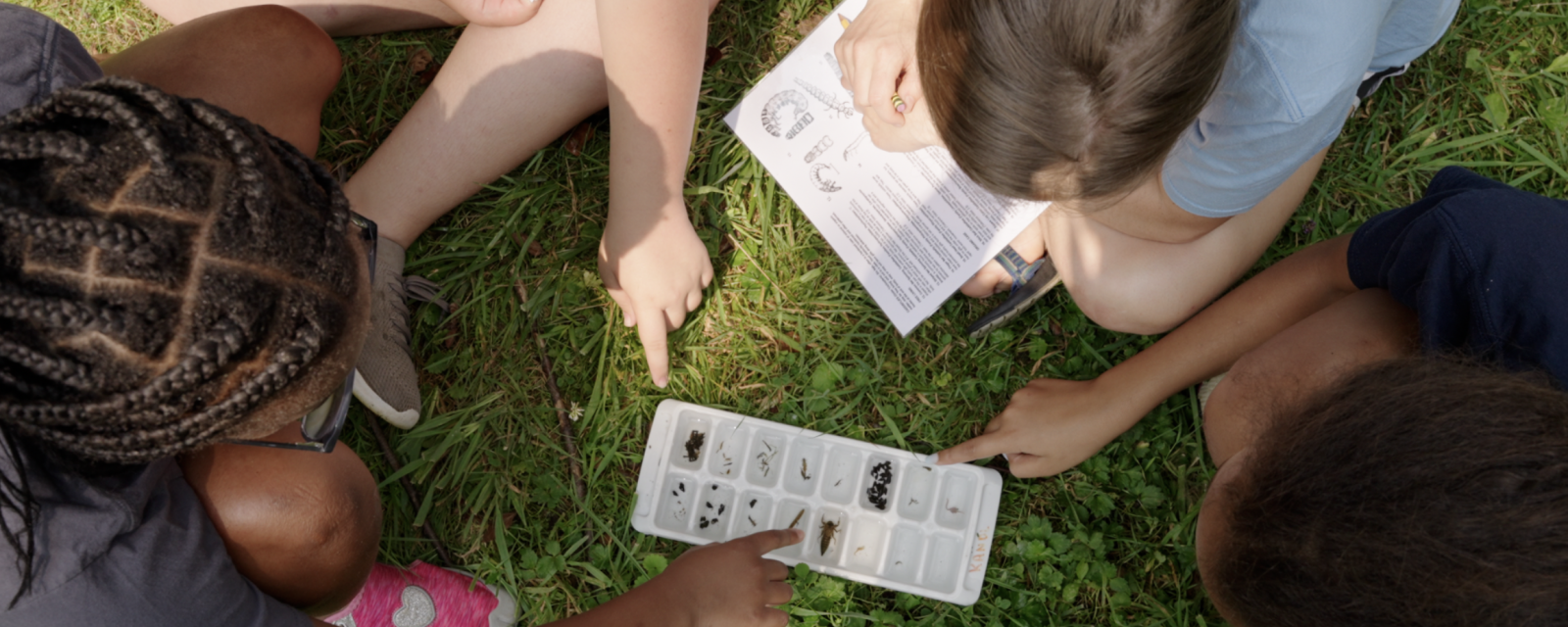
Introduction: Why Interactive Coloring Pages Work for STEM Learning
Coloring is one of the most accessible creative activities for young children. When combined with interactive features—like cutouts, matching tasks, QR codes linking to short videos, and embedded experiments—coloring pages become powerful, low-barrier tools for STEM learning. These activities appeal to multiple learning styles: visual (coloring), kinesthetic (cutting, assembling), and logical (problem-solving tasks). They also lower the intimidation factor of science by packaging concepts in a playful, familiar format.
In this article you’ll learn how to design and use interactive coloring pages to teach core STEM ideas at home, how to choose materials, and how to extend simple coloring tasks into full lessons and experiments. You’ll find age-differentiated activity plans, reproducible templates, assessment tips, suggestions for integrating technology, and recommendations for further reading and trusted external resources.

Benefits of Interactive Coloring Pages for Young Scientists
- Accessible learning: Low-cost, printable, and easy to use with minimal setup.
- Multisensory engagement: Combines drawing, cutting, assembling, and experimenting to reinforce memory and understanding.
- Developmental skills: Builds fine motor skills, pattern recognition, sequencing, and early measurement.
- Cross-curricular connections: Integrates art, literacy, math, and science for holistic learning.
- Family-friendly: Encourages parent-child interaction and collaborative problem solving.
- Life Science: Plant parts, animal anatomy, life cycles, habitats, food chains.
- Physical Science: States of matter, basic forces (push/pull), light and shadow, magnetism.
- Earth & Space Science: Weather patterns, rock/mineral types, the water cycle, phases of the moon.
- Engineering & Design: Simple machines, bridge-building templates, design challenges, coding maps.
- Mathematics: Counting, symmetry, measurement, graphing, shapes and spatial reasoning.
- Technology & Computer Science: Sequencing activities, binary coloring patterns, pixel art that teaches grids.
- Define the learning objective: Pick one clear STEM concept (e.g., plant life cycle, magnet attraction, counting to 20).
- Choose the interaction type: Decide whether the page will include cut-and-paste pieces, foldable elements, matching tasks, mazes, QR-code extensions, or experiment prompts.
- Design for the target age: Use simpler graphics and larger coloring areas for preschoolers; add labels, data tables, and problem prompts for older children.
- Include step-by-step instructions: Add clear, numbered directions for hands-on parts and experiments. Use icons to indicate required materials and safety notes.
- Create extension activities: Provide 2–3 optional challenges (e.g., “What happens if…?”) to deepen inquiry and differentiation.
- Test and iterate: Try the page with kids, observe confusion points, and refine wording or layout accordingly.
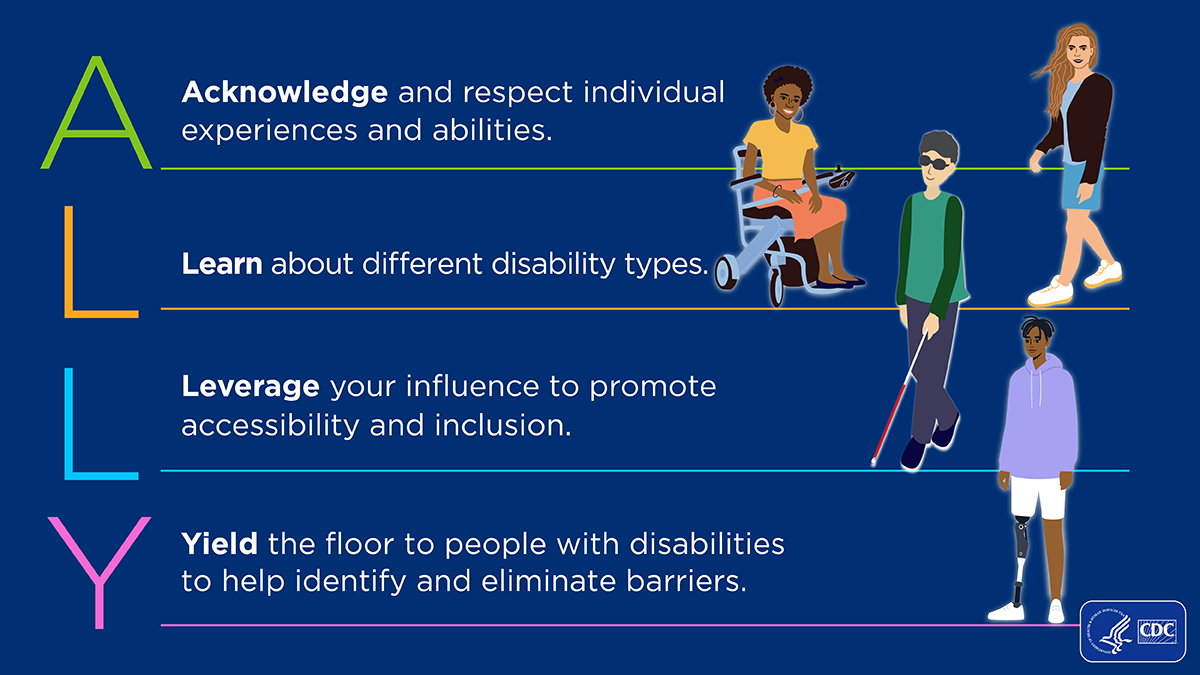
- Use high-contrast lines for children with low vision and provide large-print versions.
- Offer both digital (colorable PDFs/tablet-friendly) and printable versions.
- Include culturally diverse imagery and names in scenarios and characters.
- Offer varied difficulty levels within the same sheet using “Beginner,” “Challenger,” and “Expert” labels.
- Printable life cycle wheel template
- Crayons/markers
- Scissors
- Brass fastener (paper brad)
- Color each stage of the butterfly: egg, caterpillar (larva), chrysalis (pupa), and adult butterfly.
- Cut out the two circle pieces (the wheel and window) along the outer lines.
- Place the window over the wheel and secure with a brass fastener so the pictures rotate into view.
- Use the wheel to retell the life cycle in your own words; practice sequencing by pointing to each stage.
- Have the child create sound effects or movements for each stage and record a short narration (technology integration).
- Ask: “What does the caterpillar eat?” and chart favorite host plants; research local species.
- Printable maze coloring page with labeled metal/non-metal items
- Small metal washer or paperclip
- Small magnet under a sheet of paper
- Crayons
- Color the maze and label different items as “magnetic” or “non-magnetic” using the legend.
- Place the magnet under the paper and move it to guide the paperclip through the maze from start to finish.
- Test which items on the page actually attract the magnet material and circle them.
- Record observations: Did all metal images work? Were some surprises?
- Turn the activity into a timed challenge or competition for older kids.
- Design a maze where the path requires switching polarity (flip magnet) to navigate different gates—introduces basic magnetic poles idea.
- Printable water cycle diagram with labels and a small experiment box
- Clear glass jar, plastic wrap, small rock or clip
- Warm water and a sunny or warm spot
- Crayons and a marker
- Color and label the water cycle diagram.
- Fill the jar with warm water about 1/4–1/3 full. Cover with plastic wrap and place a small rock/clipping in the center so it dips slightly.
- Place the jar in sunlight or near a warm window and wait 30–60 minutes. Observe water droplets forming on the wrap—this is condensation.
- Record which parts of the cycle you see and draw them on the experiment box.
- Measure how long it takes for condensation to appear under different temperatures and graph results.
- Ask: “How would the water cycle be different on another planet?” for imaginative cross-curricular thinking.
- Create 30–90 second demonstration videos for experiments and link via QR codes.
- Use simple animation tools to show life cycles or processes; embed those animations as links on the page.
- Allow children to record observations using voice memos or do a short video presentation describing their experiment to practice communication skills.
- Observation checklist: note if the child can sequence stages, explain new vocabulary, and follow instructions independently.
- Exit prompts: ask a child to describe or demonstrate one thing they learned in one sentence.
- Artifact portfolio: save completed coloring pages and experiment notes to show progress over time.
- Simple rubric for older kids: accuracy of labels (3), clarity of observations (3), creativity/extension ideas (2), effort and neatness (2).
- Start with a 3–5 minute “mystery question” to hook interest (e.g., “Why do puddles disappear?”).
- Model the activity first, then hand materials out. Use a ‘think-aloud’ during the first run to show scientific reasoning.
- Keep materials in small labeled kits (zip bags with paperclip, magnet, small jar) to reduce prep time.
- Rotate focus areas weekly (life science week, engineering week) to provide depth without overwhelming families.
- Encourage documentation—simple notebooks with drawings and short sentences to build science communication skills.
- Cover page with mission statement and materials list
- Three life science pages (life cycle wheel, habitat match-up, plant parts labeling)
- Three physical science pages (magnet maze, forces coloring with push/pull examples, states of matter sorting)
- Two engineering challenge sheets (bridge template, simple machine coloring + build challenge)
- Water cycle experiment page with data table
- Math integration sheet (counting/scales, symmetry design)
- One reflection journal page for kids to write/draw observations
- Parent/educator guide with objectives, prep, and extension ideas
- Choking hazard warnings for small parts (washers, paperclips) for children under 3.
- Use non-toxic crayons, markers, and glue sticks.
- Supervise experiments involving heat, boiling water, or chemicals.
- Avoid latex balloons if anyone has an allergy; use alternatives.
- Dispose of or store sharp items (scissors) safely after use.
- Group size: 18 students in 3 groups
- Duration: 5 days, 40-minute stations each day
- Stations: Life Cycle Wheel, Magnet Maze, Bridge Build, Water Cycle Experiment, Reflection & Share
- Day 1: Teacher models life cycle wheel; students color, assemble, and narrate a short story about a caterpillar.
- Day 2: Magnet maze exploration with pair-based hypothesis testing; students record results in a simple chart.
- Day 3: Bridge-building using printable templates and craft sticks; groups test which design holds the most coins (measurement and recording).
- Day 4: Water cycle jar experiment and discussion about weather; students color diagrams and compare observations.
- Day 5: Reflection session—students present one thing learned using their coloring pages as visual aids.
- Improved vocabulary and ability to sequence events.
- Increased engagement and peer collaboration during hands-on tasks.
- Student portfolios showing progression from labeling to explaining cause/effect.
- Vector editors: Inkscape (free), Adobe Illustrator
- Layout and PDF tools: Canva, Affinity Designer, Google Slides (for quick templates)
- QR code generators: QRCode Monkey, QR Code Generator (link videos or instructions)
- Stock illustration sources: Noun Project (icons), OpenClipart (free illustrations) — check licenses
- NGSS (Next Generation Science Standards) website for standards alignment (external link suggestion).
- NASA Kids’ Club and NOAA education pages for trustworthy earth and space visuals.
- Scholastic and PBS Kids for lesson ideas and kid-friendly media.
- Primary keyword: “interactive coloring pages” and secondary keywords such as “STEM coloring pages,” “printable science activities,” and “home STEM projects.” Aim for natural keyword usage of about 1–2% density across headings, intro, and conclusion.
- Optimize meta tags and alt text: include keywords in the page title, meta description, and image alt attributes (e.g., “Printable interactive STEM coloring page showing the life cycle of a butterfly”).
- Use long-tail subheadings (H2/H3) like “Printable magnet maze for kids” and “How to make

Core STEM Topics to Teach with Coloring Pages
Interactive coloring pages can illustrate a wide range of STEM subjects. Here are primary topics that work especially well:
Designing Effective Interactive Coloring Pages (Step-by-Step)
To make coloring pages truly interactive and educational, follow a simple design process. These steps ensure your worksheets are engaging, age-appropriate, and aligned with learning goals.
Accessibility and Inclusivity Tips
Sample Interactive Coloring Pages and How to Use Them
Below are complete examples you can reproduce or adapt. Each example includes learning goals, materials, step-by-step directions, and extension ideas to deepen learning.
1. Life Cycle Wheel: Butterfly
Learning objective: Understand the four stages of a butterfly life cycle and sequence events.
Materials:
Directions:
Extension ideas:
2. Magnet Maze: Magnetic Forces and Attraction
Learning objective: Observe magnetic attraction and directional movement through a maze challenge.
Materials:
Directions:
Extension ideas:
3. Water Cycle Coloring and Experiment Sheet
Learning objective: Learn evaporation, condensation, precipitation, and collection through a simple condensation experiment.
Materials:
Directions:
Extension ideas:
Age-Differentiated Adaptations and Scaffolding
Interactive coloring pages can be scaled for preschoolers up to upper elementary. Here’s how to adjust tasks and prompts by age:
| Age | Focus | Adaptation Tips |
|---|---|---|
| 3–5 (Preschool) | Basic vocabulary, colors, fine motor | Large coloring areas, simple matching, tactile materials (felt, stickers). Provide lots of adult modeling. |
| 6–7 (Early Elementary) | Sequencing, simple measurement, observation | Add cut-and-paste sequencing wheels, fill-in-the-blank labels, simple data charts (tally marks). |
| 8–10 (Upper Elementary) | Hypothesis formation, recording data, basic reasoning | Include prediction prompts, small experiments with measurement, graphing results, and ‘why/how’ question prompts. |
Integrating Technology: Apps, QR Codes, and Digital Coloring Pages
Technology can enhance interactive coloring pages in low-tech or high-tech ways. Use QR codes on printables to link to short videos, animations, or interactive quizzes. For tablet users, provide colorable PDFs or SVGs that children can color and drag pieces on-screen.
Suggestions:
Assessment: Informal and Structured Ways to Measure Learning
Assessment should be friendly and formative. Coloring pages are best evaluated through observation, discussion, and artifact-based checks.
Methods:
Classroom and Home Implementation: Routines and Tips
Whether you’re a homeschooling parent or an informal educator running a small group, structure helps. Below are practical routines and tips to keep sessions productive and fun.
Tips:
Crafting a Printable Pack: What to Include
A balanced printable pack supports scaffolding and variety. Here’s a recommended content list for a 10–15 page STEM coloring pack aimed at early elementary learners:
Safety and Materials: What Parents Should Know
Most interactive coloring activities use safe, household materials. Still, it’s important to include safety notes and age-appropriate warnings on each printable.
Safety checklist:
Classroom Case Study: A Week of STEM Coloring Stations
Here’s a real-world example you can adapt. This case study describes a week-long rotation used by a K–2 classroom to introduce plants, forces, and engineering.
Overview:
Implementation highlights:
Outcomes:
Creating Your Own Templates: Tools and Resources
If you want to design custom interactive coloring pages, these tools and resources make it simple:
Tools:
Resource suggestions:
SEO & Sharing: How to Make Your Coloring Pages Reach More Families
To ensure your coloring pages are discoverable and widely used, apply content and sharing best practices.
SEO best practices:

0 Comments