
Hands-On STEM Fun: Interactive Coloring Pages for Young Scientists at Home
Engage curiosity. Build skills. Have fun. Coloring pages can be more than an art activity — with a little planning they become low-cost, high-impact STEM learning tools that spark inquiry, practice early science skills, and make abstract ideas tangible for young children. This article shows parents, caregivers, and educators how to use interactive coloring pages to create playful, hands-on STEM experiences at home. You’ll find why these activities work, ready-to-use project ideas, printable templates and modifications for different ages, assessment ideas, and resources for further learning.

Why Interactive Coloring Pages Work for STEM Learning
Children learn best when learning is active, concrete, and meaningful. Interactive coloring pages combine visual art with hands-on experimentation, storytelling, and problem-solving. They provide a scaffolded way to introduce foundational STEM concepts such as patterns, measurement, life cycles, basic physics, and the engineering design process.
Key benefits:
- Multisensory engagement: Coloring plus cutting, folding, or building appeals to multiple senses, improving retention.
- Accessible materials: Paper, crayons, scissors and tape are affordable and widely available.
- Flexible complexity: Pages can be adapted for toddlers through early elementary students.
- Cross-curricular learning: These activities integrate science, math, literacy, and art.
- Supports inquiry-based learning: Kids ask questions, make predictions, test ideas and iterate.
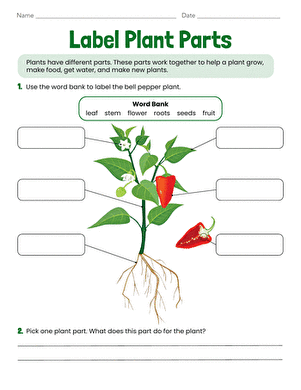
- Spaces for labeling parts (e.g., parts of a plant, phases of the moon).
- Cut-and-assemble elements for building models (e.g., simple circuits, windmills).
- Measurement grids or rulers to practice units and estimation.
- Prediction prompts (What will happen if…?) and observation boxes.
- Puzzle or problem-solving components (match the animal to its habitat).
- Preschool (3–5): Bold images, minimal text, cut-and-paste matching, and simple cause-effect experiments (sink/float sorting sheets).
- Early elementary (6–8): Labeling prompts, step-by-step mini-experiments, measurement charts, and simple engineering challenges (design a paper bridge coloring page).
- Upper elementary (9–11): Data recording tables, hypothesis space, multiple trial comparison, and open-ended design tasks (optimize a paper parachute).
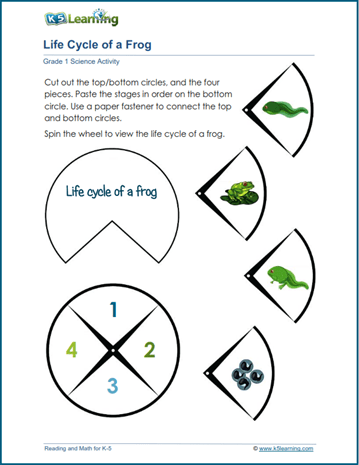
- Print the wheel template with stages arranged around the circle.
- Have the child color each stage and write simple labels (egg, caterpillar, pupa, adult).
- Cut out the wheel and attach a clear window or arrow with a brad so the child can spin to reveal stages one at a time.
- Discuss the order; ask prediction questions (Which stage eats the most? Which is dormant?).
- Color body parts and cut them out.
- Plan an insect that can roll, hop, or balance using available materials.
- Build, test, and iterate—record whether the design met the goal.
- Color the scene (e.g., a house with lit windows), then follow the printed circuit path with copper tape.
- Place the LED where indicated; fold or attach the battery to complete the circuit.
- Observe what happens and troubleshoot if the LED doesn’t light (check polarity and tape connections).
- Have the child color the chart and predict whether each object will sink or float, recording predictions in the sheet’s boxes.
- Test objects, record results, and discuss surprising outcomes.
- Introduce vocabulary: buoyancy, density, displacement.
- Color the daily icon (sunny, cloudy, rainy) and record temperature and precipitation.
- After a week or month, graph the temperatures and discuss trends.
- Encourage vocabulary: forecast, climate vs. weather, precipitation.
- Color and cut out bridge parts, then assemble with glue or tape.
- Test how much weight the bridge holds before collapsing; record results.
- Redesign to improve strength and compare the load each version holds.
- Color the diagram and cut out labels or parts that need matching.
- Match parts to descriptions (e.g., “This part supplies food to the plant”).
- Discuss function, and have the child teach back what each part does.
- Color each planet and add one or two facts (size, temperature, number of moons).
- Assemble in order from the sun and flip through to visualize sequence.
- Discuss scale: create a simple scale model using household items (e.g., the sun = basketball, Earth = blueberry at a set distance).
- Color and label the planting diagram (seed, soil, water, sun).
- Plant seeds and record germination time, height, and leaf count every few days on the sheet.
- Compare seeds with different conditions (less water, more light) to discuss variables.
- Color the tracks and mark start/finish lines at a fixed distance.
- Predict which car will be fastest; time each car across the track and record results.
- Discuss variables: car weight, wheel friction, surface material.
- Free educational resource sites (local school district sites, museums, science centers).
- Teacher resource marketplaces (Teachers Pay Teachers often has printable STEM coloring sets).
- Science organizations (NASA’s kids pages, NOAA’s education resources).
- DIY: Design custom pages using simple graphic tools or scan children’s drawings into templates.
- NASA Kids’ Club — Space-themed printables and activities.
- NOAA Education — Weather and ocean science materials.
- Khan Academy Kids — Free learning resources and ideas for sequencing and data practice.
- Break tasks into short, 10–15 minute segments (coloring, then a short experiment).
- Use large coloring areas and fewer steps.
- Turn activities into sensory play—add textured materials like felt or foam.
- Add quantitative elements: measurements, averages, unit conversions.
- Introduce formal experimental design: independent/dependent variables and control groups.
- Encourage research follow-ups—have students find real-world examples and present findings.
- Share printable PDFs via email or classroom platforms; students submit photos of completed work.
- Host live sessions to guide activities and troubleshooting (e.g., building circuits together).
- Use digital coloring tools (Google Slides, drawing apps) for families without printers.
- Observation checklists: attention to task, use of tools, ability to follow steps, evidence of iteration.
- Learning journals: short entries describing predictions, observations, and what was learned.
- Photo portfolios: document stages and allow children to narrate their work. This is excellent for parent-teacher conferences.
- Designate a weekly “STEM Art” time—children anticipate and prepare for focused exploration.
- Create a materials bin stocked with reusable supplies (copper tape, LEDs, brads, rulers).
- Rotate themes monthly (life cycles, forces and motion, Earth science) to build cumulative knowledge.
- Use student-created pages as assessment artifacts and display them to celebrate learning.
- Supervise small parts and batteries. Store batteries out of reach of young children.
- Offer alternatives for kids with fine motor challenges (sticker labels instead of cutting, adaptive scissors, larger crayons).
- Use high-contrast, simple designs for children with visual processing needs and provide tactile elements where possible.
- Provide instructions in simple language and include visuals or video demonstrations for non-readers and English-language learners.
- Day 1: Introduced plant parts using an anatomy coloring page and planted seeds in clear cups.
- Days 2–8: Daily 10-minute observations and coloring updates; measured seedling height every other day and recorded data on the printable tracker.
- Day 9: Group graphing activity—students combined class data to create a growth curve.
- Day 10: Students presented short “scientific reports” using their coloring pages as visuals.
- Primary keyword: interactive coloring pages for STEM (target density: ~1–1.5%). Use naturally in title, intro, several H2/H3s, and conclusion.
- Long-tail keyword examples: “printable STEM coloring pages for kids,” “hands-on science activities at home,” “paper circuit coloring templates.”
- Meta description suggestion: “Discover printable, hands-on STEM coloring pages and activities that turn art time into science exploration for kids. Templates, lesson ideas, and adaptations for home learning.”
- Internal link suggestions:
- Free Printable Activity Sheets (anchor
How to Design or Choose STEM Coloring Pages
Not all coloring pages are created equal for STEM purposes. The most effective ones prompt interaction beyond coloring. When designing or selecting templates, look for these features:

Age-Appropriate Design Tips
Adjust complexity by age to keep children challenged but not frustrated.
10 Interactive STEM Coloring Page Activities to Try Today
Each activity below includes learning goals, materials list, step-by-step instructions, and extension ideas.
1. Life Cycle Wheels (Butterfly or Frog)
Learning goals: Understand stages of life cycles, sequence events, practice fine motor skills.
Materials: Printable life-cycle wheel, crayons/markers, scissors, brad fastener.
Extensions: Raise caterpillars at home or observe frogspawn in a local pond (safety first). Add measurement by tracking growth weekly and creating a height vs. time chart.
2. Build-a-Bug Engineering Challenge
Learning goals: Explore materials, practice the engineering design process, learn about insect anatomy.
Materials: Bug coloring page with separate body segments, craft materials (straws, pipe cleaners, paper clips), glue, scissors.
Extensions: Compare designs, graph results, or introduce constraints like “only three materials” to prompt creative thinking.
3. Paper Circuit Coloring Pages (Simple LED Circuits)
Learning goals: Introduce basic electrical circuits, polarity, and conductive materials.
Materials: Printable circuit coloring page with copper tape pathways, small LED, coin cell battery, tape, crayons.
Safety note: Use low-voltage coin cell batteries under adult supervision. Do not connect multiple coin cells in series for kids’ projects.
4. Sink-or-Float Sorting Sheets
Learning goals: Understand density and buoyancy, practice hypothesis testing and classification.
Materials: Printable sorting sheet, small household objects (cork, coin, plastic toy), water container, towel.
Extension: Weigh objects and compare mass vs. volume to explain results more quantitatively.
5. Weather Station Color-and-Track Pages
Learning goals: Collect and graph real data, observe weather patterns, practice daily record-keeping.
Materials: Printable daily weather chart, crayons, thermometer, rain gauge (or measuring cup), wind vane (optional).
Extension: Predict tomorrow’s weather and later check the forecast vs. actual results.
6. Build-a-Bridge Measurement Challenge
Learning goals: Simple mechanics, forces, measurement, and iterative design.
Materials: Bridge template to color, popsicle sticks or folded paper strips, small weights (coins), ruler.
Extension: Create a data table and plot weight supported vs. design version. Introduce terms like tensile strength and compression.
7. Anatomy Match-and-Label Pages
Learning goals: Learn body systems or plant anatomy, improve vocabulary and fine motor skills.
Materials: Printable diagrams with labels to cut and paste, crayons, glue.
Extension: Use a mirror to locate the same parts on themselves or a model and practice using scientific terms.
8. Solar System Flipbook
Learning goals: Order of planets, relative sizes (qualitative), and distance concepts.
Materials: Flipbook coloring pages for each planet, stapler or binder ring, crayons.
Extension: Add an activity to predict which planets would be too cold or hot for life and why.
9. Plant Growth Tracker Printable
Learning goals: Observation over time, measurement, experimental controls.
Materials: Seed planting coloring page, clear cup or pot, seeds, soil, ruler.
Extension: Create a simple scientific report with hypothesis, methods, data, and conclusion.
10. Motion and Speed Race Track
Learning goals: Introduce speed, measurement, and fair testing.
Materials: Printable race track coloring page, toy cars, tape measure, stopwatch or smartphone timer.
Extension: Repeat trials, compute average times, and plot results on a bar chart.
Printable Templates and Where to Find Them
There are many free and paid resources for quality STEM coloring templates. Consider these categories:
Suggested External Resources
Adapting Activities for Different Learners and Settings
These interactive coloring activities are versatile. Here are ways to adapt them for diverse learners and environments.
For Preschoolers and Kids with Short Attention Spans
For Older or Advanced Students
For Remote or Hybrid Learning
Assessment and Documenting Learning
Assessments for these playful activities should be formative, focusing on processes and thinking rather than just correct answers.
Practical assessment methods:
Classroom and Home Routine Integration
To make STEM coloring pages a dependable learning tool, build routines around them.
Safety and Accessibility Considerations
Keep activities safe and inclusive:
Case Study: Turning a Coloring Page into a Mini STEM Unit
Overview: A first-grade teacher used a printable “Plant Growth Tracker” coloring sheet to create a two-week mini-unit focused on life cycles, measurement, and scientific reporting.
Steps implemented:
Outcomes: Students improved vocabulary, demonstrated ability to measure and record data, and showed increased engagement compared to a textbook lesson. The teacher found the tactile element helped several students who struggle with attention.
SEO & Content Recommendations for Web Publishers
To get this article to rank and engage readers, follow these SEO and UX best practices:

0 Comments