
Making Math Fun: A Parent’s Guide to Nurturing Early Math Skills at Home
Math. For some, it conjures images of complex equations and frustrating formulas. But for young children, math can be a world of discovery, wonder, and playful exploration. As parents, you have the unique opportunity to introduce your early learners to the joy of math, fostering a lifelong love for numbers and problem-solving. This guide is designed to equip you with the tools, tips, and activities to make math a fun and engaging part of your child’s everyday life. We’ll explore how to turn ordinary moments into math learning opportunities, build a strong foundation, and alleviate any anxieties surrounding the subject. Let’s embark on this exciting journey together!
Why Early Math Matters: Building a Foundation for Success
Early math skills are more than just rote memorization of numbers. They are the building blocks for critical thinking, problem-solving, and analytical skills that will benefit your child throughout their academic and professional life. Research consistently shows that a strong foundation in early math correlates with later academic success, not just in math but also in reading and science.
- Cognitive Development: Math helps children develop logical reasoning, spatial awareness, and pattern recognition.
- Problem-Solving Skills: Early math activities encourage children to think critically and find creative solutions to problems.
- Confidence Building: Mastering basic math concepts boosts a child’s confidence and encourages them to tackle new challenges.
- Real-World Applications: Math is all around us! From cooking to shopping to playing games, understanding math helps children make sense of the world.
- Future Success: A solid foundation in early math sets the stage for success in higher-level math courses and STEM-related fields.
- Measuring Ingredients: Let your child help measure ingredients for a recipe. Talk about cups, tablespoons, and teaspoons. Ask questions like, “How many half-cups do we need to make one cup?”
- Counting and Sorting: Have your child count out the number of cookies on a baking sheet or sort different types of fruits and vegetables.
- Fractions: Cutting a pizza or sandwich into equal slices is a great way to introduce fractions. Ask, “If we cut this pizza into four slices, what fraction of the pizza is each slice?”
- Time: Use a timer and allow your child to check the time while baking or cooking.
- Example: When baking cookies, ask your child to count out 12 chocolate chips for each cookie. This reinforces counting skills and one-to-one correspondence.
- Counting Cars: While driving or walking, have your child count the number of red cars, blue houses, or trees on the street.
- Identifying Shapes: Point out different shapes you see in buildings, signs, and objects. Ask, “What shape is that stop sign? How many sides does it have?”
- Reading Numbers: Encourage your child to read numbers on street signs, license plates, and store fronts.
- Estimating Distances: Ask your child to estimate how far away something is. “Do you think we are closer or farther than 100 steps from the park?”
- Example: While at the grocery store, ask your child to compare the prices of two different items. “Which cereal box is cheaper?” This introduces the concept of value and comparison.
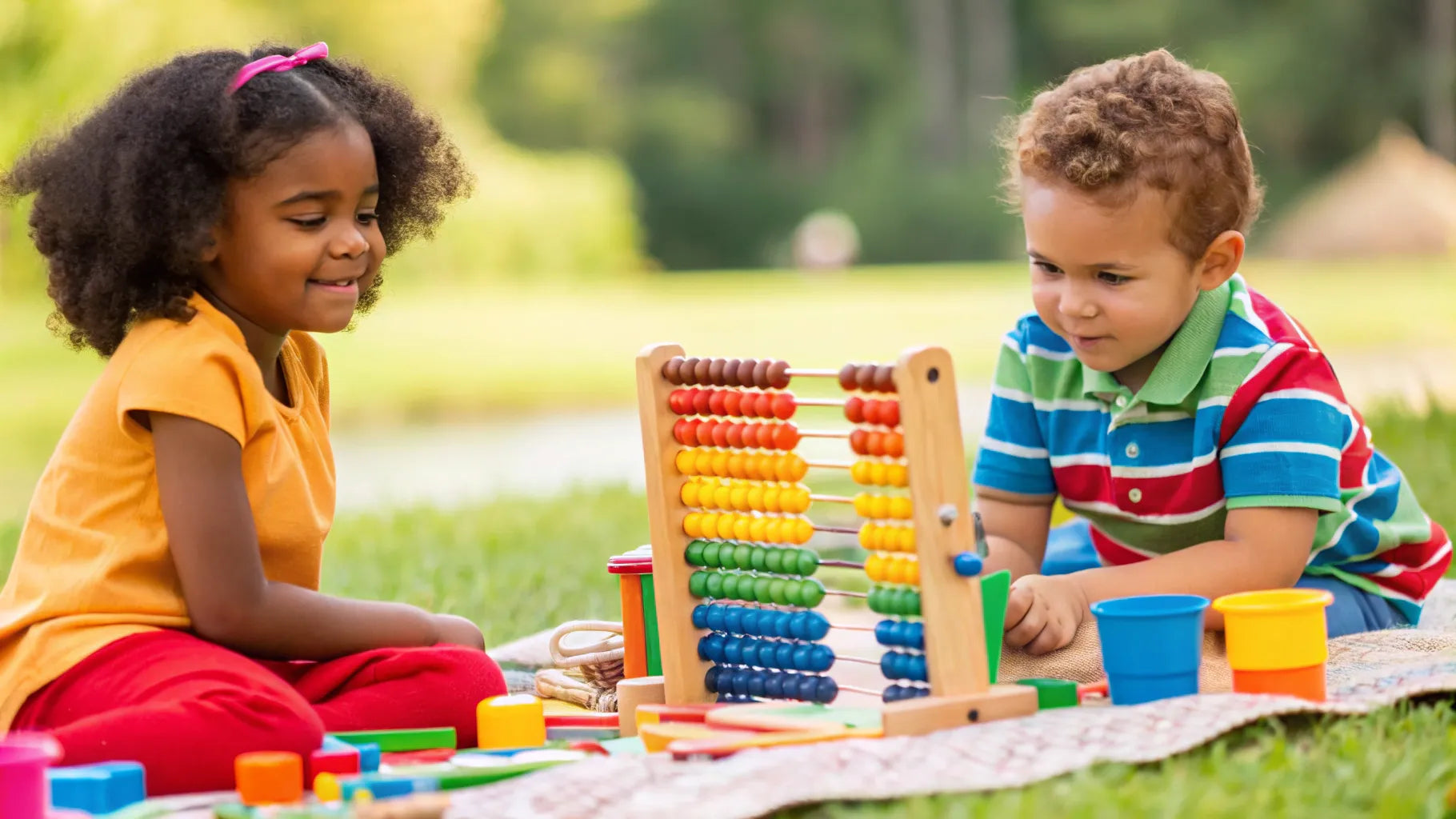
- Board Games: Choose board games that involve counting, matching, and strategic thinking, such as Chutes and Ladders, Candy Land, or Dominoes.
- Card Games: Play card games like Go Fish or War, which help children develop number recognition and comparison skills.
- Building Blocks: Use building blocks to explore shapes, sizes, and spatial relationships. Encourage your child to build towers, houses, or other structures.
- Puzzles: Puzzles help children develop spatial reasoning and problem-solving skills.
- Online Math Games: There are many free and educational math games available online that can supplement your child’s learning.
- Example: Use LEGO bricks to teach addition and subtraction. “If you have 5 red bricks and I give you 3 more, how many bricks do you have in total?”
- Number Sense: Understanding the meaning of numbers, their relationships, and how they are used. This includes counting, recognizing numerals, and understanding quantity.
- Counting: Being able to count accurately and fluently, both forwards and backwards.
- Number Recognition: Identifying and naming numerals.
- One-to-One Correspondence: Understanding that each object in a set corresponds to one number.
- Comparison: Comparing quantities and determining which is greater, lesser, or equal.
- Addition and Subtraction: Understanding the basic concepts of addition and subtraction and being able to solve simple problems.
- Shapes: Identifying and naming basic shapes, such as circles, squares, triangles, and rectangles.
- Spatial Reasoning: Understanding spatial relationships, such as above, below, inside, and outside.
- Measurement: Understanding the concept of measurement and being able to compare lengths, weights, and volumes.
- Pattern Recognition: Identifying and extending patterns.
- Counting: Count everything! Count toys, steps, fingers, toes, and anything else you can think of.
- Number Recognition: Play number matching games, use flashcards, and point out numbers in books and on signs.
- One-to-One Correspondence: Have your child match objects to numbers, such as placing one sticker on each piece of paper.
- Comparison: Use objects of different sizes and weights to compare quantities. Ask, “Which is heavier? Which is bigger?”
- Addition and Subtraction: Use manipulatives like blocks or counters to demonstrate addition and subtraction. Tell stories that involve adding or taking away objects.
- Shapes: Go on a shape hunt around the house or neighborhood. Ask your child to identify different shapes they see.
- Spatial Reasoning: Play games that involve following directions, such as “Put the toy on top of the table” or “Hide the ball behind the chair.”
- Measurement: Use a ruler or measuring tape to measure different objects. Compare the lengths of different items.
- Pattern Recognition: Create patterns using colors, shapes, or objects. Ask your child to identify the pattern and extend it.
- Make it Playful: Focus on making math fun and engaging. Use games, activities, and real-world examples to make learning enjoyable.
- Be Patient: Learning takes time. Be patient with your child and provide encouragement and support.
- Focus on Understanding: Don’t just focus on memorization. Help your child understand the concepts behind the math.
- Use Manipulatives: Manipulatives like blocks, counters, and beads can help children visualize math concepts.
- Connect to Real Life: Show your child how math is used in everyday life. This will help them understand the relevance of what they are learning.
- Encourage Questions: Encourage your child to ask questions and explore their curiosity.
- Celebrate Successes: Celebrate your child’s successes, no matter how small. This will help them build confidence and motivation.
- Be Positive: Maintain a positive attitude towards math. Your attitude can influence your child’s perception of the subject.
- Adapt to Your Child’s Learning Style: Every child learns differently. Adapt your teaching methods to suit your child’s individual learning style.
- Read Math-Related Books: There are many wonderful children’s books that introduce math concepts in a fun and engaging way.
- “Chicka Chicka Boom Boom” by Bill Martin Jr. and John Archambault (Alphabet, Counting)
- “Anno’s Counting Book” by Mitsumasa Anno (Number Sense, Counting)
- “Ten Black Dots” by Donald Crews (Counting, Shapes)
- “Mouse Count” by Ellen Stoll Walsh (Counting, Subtraction)
- Acknowledge and Validate Feelings: If your child expresses anxiety or frustration about math, acknowledge their feelings and let them know that it’s okay to struggle.
- Focus on Effort, Not Just Results: Praise your child’s effort and persistence, rather than just focusing on getting the right answer.
- Break Down Problems: Break down complex problems into smaller, more manageable steps. This can make the problem seem less daunting.
- Provide Support and Guidance: Offer support and guidance, but avoid doing the work for your child. Encourage them to try to solve the problem on their own.
- Use Positive Language: Use positive and encouraging language when talking about math. Avoid negative statements like “I’m not good at math either.”
- Create a Relaxed Environment: Create a relaxed and stress-free environment for learning math. Avoid distractions and interruptions.
- Make it Fun: As mentioned earlier, making math fun and engaging can help reduce anxiety and increase motivation.
- Share Your Own Positive Math Experiences (If Possible): If you have positive memories of math, share them with your child. This can help them see math in a more positive light.
- Seek Professional Help If Needed: If your child’s math anxiety is severe or persistent, consider seeking professional help from a tutor or educational psychologist.
- Websites:
- Khan Academy Kids (https://www.khanacademy.org/) – Free, comprehensive math lessons and practice exercises.
- PBS Kids (https://pbskids.org/) – Fun and educational math games and videos.
- Math Playground (https://www.mathplayground.com/) – A variety of math games and activities for different skill levels.
- NRICH (https://nrich.maths.org/) – A wealth of mathematical resources, problems and articles designed to support rich mathematical learning
- Apps:
- Todo Math – Engaging math games and activities for early learners.
- Monster Math 2 – Fun math practice with a monster theme.
- Marble Math Junior – Customizable math challenges for different skill levels.
- Books:
- “Sir Cumference” series by Cindy Neuschwander – Engaging stories that introduce math concepts.
- “MathStart” series by Stuart J. Murphy – A collection of books that teach math concepts through stories.
- Local Libraries:
- Libraries offer a wealth of math-related books, games, and resources for children.
- Many libraries also offer free math tutoring and workshops.
By investing time and effort in nurturing your child’s early math skills, you are giving them a valuable gift that will benefit them for years to come.

Turning Everyday Moments into Math Adventures
The beauty of early math is that it doesn’t require expensive textbooks or complicated worksheets. You can seamlessly integrate math learning into your daily routines, transforming ordinary moments into fun and educational experiences. Here are some ideas to get you started:

Math in the Kitchen: Cooking Up Learning Opportunities
The kitchen is a treasure trove of math possibilities. Involve your child in cooking and baking, and you’ll be amazed at how much math they can learn.

Math on the Go: Exploring Numbers in the World
Turn your everyday outings into math adventures by pointing out numbers and shapes in the environment.
Math at Play: Learning Through Games and Activities
Games and activities are a fantastic way to make math fun and engaging for young children.
Key Math Concepts for Early Learners: Building a Strong Foundation
Focus on these key math concepts to build a solid foundation for your child’s future math success:
Activity Ideas for Each Concept:
* Number Sense: Use number lines, counters, and manipulatives to help children visualize numbers and their relationships.
Making Math Engaging: Tips for Parents
Here are some tips to help you make math engaging and enjoyable for your child:
Recommended Books:
* “The Very Hungry Caterpillar” by Eric Carle (Counting, Sequencing)
Addressing Math Anxiety: Creating a Positive Learning Environment
Math anxiety is a real phenomenon that can affect children’s performance and attitude towards math. As parents, it’s important to create a positive learning environment that reduces anxiety and fosters confidence.
Resources for Parents: Expanding Your Math Toolkit
There are many excellent resources available to help you support your child’s math learning at home:
Conclusion: Embracing the Math Journey Together
Nurturing your child’s early math skills is an investment in their future success. By turning everyday moments into math adventures, focusing on key concepts, making math engaging, and addressing anxiety, you can help your child develop a lifelong love for numbers and problem-solving. Remember to be patient, supportive, and positive, and most importantly, have fun! Embrace the math journey together, and you’ll be amazed at what your child can achieve. Math isn’t just about numbers; it’s about fostering curiosity, critical thinking, and a love for learning. So, go ahead, explore the world of math with your child, and watch them thrive!
Key Takeaway: Make math a fun and engaging part of your child’s everyday life by incorporating it into everyday activities, using games and manipulatives, and fostering a positive attitude towards the subject.
Call to Action: Sign up for our newsletter to receive more tips and resources on how to support your child’s learning at home! [Link to Newsletter Signup]
Internal Link Suggestion: For more activities to do at home, read our article on “Fun Educational Games for Preschoolers” [Link to Internal Article]
External Link Suggestion: Visit Khan Academy Kids for free math lessons and practice exercises. https://www.khanacademy.org/


0 Comments