
Nurturing Little Hearts: Essential Emotional Intelligence Lessons for Kids
Emotional intelligence (EQ) is the ability to understand, manage, and express your own emotions, as well as recognize and influence the emotions of others. While traditionally, academic intelligence (IQ) was considered the primary determinant of success, research increasingly highlights the crucial role EQ plays in various aspects of life, from building strong relationships to achieving career goals. For children, developing emotional intelligence is particularly vital, as it lays the foundation for their social, emotional, and academic well-being.
Teaching emotional intelligence lessons to kids isn’t about suppressing emotions; it’s about helping them understand and navigate their feelings in a healthy and constructive way. By equipping children with these skills early on, we empower them to become more resilient, empathetic, and well-adjusted individuals. This article will explore essential emotional intelligence lessons that parents, educators, and caregivers can incorporate into a child’s upbringing.

Why Emotional Intelligence Matters for Children
Before diving into specific lessons, it’s important to understand why emotional intelligence is so critical for children’s development. EQ impacts numerous areas of their lives, including:
- Social Skills: Children with high EQ tend to have better social skills. They can understand social cues, empathize with others, and build positive relationships.
- Academic Performance: Studies have shown a correlation between emotional intelligence and academic success. Children who can manage their emotions are better able to focus in class, handle stress, and collaborate with peers.
- Mental Health: Emotional intelligence is a protective factor against mental health issues. Children who understand their emotions are better equipped to cope with stress, anxiety, and depression.
- Conflict Resolution: Emotionally intelligent children are better at resolving conflicts peacefully. They can understand different perspectives, communicate their needs effectively, and find mutually agreeable solutions.
- Resilience: Developing emotional intelligence helps children build resilience. They learn to bounce back from setbacks, manage their emotions during difficult times, and maintain a positive outlook.
- How to Teach It:
- Use Emotion Charts: Create or download emotion charts with pictures of different facial expressions and corresponding emotion words (e.g., happy, sad, angry, scared, surprised). Regularly refer to these charts when discussing emotions.
- Read Books About Emotions: Children’s books often depict characters experiencing various emotions. Read these books together and discuss how the characters are feeling and why.
- Play Emotion Games: Play games like “charades” where children act out different emotions, or “emotion matching” where they match facial expressions to emotion words.
- Label Your Own Emotions: Model emotional awareness by labeling your own emotions. For example, “I’m feeling frustrated because I can’t find my keys.”
- Encourage Emotional Expression: Create a safe space for children to express their emotions without judgment. Let them know that all feelings are valid, even the uncomfortable ones.
- How to Teach It:
- Ask “Why” Questions: When your child expresses an emotion, ask them why they are feeling that way. For example, “You seem happy. Why are you feeling happy today?”
- Help Them Make Connections: Guide children in connecting their emotions to specific events. For example, “You’re feeling angry because your brother took your toy without asking.”
- Use Real-Life Examples: Discuss how different situations make you feel and explain why. For example, “I feel proud when I see you helping others because it shows you’re a kind person.”
- Explore Different Perspectives: Encourage children to consider how others might feel in a given situation. This helps them develop empathy and understand that different people can have different emotional reactions to the same event.
- Create Emotion Diaries: Encourage older children to keep emotion diaries where they record their feelings and the events that triggered them. This can help them identify patterns and better understand their emotional responses.
- How to Teach It:
- Teach Relaxation Techniques: Introduce simple relaxation techniques like deep breathing, progressive muscle relaxation, and mindfulness meditation.
- Encourage Physical Activity: Physical activity is a great way to release pent-up emotions. Encourage children to engage in activities they enjoy, such as running, playing sports, or dancing.
- Promote Problem-Solving: Help children develop problem-solving skills to address the root causes of their emotions. For example, if they’re feeling frustrated with a homework assignment, help them break it down into smaller, more manageable tasks.
- Teach Cognitive Restructuring: Help children challenge negative thoughts and replace them with more positive and realistic ones. For example, if they’re thinking “I’m going to fail this test,” help them reframe it as “I’ve studied hard, and I’ll do my best.”
- Model Healthy Coping Strategies: Show children how you manage your own emotions in a healthy way. For example, “I’m feeling stressed, so I’m going to take a walk to clear my head.”
- How to Teach It:
- Talk About Others’ Feelings: When reading books or watching movies, discuss how the characters are feeling and why. Encourage children to imagine themselves in the characters’ shoes.
- Ask “How Would You Feel?” Questions: In everyday situations, ask children how they would feel if they were in someone else’s position. For example, “How would you feel if you were left out of a game?”
- Encourage Acts of Kindness: Encourage children to perform acts of kindness for others. This helps them develop empathy and understand the impact of their actions on others.
- Model Empathy: Show empathy towards others in your own interactions. For example, “I can see that you’re feeling sad. Is there anything I can do to help?”
- Discuss Different Perspectives: Encourage children to consider different perspectives in conflicts. Help them understand that different people can have different opinions and feelings about the same situation.
- How to Teach It:
- Teach Communication Skills: Teach children how to communicate their needs and feelings effectively. This includes active listening, assertive communication, and nonverbal communication.
- Encourage Cooperation and Collaboration: Provide opportunities for children to work together on projects and activities. This helps them develop teamwork skills and learn how to compromise.
- Role-Play Social Situations: Practice social situations with children through role-playing. This can help them feel more confident and prepared when they encounter similar situations in real life.
- Teach Conflict Resolution Skills: Teach children how to resolve conflicts peacefully and respectfully. This includes active listening, empathy, and problem-solving.
- Model Positive Social Interactions: Show children how to interact with others in a positive and respectful way. This includes using polite language, showing appreciation, and being considerate of others’ feelings.
- How to Teach It:
- Encourage Self-Reflection: Encourage children to reflect on their experiences and identify their strengths and weaknesses. Ask them questions like “What are you good at?” and “What are you working on improving?”
- Provide Constructive Feedback: Give children specific and constructive feedback on their performance. Focus on their effort and progress rather than just the outcome.
- Help Them Set Realistic Goals: Help children set realistic goals that align with their strengths and interests. This can help them build confidence and motivation.
- Encourage Self-Compassion: Teach children to be kind and compassionate towards themselves, especially when they make mistakes. Help them understand that everyone makes mistakes and that it’s okay to learn from them.
- Model Self-Awareness: Share your own strengths and weaknesses with children. This can help them understand that everyone has areas where they excel and areas where they need to improve.
- Emotion Check-Ins: Start each day or week with an emotion check-in. Ask children how they’re feeling and why. This helps them become more aware of their emotions.
- Storytelling with Emotions: Create stories together that focus on different emotions. Encourage children to explore how the characters are feeling and how they handle their emotions.
- Mindfulness Exercises: Practice mindfulness exercises together, such as deep breathing or body scan meditations. This helps children become more present and aware of their emotions.
- Gratitude Journaling: Encourage children to keep a gratitude journal where they write down things they are grateful for each day. This helps them focus on positive emotions.
- Role-Playing Scenarios: Role-play different social situations, such as resolving conflicts or making new friends. This helps children develop social skills and empathy.
- Creative Expression: Encourage children to express their emotions through art, music, or writing. This provides a healthy outlet for processing their feelings.
- Resistance to Expressing Emotions: Some children may be resistant to expressing their emotions, especially if they’ve been taught to suppress them. Create a safe and supportive environment where they feel comfortable sharing their feelings.
- Difficulty Understanding Abstract Concepts: Younger children may have difficulty understanding abstract concepts like empathy and perspective-taking. Use concrete examples and real-life situations to illustrate these concepts.
- Lack of Patience: Teaching emotional intelligence takes time and patience. Don’t get discouraged if your child doesn’t grasp these concepts immediately. Keep practicing and reinforcing these skills over time.
- Inconsistent Modeling: Children learn by observing the adults in their lives. If you’re not modeling emotional intelligence in your own interactions, it will be difficult for your child to develop these skills. Be mindful of your own emotions and how you express them.
- External Pressures: Children may face external pressures from peers or society to conform to certain emotional norms. Help them understand that it’s okay to express their emotions in a healthy and authentic way, even if it’s different from what others expect.
- Improved Relationships: Children with high EQ tend to have stronger and more fulfilling relationships with family, friends, and romantic partners.
- Greater Career Success: Emotional intelligence is increasingly recognized as a key factor in career success. Children with high EQ are better able to work in teams, lead others, and navigate workplace challenges.
- Enhanced Mental and Physical Health: Emotional intelligence is linked to better mental and physical health. Children with high EQ are better able to manage stress, cope with adversity, and maintain a positive outlook.
- Increased Resilience: Emotional intelligence helps children build resilience and bounce back from setbacks. They are better able to learn from their mistakes and persevere in the face of challenges.
- Greater Overall Well-Being: Ultimately, emotional intelligence contributes to greater overall well-being and life satisfaction. Children with high EQ are happier, healthier, and more fulfilled.
- Books: “Raising Good Kids” by Thomas Lickona, “The Whole-Brain Child” by Daniel J. Siegel and Tina Payne Bryson, “Emotional Intelligence: Why It Can Matter More Than IQ” by Daniel Goleman.
- Websites: Greater Good Science Center, Child Mind Institute, Understood.org.
- Workshops and Programs: Many schools and community organizations offer workshops and programs on emotional intelligence for children and adults.
Key Takeaway: Emotional intelligence is not just a “nice-to-have” skill; it’s a fundamental aspect of a child’s overall development and well-being.
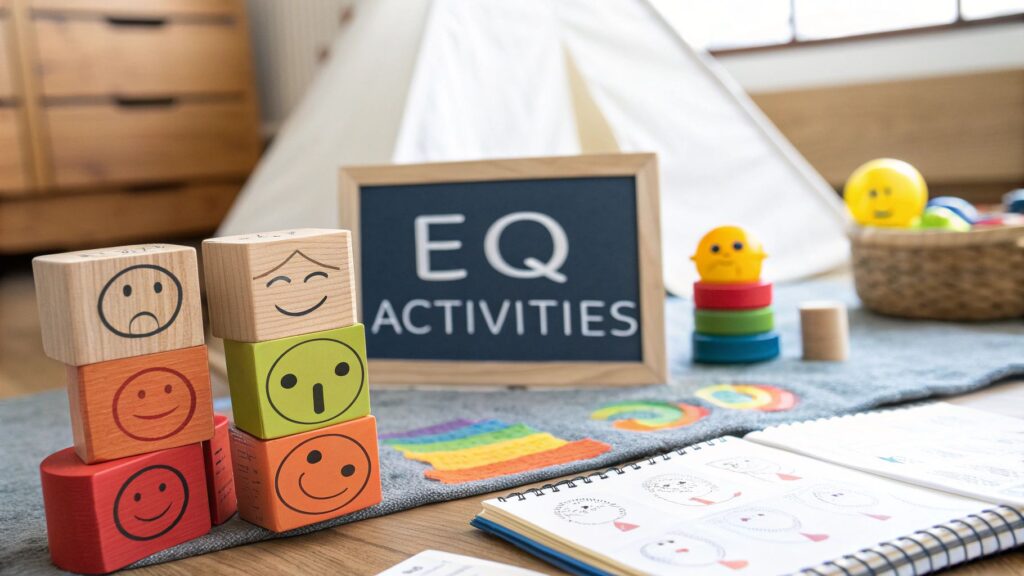
Essential Emotional Intelligence Lessons for Kids
Here are some essential emotional intelligence lessons that you can teach your children:
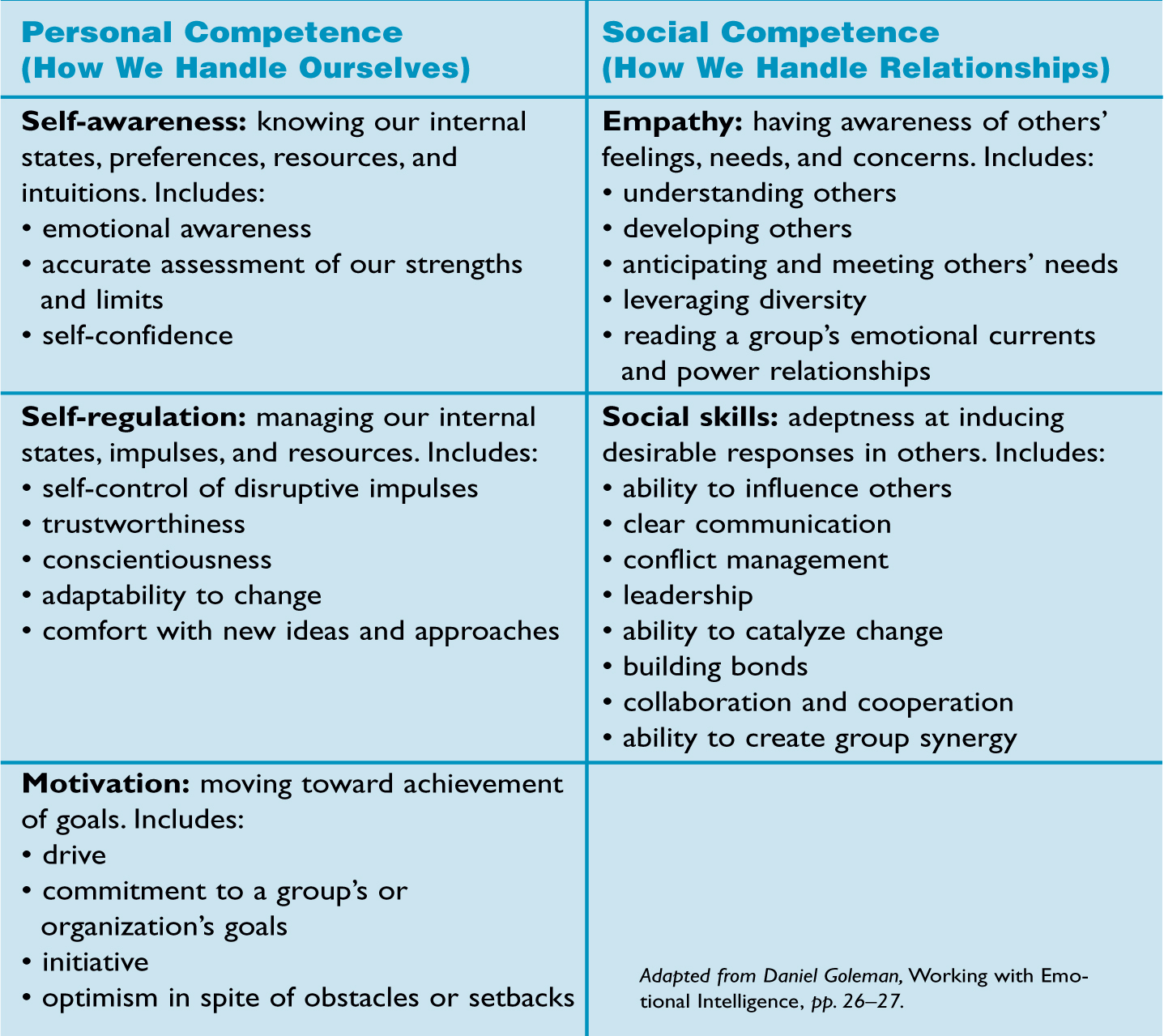
1. Recognizing and Naming Emotions: The Foundation of EQ
The first step in developing emotional intelligence is learning to recognize and name different emotions. Many children, especially younger ones, struggle to articulate how they feel. They might say they feel “bad” without being able to pinpoint the specific emotion.
Example: When your child is upset, instead of just saying “Don’t be sad,” try saying, “I see that you’re feeling sad because you didn’t get to play outside. It’s okay to feel sad, and we can find something else fun to do.”
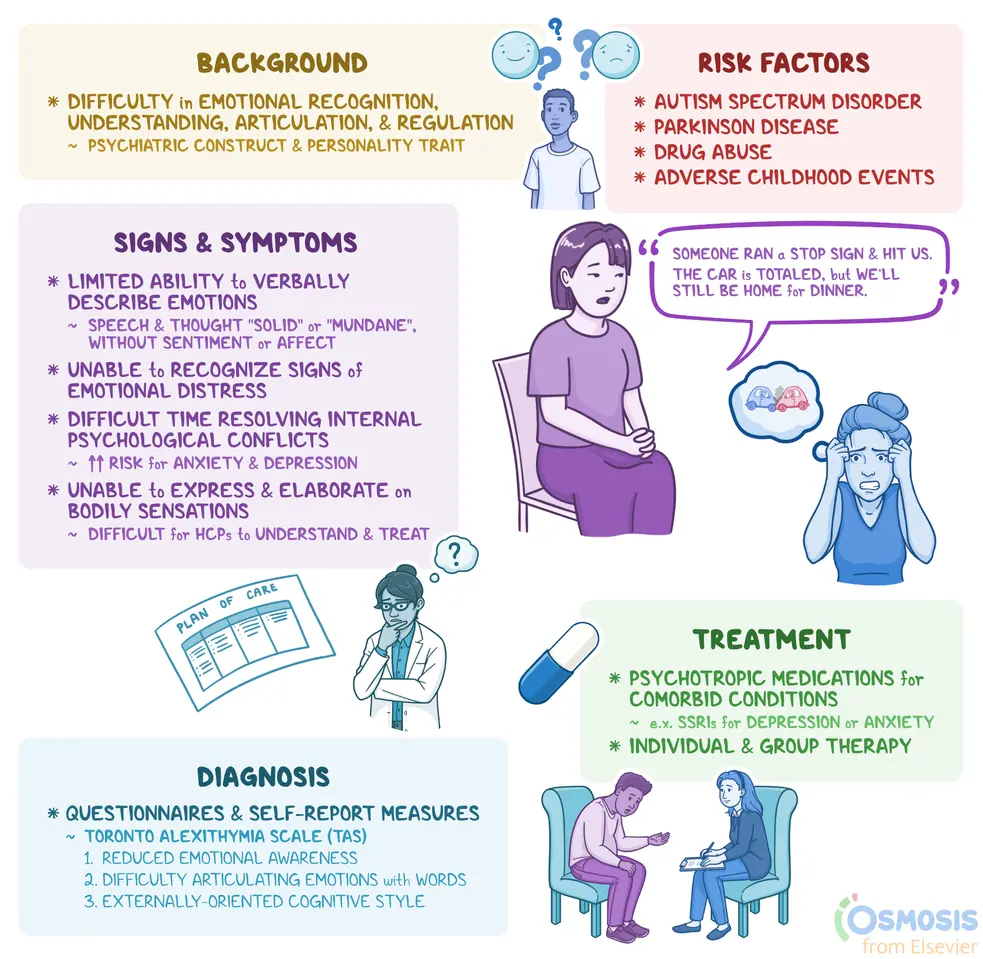
2. Understanding the Causes of Emotions: Connecting Feelings to Events
Once children can recognize and name emotions, the next step is to help them understand what causes those emotions. This involves connecting feelings to specific events or situations.
Example: If your child is feeling anxious before a test, help them connect their anxiety to the upcoming event. “It’s normal to feel anxious before a test. You’re worried about doing well, and that’s okay. We can study together to help you feel more prepared.”
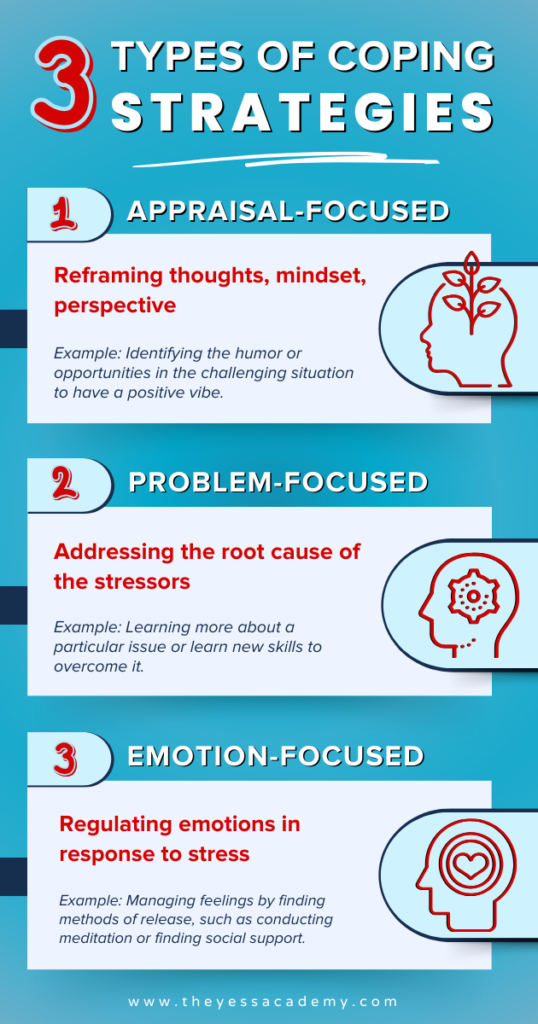
3. Managing Emotions: Developing Healthy Coping Strategies
Learning to manage emotions is a crucial aspect of emotional intelligence. This involves developing healthy coping strategies for dealing with difficult emotions like anger, sadness, and anxiety.
Example: When your child is feeling angry, teach them to take a few deep breaths and count to ten before reacting. You can also suggest alternative ways to express their anger, such as drawing, writing, or talking to a trusted adult.
4. Empathy and Perspective-Taking: Understanding Others’ Emotions
Empathy is the ability to understand and share the feelings of others. It’s a crucial component of emotional intelligence and essential for building strong relationships. Perspective-taking involves seeing a situation from another person’s point of view.
Example: If your child is arguing with a sibling, encourage them to see the situation from their sibling’s perspective. “How do you think your brother is feeling right now? Why might he be upset?”
5. Social Skills: Building Positive Relationships
Emotional intelligence is closely linked to social skills. Children with high EQ tend to have better social skills, which helps them build and maintain positive relationships.
Example: Teach your child how to introduce themselves to new people, make eye contact, and ask questions to show interest. You can also practice different scenarios, such as asking for help or resolving a disagreement.
6. Self-Awareness: Understanding Your Strengths and Weaknesses
Self-awareness is the ability to understand your own strengths, weaknesses, values, and beliefs. It’s a crucial component of emotional intelligence and essential for personal growth.
Example: Help your child identify their strengths by asking them what they enjoy doing and what they feel good at. You can also help them identify areas where they need to improve by asking them what they find challenging and what they would like to learn.
Practical Activities to Enhance Emotional Intelligence
Integrating these lessons into everyday activities is key to fostering emotional intelligence in children. Here are some practical activities:
Call to Action: Start incorporating these activities into your daily routine to help your child develop emotional intelligence and build a strong foundation for their future success.
Addressing Challenges in Teaching Emotional Intelligence
While teaching emotional intelligence is incredibly beneficial, it can also present some challenges. Here are some common challenges and how to address them:
Key Takeaway: Patience, consistency, and a supportive environment are essential for overcoming challenges in teaching emotional intelligence.
The Long-Term Benefits of Emotional Intelligence
Investing in your child’s emotional intelligence development has numerous long-term benefits. These include:
Call to Action: By prioritizing emotional intelligence in your child’s upbringing, you’re setting them up for a lifetime of success, happiness, and well-being.
Resources for Parents and Educators
There are many resources available to help parents and educators teach emotional intelligence to children. Here are a few:
Internal Link Suggestion: For more information on related topics, consider reading our article on “Effective Communication Strategies for Families” to further enhance your child’s interpersonal skills.
External Link Suggestion: Explore the resources offered by the Yale Center for Emotional Intelligence for research-backed strategies and tools.
Conclusion: Empowering the Next Generation with Emotional Intelligence
Emotional intelligence is a vital skill that can significantly impact a child’s life, influencing their social interactions, academic performance, and overall well-being. By teaching children to recognize, understand, manage, and express their emotions, we empower them to navigate the complexities of life with greater confidence and resilience.
Remember, fostering emotional intelligence is an ongoing process that requires patience, consistency, and a supportive environment. By incorporating these lessons and activities into your daily routine, you can help your child develop the emotional skills they need to thrive in all areas of their life. Let’s nurture the emotional well-being of our children, equipping them with the tools they need to build a brighter, more compassionate future.
Final Thought: Emotional intelligence is not just a skill; it’s a superpower that can transform lives. By investing in your child’s emotional development, you’re giving them the greatest gift of all: the ability to understand themselves and connect with others on a deeper level.


0 Comments