
Unlock Creativity: Engaging Story-Starter Prompts and Coloring Pages for Young Writers
Does your young learner sometimes stare at a blank page, unsure how to begin their next grand adventure in words? You’re not alone! Many parents navigating homeschool language arts find that while their children have vibrant imaginations, translating those ideas into written stories can be a hurdle. The good news is, there’s a wonderfully interactive and fun solution that blends artistic expression with literary development: story-starter coloring page and printables.
These unique resources are much more than just a creative outlet; they are powerful tools designed to ignite writing inspiration and cultivate essential writing skills in elementary-aged children. By providing a visual anchor – a scene, a character, or a mysterious object to color – these printable prompts gently guide young authors past writer’s block. They transform the daunting task of starting a story into an exciting journey of creative storytelling. This article will delve into why these engaging printables are a game-changer for homeschool language arts, how to best utilize them, and how they foster a lifelong love for writing. Get ready to watch your child’s stories blossom from a splash of color to a world of words!

Why Creative Storytelling is Essential for Young Minds
Creative storytelling is a cornerstone of child development, extending far beyond simply learning to write. For elementary homeschoolers, engaging in imaginative narrative creation offers a wealth of cognitive and emotional benefits that are crucial for their overall growth. It’s not just about putting words on paper; it’s about building a foundation for critical thinking, problem-solving, and self-expression.
Firstly, imagination is the engine of innovation. When children create stories, they’re exercising their ability to envision new worlds, characters, and scenarios. This mental flexibility translates into better problem-solving skills in everyday life and across academic subjects. Secondly, writing skills are significantly enhanced through creative writing. Children learn about narrative structure, character development, setting descriptions, and the effective use of vocabulary in a context that feels natural and exciting. They experiment with language, discover new words, and refine their sentence construction without the pressure often associated with formal grammar lessons.
Moreover, creative storytelling provides an invaluable outlet for emotional expression. Children can explore feelings, fears, and aspirations through their characters and plots, helping them process their own experiences in a safe and imaginative space. This emotional literacy is a vital component of well-rounded development. Integrating story-starter coloring page and printables into your homeschool language arts curriculum naturally fosters these benefits, making learning enjoyable and deeply impactful.
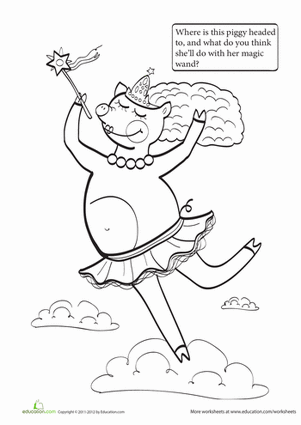
The Magic of Story-Starter Coloring Pages and Printables
Imagine a tool that effortlessly bridges the gap between a child’s visual creativity and their emerging writing skills. That’s exactly what story-starter coloring page and printables offer. These resources are specifically designed to spark writing inspiration by giving children a tangible starting point for their stories. Instead of a blank page, they encounter an inviting illustration – perhaps a whimsical creature, a mysterious castle, or a futuristic city – ready to be brought to life with color and imagination.
The beauty of these printable prompts lies in their dual approach. They first engage the child visually through coloring, which is a calming and focusing activity. This initial engagement lowers the barrier to entry for writing, making it less intimidating. Once the coloring is complete, the vibrant image serves as a powerful springboard for narrative ideas. Children are encouraged to ask questions about the picture: Who lives here? What just happened? What will happen next? This natural curiosity then flows directly into creative storytelling, making the writing process feel like a continuation of their artistic play.

How Coloring Boosts Writing Inspiration
Coloring isn’t just a fun pastime; it’s a powerful cognitive exercise that can significantly boost writing inspiration. When children engage in coloring, they enter a state of focused relaxation. This meditative quality helps to quiet the inner critic and allows ideas to flow more freely. The act of choosing colors and staying within lines enhances concentration and fine motor skills, preparing their minds for the structured yet imaginative task of writing.
Furthermore, the visual cues within a story-starter coloring page act as direct prompts for the narrative. A child might color a character with a mischievous grin, immediately inspiring a story about a playful prankster. A dark, winding path might suggest a tale of adventure or mystery. These visual anchors provide concrete details that young writers can latch onto, making the initial stages of creative storytelling much less overwhelming. The combination of artistic expression and structured printable prompts creates a fertile ground where imagination thrives and writing skills are naturally honed.

Turning a Picture into a Thousand Words: Practical Tips
Transforming a finished story-starter coloring page into a compelling narrative is an exciting process. Here are some practical tips to guide your young writer:
- Observe and Describe: Encourage your child to look closely at their colored picture. Ask them to describe what they see using descriptive words. “What colors did you use? What does the character look like? What objects are in the scene?” This builds their vocabulary and attention to detail.
- Ask “W” Questions: Who, what, where, when, why, and how are powerful
printable prompts. - Who is the main character? What is their name? What are they like?
- What is happening in the picture? What problem might the character face?
- Where does the story take place? What details can you add about the setting?
- When does the story happen? Is it morning, night, in the future, or the past?
- Why is the character there? Why did this event occur?
- How will the character solve their problem?
- Brainstorm Feelings and Actions: Discuss the emotions the picture evokes. Does the character look happy, sad, scared, or excited? What actions might they take based on these feelings? This helps develop empathy and plot progression.
- Think About Before and After: The picture is a snapshot. What happened right before this moment? What might happen immediately after? This encourages thinking about cause and effect, essential for
creative storytelling. - Start Small: Don’t pressure them to write a novel. A few sentences, a short paragraph, or even just a list of ideas is a fantastic start. The goal is to ignite
writing inspiration, not create immediate masterpieces. - Choose the Right Prompt: Let your child browse a selection of
story-starter coloring page and printables. Allowing them to choose what excites them instantly boosts their engagement andwriting inspiration. - Gather Materials: Ensure you have crayons, colored pencils, markers, and plenty of paper readily available. A comfortable, well-lit workspace free from distractions is also key.
- Set a Positive Tone: Emphasize that this is a fun activity, not a test. Reassure them that there are no “wrong” answers in
creative storytelling. The goal is to explore theirimagination. - Discuss the Artwork: Start by admiring their colored creation. Ask open-ended questions like, “Tell me about this picture you’ve created. What’s happening here?” or “What do you think this character is feeling?”
- Brainstorm Ideas Together: If they’re struggling, offer gentle
writing inspiration. You can suggest, “Maybe this little fox is looking for something lost,” or “What if this castle held a secret?” Encourage them to jot down keywords or phrases that come to mind. - Start Writing, No Pressure: Encourage them to write the first sentence. It could be as simple as, “Once upon a time…” or “One sunny morning…” Remind them that they can always change it later. Focus on getting ideas down.
- Embrace Imperfection: Let go of the need for perfect spelling or grammar in the initial draft. The primary focus here is on nurturing
creative storytellingand developingwriting skills. You can revisit editing later. - Be a Scribe (If Needed): For younger writers or those who struggle with fine motor skills, offer to be their scribe. They dictate, and you write. This keeps the flow of
imaginationgoing without the frustration of handwriting. - Read Aloud: Encourage your child to read their story aloud. This helps them hear the rhythm of their words, identify areas for improvement, and boosts their confidence. You can also read it aloud to them, showing your appreciation for their effort.
- Share with Others: Allow your child to share their story with family members or friends. This positive reinforcement is incredibly motivating and validates their
writing inspiration. - Develop Characters Further: Ask your child to think about their character’s personality, favorite things, or even create a family tree for them. This deepens their understanding of character development.
- Create Sequels or Prequels: What happened before the
story-starter coloring pagescene? What happens next? Encouraging sequels or prequels teaches plot continuity and expands their narrative horizons. - Illustrate More: If your child enjoys drawing, encourage them to create more illustrations for their story, turning it into their own book. This reinforces the connection between visual art and written narrative.
- Connect to Reading: Discuss how their story is similar to or different from books they’ve read. This helps them recognize literary elements in published works. For more tips on nurturing a love for reading alongside writing, explore our guide on developing reading comprehension skills.
- A child happily coloring a
story-starter coloring pagewith crayons, surrounded byprintable prompts. - A close-up of a child’s hand writing a story inspired by a vibrant
coloring page. - A stack of
story-starter coloring page and printableswith different themes, ready forcreative storytelling. - An open notebook with a child’s handwritten story next to a completed
coloring pageillustration. - Headline: Unlock Creativity: Free
Story-Starter Coloring Page and Printablesfor Young Writers - Description: Boost
homeschool language artswith engagingprintable prompts! Discover howstory-starter coloring page and printablesigniteimaginationandwriting skillsin elementary kids. Get your free prompts! - Hashtags: #HomeschoolLanguageArts #CreativeWriting #KidsWriting #StoryStarters #ColoringPages #PrintablePrompts #YoungWriters #Imagination #HomeschoolLife

Engaging Your Child with Story-Starter Prompts: A Step-by-Step Guide
Making the most of story-starter coloring page and printables involves a fun, relaxed approach that prioritizes enjoyment and imagination over strict rules. Here’s a simple guide to help you integrate these printable prompts seamlessly into your homeschool language arts routine.
Setting the Scene: Before You Begin
Preparation can make all the difference in creating an inviting atmosphere for creative storytelling.
The Prompting Process: From Image to Story
Once your child has chosen a story-starter coloring page and completed the coloring, it’s time to transition to writing.
Beyond the Page: Extending Creative Storytelling
The story-starter coloring page and printables are just the beginning! Once your child has completed a story, there are many ways to extend the creative storytelling experience and further develop their writing skills.
Engaging in these extensions reinforces homeschool language arts learning in a joyful and memorable way, ensuring that creative storytelling remains a cherished part of their educational journey. For additional insights into the cognitive benefits of imaginative play and creative writing, consider exploring resources from reputable educational psychology institutions like the National Association for the Education of Young Children (external link, opens in new window).
Frequently Asked Questions About Creative Writing Prompts
Many parents have questions about how to best use story-starter coloring page and printables to foster creative storytelling and writing skills. Here are some common inquiries:
Q: What age are these story-starter coloring page and printables best suited for?
A: These printable prompts are ideal for elementary-aged children, typically from kindergarten through fifth grade. Younger children might focus more on the coloring and dictate their stories, while older children can independently write longer, more complex narratives. The beauty is their adaptability to various writing skills levels.
Q: How often should we use printable prompts for creative storytelling?
A: Consistency is key, but so is variety. Aim for 1-2 times a week to keep the writing inspiration flowing without causing burnout. You can also integrate them during quiet time, after finishing other homeschool language arts tasks, or whenever your child expresses a desire for creative play.
Q: What if my child doesn’t want to write after coloring?
A: That’s perfectly fine! The primary goal is to spark imagination and make writing enjoyable. If they’re not ready to write, simply talk about the picture. Ask them to tell you a story verbally. You can even offer to write it down for them. The act of verbal creative storytelling is a crucial precursor to written writing skills. Remember, the process should be fun and low-pressure.
Q: Can these story-starter coloring page and printables help with writer’s block?
A: Absolutely! They are specifically designed to combat writer’s block by providing a visual cue and a clear starting point. The act of coloring itself can be relaxing and help ideas form, making the transition to writing much smoother and boosting writing inspiration.
Spark Imagination, Ignite Stories!
Encouraging creative storytelling in young writers is one of the most rewarding aspects of homeschool language arts. Story-starter coloring page and printables offer a unique, engaging, and highly effective way to do just that. They transform the blank page from a source of intimidation into a canvas of endless possibilities, nurturing imagination, building writing skills, and fueling writing inspiration with every stroke of color and every carefully chosen word. By embracing these printable prompts, you’re not just teaching your child to write; you’re empowering them to become confident storytellers who can articulate their vibrant inner worlds.
Ready to embark on a colorful journey of words with your child? Spark your child’s imagination with our free writing prompts today and watch their stories come to life!
—
Image Alt Text Suggestions:
Social Sharing Optimization:


0 Comments