
Coloring Page and Printables for Homeschool History: Teaching Famous Inventors, Time Periods, and Ancient Civilizations through Visual Learning
Engage young learners with creative, hands-on history lessons: homeschooling parents and educators can use coloring pages and printables to bring famous inventors, historical time periods, ancient civilizations, and heroic figures to life. This guide explains why visual learning matters, offers dozens of printable activity ideas, and provides ready-to-use lesson structures that blend art, history, and critical thinking.

Introduction: Why Coloring Pages and Printables Work for Homeschool History
Are your children struggling to remember dates, names, or the significance of historical events? Coloring pages and printables convert abstract facts into memorable visuals and interactive experiences. Visual learning supports retention by linking imagery with narrative and kinesthetic activity. When kids color a caricature of Leonardo da Vinci, label the parts of an Egyptian sarcophagus, or sequence printable timeline cards for the Industrial Revolution, they actively construct meaning rather than passively absorb facts.
In this article you’ll learn practical ways to design and use history-themed coloring pages and printable packs tailored to different ages and learning styles. We cover lesson plans for famous inventors, explorations of time periods and ancient civilizations, hero-spotlight pages, assessment ideas, accessibility and differentiation tips, and suggestions for printing and sharing. Whether you need a quick, low-prep printable or a multi-week project, this post provides ready-to-use examples and resources to enrich your homeschool history curriculum.
How Visual Learning Enhances Homeschool History
Why visuals improve memory and engagement
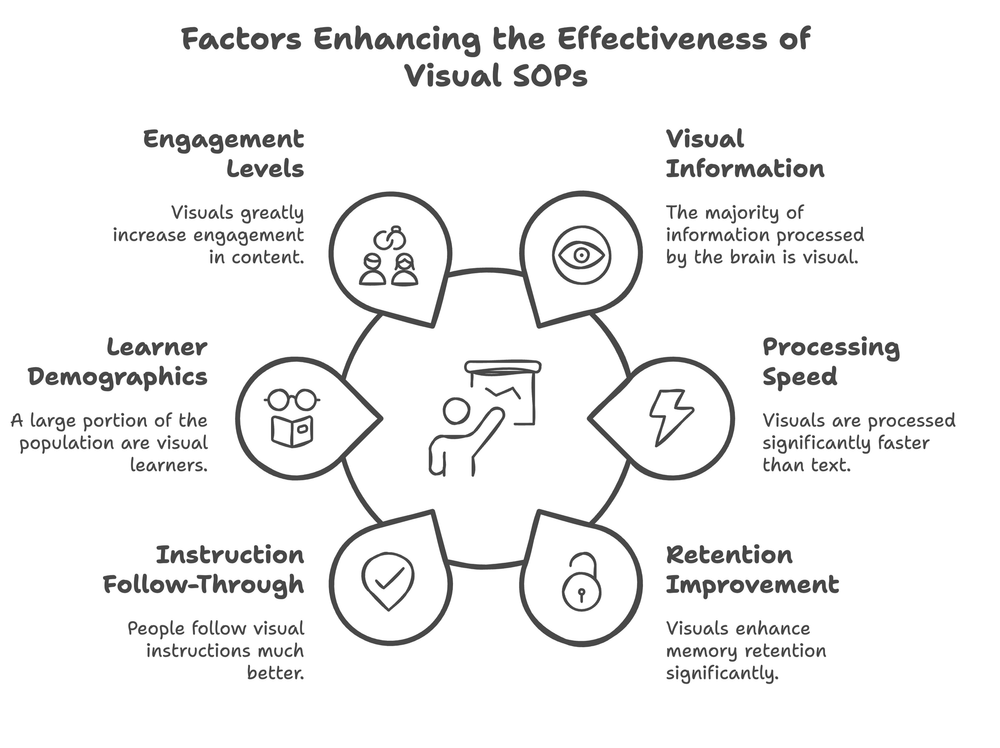
Visual materials activate areas of the brain involved in pattern recognition and storytelling. For children, combining coloring (fine motor practice) with historical narratives encourages dual coding—information stored both visually and verbally—improving recall. Visuals also lower cognitive load by summarizing complex ideas into digestible images.

Benefits specific to homeschool settings
- Flexible pacing: colorables can be extended or condensed to match attention spans.
- Cross-curricular opportunities: art + history + literacy + handwriting practice.
- Low-cost, low-prep: printable resources are typically inexpensive and reusable.
- Family participation: siblings of different ages can work on the same theme at different complexity levels.
- Remembering: Identify three inventions by Thomas Edison or Nikola Tesla.
- Understanding: Explain how the printing press changed access to knowledge.
- Applying: Use printable timeline cards to place inventions in chronological order.
- Analyzing: Compare tools used by different ancient civilizations.
- Creating: Design a poster featuring a “modern hero” inspired by historical inventors.
- Coloring pages: simple portraits with signature inventions (Edison – light bulb, Marie Curie – beakers, Alexander Graham Bell – telephone).
- Labeling worksheets: parts of inventions (e.g., printing press components).
- “Invention Timeline” cards: color, cut, and sequence key inventions.
- Research mini-poster template: fill-in facts, draw the invention, list three impacts.
- Color-by-period sheets: prehistoric, classical, medieval, Renaissance, Industrial, modern.
- Printable foldable timelines: accordion-style timelines for classroom walls.
- Cause-and-effect maps: connect events, inventions, and social changes with arrows and pictures.
- Civilization pages: Egypt, Mesopotamia, Indus Valley, China, Mesoamerica—each with landmark images to color and vocabulary boxes.
- Map puzzles: printable maps to cut and assemble that show river systems and trade routes.
- Artifact templates: design your own clay pot or cuneiform tablet, with writing prompts.
- Hero spotlight coloring pages: warriors, scientists, explorers, reformers, and unsung local heroes.
- “Then & Now” activity: find a modern role model who continues the hero’s legacy and create a comparison chart.
- Letter-writing templates: students write thank-you letters to historical figures (creative exercise).
- Hook (10 minutes): Show pictures of everyday objects (lightbulb, smartphone) and ask students to guess inventors or origins.
- Direct instruction (15 minutes): Brief mini-lecture with printable timeline cards; students place cards on a timeline strip.
- Hands-on (30 minutes): Coloring pages of inventors + labeling worksheet. Students complete a mini-poster about one inventor.
- Extension (15 minutes): Debate or discuss which invention had the biggest impact and why—use a printable pros/cons chart.
- Assessment (10 minutes): Quick quiz using printable matching sheet (inventor → invention).
- Hook (5 minutes): Play a soundscape of river noises; ask how rivers might be useful.
- Activity (20 minutes): Map puzzle—assemble printable maps showing the Nile, Tigris/Euphrates, Indus, Yellow River.
- Craft (25 minutes): Color and decorate artifact templates; write one sentence about how the artifact was used.
- Wrap-up (10 minutes): Match vocabulary cards to images (irrigation, scribe, ziggurat, dynasty).
- Lower levels: simplified coloring pages, fewer facts, fill-in-the-blank vocabulary.
- Mid levels: labeling tasks, short-answer prompts, sequencing activities.
- Higher levels: source analysis prompts, project-based assessments, research extension sheets.
- Visual supports: high-contrast line art, larger fonts, image-only flashcards for emergent readers.
- Multisensory options: incorporate tactile elements (sand for Egyptian tomb simulation, modeling clay for artifacts).
- Assistive tech: provide printable text with audio-read versions or QR codes linking to short video clips.
- Rubrics (3–5 point scale) for poster clarity, historical accuracy, and creativity.
- Exit tickets: one-sentence summary of what they learned + one question they still have (printable slip).
- Portfolio pages: bind colored pages and research posters as a semester portfolio to demonstrate growth.
- Keep line art crisp and simple—avoid overcrowding the page.
- Offer both labeled and unlabeled versions to support different objectives.
- Include margin notes with a quick historical fact or prompt to guide discussion.
- Make print-friendly versions (black-and-white, ink-saving) and a color preview PDF for digital use.
- Provide alternative formats (landscape/portrait) to fit various printers and binders.
- Use 24–32 lb paper for durability when making coloring booklets or posters.
- For reusable materials (flashcards, timeline strips), laminate or use printable sticker paper.
- Consider binder-ready hole-punched pages to build a year-long history portfolio.
- Use public domain images for historical figures or obtain permission for modern portraits.
- Offer a clear license statement on your printable pack (e.g., “For personal and classroom use only; not for resale”).
- Provide attribution if you incorporate third-party clip art or educational content.
- Primary keyword: color page and printables (use naturally ~1–2% density across content).
- Secondary keywords and LSI terms: homeschool history, famous inventors worksheets, ancient civilizations printable, time periods coloring pages, visual learning resources, history heroes activities.
- Use descriptive file names for downloads (e.g., famous-inventors-coloring-pack.pdf) and include alt text for all images (e.g., “Coloring page: Nikola Tesla holding a coil — printable for homeschool history”).
- Offer snippet-friendly FAQs (see below) and short descriptive meta descriptions for each printable.
- Share images of completed student pages on social platforms with consent—use hashtags like #HomeschoolHistory #HistoryPrintables.
- Create Pinterest pins for each printable pack using vertical images and keyword-rich descriptions.
- Offer a free sample printable behind an email signup (soft CTA) and present a bundle upsell (strong CTA) on the product page.
- Anchor text: “homeschool curriculum planning” — link to your site’s curriculum planning page.
- Anchor text: “printable timeline templates” — link to related downloadable templates on your site.
- Anchor text: “art integration activities” — link to a post about cross-curricular arts projects.
- Smithsonian National Museum of American History — for historical context on inventions: https://americanhistory.si.edu/ (external)
- British Museum — for reliable resources on ancient civilizations: https://britishmuseum.org/ (external)
- Library of Congress — for primary source materials and public domain images: https://loc.gov/ (external)
- “Coloring page of Leonardo da Vinci sketching a flying machine — homeschool history printable”
- “Foldable timeline printable showing major time periods — educational resource for homeschool”
- “Map puzzle of ancient river civilizations — printable activity for kids”
- Download a free sample printable: Famous Inventors Coloring Page (offer as a visible download on your site).
- Create a 4-week mini-unit using the Time Periods kit and share student work on social with #HomeschoolHistory.
- Sign up for monthly printable bundles to receive new packs each season.

Planning Effective History Printables: Curriculum Goals and Learning Targets
Start by defining objectives for each printable pack. Use Bloom’s Taxonomy to scaffold activities from remembering to creating. Example targets:
Printable Pack Ideas and Templates
The following printable packs can be mixed and matched. Each pack includes variations for three age levels: early elementary (K–2), upper elementary (3–5), and middle school (6–8).
1. Famous Inventors Coloring & Activity Pack
2. Time Periods and Timeline Kits
3. Ancient Civilizations Activity Bundle
4. Heroes and Historical Figures Pack
Sample Lesson Plans Using Coloring Pages and Printables
Lesson: “Inventions That Changed the World” (Ages 8–12)
Lesson: “Ancient River Civilizations” (Ages 6–9)
Differentiation, Accessibility, and Multi-Age Strategies
Differentiate by complexity
Support diverse learners
Multi-age usage
Create one core printable set and add “challenge layers.” For example, younger children color inventors while older students complete the research poster and create an invention patent form.
Assessment and Tracking Progress with Printables
Printable assessments can be quick and meaningful. Use rubrics for poster projects and observation checklists for process skills like research and collaboration.
Assessment examples
Examples & Case Studies: Real Homeschool Projects
Case Study 1: Multi-week Ancient Civilization Unit
A homeschool co-op used printable packs to run a six-week unit: maps, artifact art, and dramatized “market day.” Students created a class museum with labeled printables, resulting in improved geography scores and deeper retention of vocabulary.
Case Study 2: Inventor Fair for Mixed Ages
A family organized an “Inventor Fair” where younger siblings used coloring pages to display inventions while older students presented research posters and prototype sketches using printable patent forms. The event fostered confidence and public speaking skills.
Design Tips for High-Quality Coloring Pages and Printables
Printing, Laminating, and Reusing Printables
Printing tips:
Integrating Technology with Printable Activities
Combine digital tools with printables for hybrid learning. Use QR codes that link to short videos or audio clips about an inventor’s life, or use a simple slide deck that mirrors printable worksheets for remote learners.
Copyright & Licensing Considerations for Printables
When creating or using printables, follow these best practices:
SEO & Sharing Strategies for Your Printable Resources
To help parents and educators find your materials, optimize your resource pages using the following suggestions:
On-page SEO techniques
Promotion & social sharing
Recommended Internal and External Links
Internal link suggestions (anchor text recommendations):
External authoritative link suggestions (open in a new window):
Printable Pack Table: Quick Reference
| Pack | Contains | Age Range | Time to Complete |
|---|---|---|---|
| Famous Inventors | Coloring pages, timeline cards, mini-poster | K–8 | 30–90 minutes |
| Time Periods | Color-by-period, foldable timeline, cause-effect charts | 3–8 | 45–120 minutes |
| Ancient Civilizations | Maps, artifact templates, vocab cards | K–6 | 45–90 minutes |
| Heroes & Figures | Spotlights, letter templates, comparison charts | K–8 | 20–60 minutes |
FAQs (Optimized for Voice Search and Featured Snippets)
How can I use coloring pages to teach history?
Coloring pages make abstract historical concepts concrete, support retention through visual memory, and provide low-pressure opportunities for discussion and extended projects.
What age group benefits most from printable history packs?
Printables can be adapted from preschool to middle school. Use simpler sheets for K–2 and add research or analysis tasks for older students.
Can I reuse historical printables year after year?
Yes—laminate frequently used items like flashcards and timeline strips or keep digital copies to print again. Provide a clear license if you distribute them.
Image Alt Text Suggestions
Schema Markup Recommendation
Use Article schema (JSON-LD) including headline, description, author, datePublished, and mainEntity for FAQ. For each downloadable printable, add a CreativeWork schema with interactionType set to “http://schema.org/DownloadAction” and license details.
Calls-to-Action (Contextual & Natural)
Soft CTA: Download a free sample “Famous Inventors” coloring page to try in your next history lesson.
Strong CTA: Subscribe to our resource library to access complete printable bundles, lesson plans, and grading rubrics for homeschool history.
Conclusion: Make History Stick with Coloring Pages and Printables
Coloring pages and printables are powerful tools for homeschool history. They turn passive facts into active exploration, support multiple learning styles, and adapt easily to different ages and goals. Use the pack ideas, lesson plans, and assessment strategies in this article to design memorable units about famous inventors, pivotal time periods, ancient civilizations, and historical heroes. Start small—download or create one printable, try it in a single lesson, and build your resource library from there. Your students will not only remember history—they’ll enjoy creating it.

0 Comments