
Coloring Page and Printables for Homeschool Math: Boost Number Recognition, Problem Solving, and Number Skills Through Play
Engaging young learners in math doesn’t have to mean worksheets packed with dry problems. Coloring page and printables designed for homeschool math combine creativity, hands-on practice, and play to build essential number skills. In this article you’ll learn why printable coloring activities work, how to use them to teach number recognition and early problem solving, practical activity ideas and templates, assessment tips, and ways to scale activities across skill levels. Whether you’re a homeschooling parent, tutor, or classroom teacher looking for new strategies, these friendly, research-backed approaches will help children enjoy math while mastering core concepts.

Why Coloring Page and Printables Work for Homeschool Math
Coloring and printable activities tap into multiple learning strengths at once: visual, kinesthetic, and logical. They reduce math anxiety by situating concepts in a low-stakes, creative context. Short, focused printable tasks are ideal for homeschool schedules because they’re flexible, reusable, and easy to differentiate.
- Multisensory learning: Coloring adds tactile and visual feedback that reinforces abstract number ideas.
- Motivation through play: Children often engage longer with playful tasks, increasing practice time without resistance.
- Easy differentiation: Printables can be adapted for different levels—same theme, varied complexity.
- Quick assessment: Finished sheets give immediate insight into recognition and reasoning skills.
- Begin with numerals 1–10 for preschoolers; use sums up to 10 for kindergarten/1st grade.
- Provide a key that maps numbers or equation results to colors.
- Encourage self-checking: reveal answers on a separate key after completion.
- Start with familiar concepts, then increase complexity. E.g., number recognition → counting to 20 → addition within 20.
- Keep visual themes consistent while changing cognitive demand. Use the same animal characters across levels to build comfort.
- Offer optional challenge boxes on the same sheet (extension problems, higher-number sums).
- Include manipulatives or cutouts for hands-on versions of the same printable for students who need extra support.
- Warm-up (5 minutes): Sing a counting song together (1–10).
- Main activity (15 minutes): Provide a theme-based color-by-number worksheet (numbers 1–10) and a set of counters. Children identify each number, count out counters for that number, then color the corresponding regions.
- Extension (5–10 minutes): Use a matching cut-and-paste sheet—match numeral cards to groups of objects.
- Assessment: Review the child’s colored page for correct color-number correspondences and observe counting strategy.
- Number tracing sheets with themed drawings
- Color-by-number pictures for numerals and simple sums
- Dot-to-dot pages for sequential counting
- Cut-and-paste numeral-to-set matching cards
- Story-problem coloring pages with pictorial clues
- Number lines and skip-counting coloring chains
- Offer choice: let the child pick the coloring theme or colors.
- Keep sessions short and celebrate small successes.
- Use stickers and stamps as rewards for completed pages.
- Integrate favorite characters or family photos into custom printables for high motivation.
- Work alongside the child—co-coloring models focus and makes math social.
- National Association for the Education of Young Children (NAEYC) — resources on developmentally appropriate practice
- Edutopia — articles on play-based learning
- Institute of Education Sciences (IES) — research summaries on early math interventions
- “Color-by-number worksheet showing a butterfly with numbered regions 1–8.”
- “Number tracing worksheet with the numeral 5 and five apples to color.”

Core Math Skills You Can Teach with Coloring Page and Printables
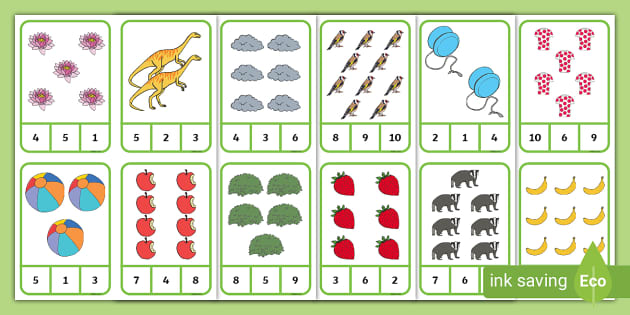
Number Recognition
Number recognition is foundational. Use large-number coloring pages, number tracing sheets, and “color by number” activities to link numeral shapes with quantities and names.

Counting and One-to-One Correspondence
Printable counting mats, dot-to-dot pages, and objects-to-number coloring tasks help children match each item to a single number, reinforcing accurate counting.
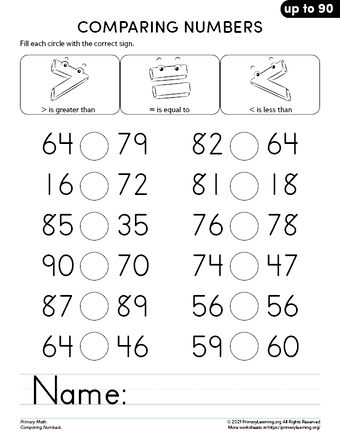
Comparing and Ordering Numbers
Activities like “color smaller numbers blue and larger numbers red” or printable number lines make comparative language (more/less, greater/lesser) concrete.
Basic Addition and Subtraction
Color-by-sum or color-by-difference printables require children to solve simple problems to know which color to use, blending arithmetic with art.
Problem Solving and Logical Thinking
Puzzles, patterned coloring sequences, and mini-story math printables develop reasoning skills. These formats encourage students to plan, test ideas, and check answers.
Practical Printable Activities and How to Use Them
1. Color-by-Number (Number Recognition & Operations)
Design images where each region corresponds to a number or the result of a simple equation. Use these for numerals, addition, subtraction, or even multiplication for older children.
2. Number Tracing and Coloring Pages (Fine Motor + Recognition)
Combine large traceable numerals with fun themed drawings (animals, vehicles) that children color after tracing. This connects the written symbol with a visual cue.
3. Dot-to-Dot and Counting Mats (One-to-One Correspondence)
Dot-to-dot pages that require counting aloud as they connect dots help children sequence numbers. Counting mats with movable objects (paper counters) strengthen quantity understanding.
4. Matching and Cut-and-Paste Printables (Sorting & Comparison)
Provide cards with numerals, sets of objects, and written words for numbers. Children cut, sort, and glue matches—great for kinesthetic learners and small-group work.
5. Story Problem Coloring Sheets (Contextual Problem Solving)
Create short narratives (e.g., “Sam had 3 apples and got 2 more”) and embed a coloring task that corresponds to the answer. These teach translation of language to math.
6. Patterned Coloring and Skip Counting (Number Relationships)
Use pattern templates where colors follow numeric sequences (every 2nd number colored red) to teach skip counting and early multiplication concepts.
How to Design Printables for Differentiation and Progression
Effective printables are simple to scale. Follow these principles:
Sample Lesson Plan Using Coloring Page and Printables (Ages 4–6)
Duration: 20–30 minutes. Goal: number recognition to 10 and one-to-one counting.
Assessment and Progress Tracking
Short, playful printables double as formative assessments. Use a simple rubric to track number skills across sessions:
| Skill | Emerging | Developing | Secure |
|---|---|---|---|
| Number recognition (1–10) | Needs visual prompts | Recognizes numbers with occasional errors | Accurate and quick identification |
| Counting/one-to-one | Counts with errors or skips | Counts reliably to 10 | Counts and groups accurately beyond 10 |
| Simple addition/subtraction | Uses objects with support | Solves simple problems with guidance | Solves mentally and explains thinking |
Keep a portfolio of completed coloring pages and short observation notes. Over weeks, you’ll see clear progress and areas that need reinforcement.
Using Technology and Printable Hybrids
Combine digital coloring apps with printable extensions. For instance, children can color an image on a tablet (reinforcing fine motor control) and then print a worksheet to answer related math problems. QR codes on printables can link to short tutorial videos or songs for blended learning.
Real-World Examples and Case Studies
Case Study: Homeschool Family — From Resistance to Enthusiasm
A homeschool family reported their 5-year-old resisted math worksheets but loved drawing. By replacing traditional problems with themed color-by-number printables tied to weekly topics (space, farm animals), the child’s counting accuracy improved from inconsistent to reliable within six weeks. Parents logged progress using a simple rubric and gradually introduced addition color-by-number sheets to build fluency.
Classroom Example: Small Group Intervention
A kindergarten teacher used cut-and-paste number matching printables during a 15-minute intervention block. Students who previously struggled with one-to-one correspondence moved up one rubric level after four sessions, showing better counting strategies and confidence.
Printable Resource Ideas and Templates to Create
Tip: Create a printable pack for each number range (1–10, 1–20, 1–50) so you can quickly choose materials matched to a child’s level.
Tips for Engaging Reluctant Learners
Recommended Internal and External Links
Internal link suggestions (anchor text recommendations):
Authoritative external links to include (open in new window):
Accessibility, Image Alt Text, and Schema Recommendations
Include clear alt text for printable images to support accessibility. Example alt text:
Schema markup recommendation: use Article schema with properties for headline, description, author, datePublished, image, and keywords (e.g., coloring page and printables, homeschool math, number recognition). Include an educationalResourceType property for “worksheet” if using LearningResource schema.
FAQ — Quick Answers for Busy Parents
How often should I use printables for best results?
Short daily sessions (10–20 minutes) or several times per week work well. Consistency beats length—frequent, playful practice builds fluency.
Are color-by-number activities effective for older students?
Yes—adapt complexity. Use algebraic expressions, multiplication, or fractions as keys for older learners to combine creativity with higher-level practice.
How do I know when to move to the next level?
When a child completes tasks accurately and quickly with minimal prompts, introduce slightly harder problems or expand the number range.
Call to Action
Start today: download or create a small printable pack (five sheets) that target one skill—number recognition or basic addition—and use it for two weeks. Track progress with a simple rubric and adjust difficulty as confidence grows. Sign up for a weekly newsletter to receive fresh printable themes and lesson ideas directly to your inbox.
Conclusion
Coloring page and printables are powerful tools in homeschool math. They turn abstract number concepts into tangible, enjoyable activities that build number recognition, counting accuracy, problem solving, and broader number skills. With simple design tweaks, effective assessment strategies, and progression plans, these playful resources can accelerate learning and foster a lifelong positive attitude toward math. Use the activity ideas, templates, and tips above to create a fun, structured math routine that meets each child where they are and helps them grow with confidence.
Key takeaways: integrate play and printables into daily routines, start with multisensory tasks, track progress with short rubrics, and gradually increase complexity while keeping learning enjoyable.


0 Comments