
Math Made Fun with Coloring: Creative Activities, Worksheets, and Lesson Ideas
Start with a question: What if crayons could unlock number sense, geometry fluency, and algebraic thinking? Coloring isn’t just calming artwork—when paired with purposeful math tasks, it becomes a powerful, evidence-backed tool to boost engagement, comprehension, and retention.
This comprehensive guide shows teachers, parents, and curriculum designers how to use coloring activities to teach math from kindergarten through middle school. You’ll find classroom-ready strategies, sample lesson sequences, printable worksheet concepts, differentiation tips, assessment ideas, and links to helpful external resources. Ready to transform math time into a colorful learning adventure? Read on to discover step-by-step methods, examples, and reproducible templates you can implement tomorrow.

Why Coloring Works for Math Learning
Coloring supports math learning through multiple mechanisms:
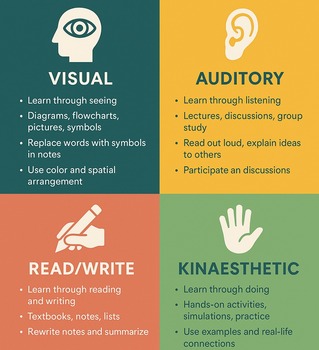
- Multisensory engagement: Integrates visual, kinesthetic, and often verbal processing—helpful for diverse learners.
- Reduced math anxiety: Creative tasks lower stress and increase willingness to experiment with problems.
- Immediate feedback: Coloring-by-number and code-based tasks make errors visible and correctable.
- Pattern recognition: Coloring highlights repetition, symmetry, and spatial relationships—foundational for algebra and geometry.
- Motivation and persistence: Tangible, attractive outcomes (a completed colored image) motivate students to finish tasks and iterate.
- Number sense & operations (addition, subtraction, multiplication, division)
- Place value and rounding
- Fractions, decimals, and percentages
- Patterns, sequences, and algebraic reasoning
- Geometry: shapes, symmetry, area, perimeter
- Coordinate plane and graphing
- Measurement and units
- Statistics: mean, median, mode, and interpreting charts
- Create problems—e.g., 24 ÷ 6, 7 × 8, 45 + 18—place results as labels in regions of the picture.
- Provide a color key (e.g., 1 = red, 2 = blue) where numbers correspond to solution categories (e.g., evens/odds, multiples of 3).
- Students solve each problem and color the corresponding region.
- Include mixed operations to increase complexity.
- Use decimal or fraction problems for older students.
- Create clues requiring use of different math skills (e.g., “If the area of a rectangle is 24 and length is 6, color cell A blue”).
- Students solve clues and reveal a hidden picture.
- Add dependency clues (one clue’s result used in another) to encourage note-taking and reasoning.
- Assign colors to fraction categories or results (e.g., 0.25 = green).
- Students compute or identify equivalent values and color accordingly.
- Use improper fractions and mixed numbers and ask students to simplify before coloring.
- Ask students to color regions based on shape attributes (e.g., triangles are blue, quadrilaterals are yellow).
- For symmetry: color one half of an image and reflect it across the line of symmetry.
- Include scale factor coloring—students compute the area after scaling and color according to ranges.
- Give students a sequence of coordinates with color codes (e.g., (2,3) red).
- Students plot and color to reveal a picture or pattern.
- Have students write their own coordinate art and swap with peers.
- Warm-up: Count together and identify numbers 0–20 (5 minutes).
- Model: Demonstrate solving 7 + 5 and show coloring based on result categories (e.g., <10 vs ≥10).
- Independent practice: Students solve and color. Teacher circulates to provide guided help.
- Share: Display finished works and ask students to describe a pattern they notice.
- Provide manipulatives (counters) for students needing concrete support.
- Challenge advanced students with two-digit sums or missing addends.
- Collect worksheets and quickly score for computation accuracy and explanation confidence.
- Hook: Show a colored mosaic and ask how math could have created the picture.
- Teach: Review finding equivalent fractions and adding fractions with like denominators.
- Practice: Students solve tile problems and color corresponding tiles.
- Reflect: Students write one sentence describing what strategies helped them find equivalents.
- Offer fraction strips for tactile support or challenge with mixed denominators for advanced students.
- Use a quick exit ticket asking for an equivalent fraction and one addition problem to solve.
- Warm-up: Identify slope and y-intercept from quick examples.
- Activity: Students solve for y for a list of x-values and plot points, coloring points by slope category to reveal an image or design.
- Extension: Ask students to create an image using linear inequalities to shade regions.
- Scaffold by providing tables of values or challenge students to encode quadratic curves with color rules.
- Evaluate students’ plotted points, explanations of steps, and ability to create an equation that fits their design.
- Choose the math objective (e.g., adding fractions, plotting points, multiplying decimals).
- Select an image or grid appropriate for the grade level (simple shapes for younger students, dense mosaics for older learners).
- Segment the image into regions and assign problem values or codes to each section.
- Create a color key linked to answer categories (e.g., multiples, ranges, equivalence classes).
- Test the worksheet for clarity—solve it yourself or pilot with a colleague.
- Add differentiation supports: hints, manipulatives, or an answer legend for self-checking.
- Free drawing programs: Inkscape, LibreOffice Draw
- Paid/online tools: Canva, Adobe Illustrator, Teachers Pay Teachers (for inspiration)
- Math-specific generators: WorksheetWorks.com, Math-Aids.com, SuperTeacherWorksheets.com
- Printable clip art and grid templates: OpenClipart, GeoGebra (for coordinate grids)
- Provide multiple entry points: simplified problems for scaffolding and extension prompts for enrichment.
- Use assistive materials: large-print worksheets, manipulatives, and tactile outlines for visually impaired students.
- Leverage pair work: partner students strategically so peers can model strategies and language.
- Offer choices: let students pick color palettes or themes to increase ownership and cultural relevance.
- Include language supports: math vocabulary lists and sentence starters for English learners.
- Rubric-based review: assess accuracy, strategy explanation, and effort on a simple 3-point scale.
- Exit tickets: one problem from the coloring page resubmitted on a separate sheet for quick marking.
- Peer review: students explain their solution choices and color rubric to a partner.
- Self-assessment checklist: “I showed my work, checked my answer, and used the correct color.”
- Set expectations for supplies, time limits, and cleanup.
- Create color-sharing stations with crayons or markers to reduce noise and crowding.
- Rotate tasks—introductory warm-up, independent practice, and challenge extension—to maintain engagement.
- Use timed rounds for practice fluency (e.g., “Solve and color 10 problems in 12 minutes”).
- Google Slides: Create drag-and-drop color tiles or reveal hidden images based on answers.
- GeoGebra: Interactive coordinate and geometry coloring activities.
- Seesaw and Kami: Students annotate and color PDFs, then submit for review.
- Smartboard activities: Whole-class coloring problem-solving using touch interactions.
- Engagement increased—classroom observation showed 85% on-task behavior during practice vs 60% in prior units.
- Formative data indicated a 20% increase in correct responses on fraction equivalence items between pre- and post-assessments.
- Student feedback: majority reported higher confidence and enjoyment with fractions after the unit.
- Define learning objective for the coloring activity.
- Select or create a suitable visual grid or image.
- Create problems and verify accuracy.
- Design a clear color key tied to solution categories.
- Plan differentiation and materials (manipulatives, large print).
- Decide on assessment method: rubric, exit ticket, or self-check.
- Pilot one copy and revise if necessary.

Research and educational grounding
Educational research supports active, engaging tasks and multimodal learning. While coloring itself is not a replacement for explicit instruction, combining coloring with targeted math objectives aligns with Universal Design for Learning (UDL) principles and formative assessment strategies.

Core Math Topics That Pair Well with Coloring
Coloring can be adapted to almost any math topic. Key pairings that consistently work well include:
Practical Coloring Activity Types (with Examples)
Below are reproducible activity types you can use in class, small groups, or at home. Each includes a purpose, materials, setup, and extension ideas.

1. Color-by-Number / Answer Key Coloring
Purpose: Practice computation fluency and immediate self-checking.
Materials: Printable coloring page segmented into numbered areas, answer key mapping numbers to colors.
Setup & Instructions:
Extensions:
2. Code Coloring (Logic & Problem Solving)
Purpose: Build logical thinking and multi-step problem solving.
Materials: Grid or image with cells labeled by codes; a set of clues linking codes to colors.
Setup & Instructions:
Extensions:
3. Fraction & Decimal Coloring
Purpose: Visualize equivalence, addition/subtraction of fractions, and converting between fractions and decimals.
Materials: Coloring pages with fractional labels (1/2, 3/8) or decimal equivalents.
Setup & Instructions:
Extensions:
4. Geometry & Symmetry Coloring
Purpose: Teach properties of shapes, symmetry lines, transformations, area, and perimeter.
Materials: Geometric designs, tessellation outlines, coordinate grid images.
Setup & Instructions:
Extensions:
5. Coordinate Plane Art
Purpose: Practice plotting points, recognizing quadrants, and following ordered pairs.
Materials: Coordinate grids, list of ordered pairs colored by region.
Setup & Instructions:
Extensions:
Sample Lesson Plans by Grade Band
Below are three short lesson sequences you can adapt. Each includes objective, materials, procedure, differentiation, and assessment ideas.
Kindergarten–Grade 2: Number Recognition & Simple Addition
Objective: Strengthen number recognition and addition up to 20 using color-by-number.
Materials: Animal-themed coloring-by-number worksheets with single-digit addition problems.
Procedure:
Differentiation:
Assessment:
Grades 3–5: Fractions and Equivalent Values
Objective: Identify equivalent fractions and add fractions with like denominators using a coloring mosaic.
Materials: Mosaic grid, fraction problems labeled on tiles, color key for fraction families.
Procedure:
Differentiation:
Assessment:
Grades 6–8: Algebraic Patterns and Coordinate Art
Objective: Use linear equations to color-coded regions and plot linear patterns on the coordinate plane.
Materials: Coordinate grids, equation list, color keys for slope categories (positive, negative, zero, undefined).
Procedure:
Differentiation:
Assessment:
Creating Your Own Coloring Worksheets: Step-by-Step
Designing effective coloring math activities requires aligning visuals with objectives. Follow this streamlined workflow:
Tools and Resources for Worksheet Creation
Differentiation and Inclusion Strategies
Coloring math activities are naturally flexible. Use these strategies to reach diverse learners:
Assessment and Feedback: Making Coloring Count
Coloring can also serve as a formative assessment tool. Use these quick, meaningful methods:
Classroom Management and Logistics
Using coloring in a math classroom at scale requires clear routines:
Sample Printable Ideas (Descriptions for Immediate Creation)
Here are ready-to-produce worksheet concepts you can make quickly.
1. Multiplication Garden
Grid of flowers—each petal labeled with multiplication expressions (e.g., 6×7). Color petals with the same product in the same color to reveal a pattern.
2. Fraction Pizza Party
Pizza slices represent fractions. Students add fractions for each pizza and color the resulting slices based on equivalence classes.
3. Coordinate Constellation
Plot star coordinates and color points by quadrant; connecting the points reveals a night-sky shape.
4. Algebraic Maze
Maze sections have algebraic expressions. Students simplify or solve to reveal which path is correct and color the path to escape.
Technology Integrations
Digital coloring activities can be interactive and track student progress automatically.
Case Study: A Mid-Year Unit That Boosted Engagement
Context: A suburban grade 4 classroom with mixed ability levels (24 students).
Approach: The teacher introduced a 3-week “Fraction Art” unit where each lesson combined direct instruction, practice problems, and color-by-fraction mosaics. Students worked individually and in pairs to solve fraction equivalence and addition tasks, coloring tiles to reveal seasonal images.
Results:
Takeaway: When aligned with explicit instruction and scaffolded practice, coloring-focused units can measurably improve understanding and attitude.
Printable Checklist for Teachers
FAQ (Optimized for Voice Search and Featured Snippets)
How does coloring help students learn math?
Coloring makes abstract math concrete by linking computations to visible outcomes, increasing engagement and offering immediate visual feedback that helps correct misconceptions.
What age is coloring-based math best for?
Coloring can be effective from kindergarten

0 Comments