
Math Made Fun: Unleash Your Inner Artist with Coloring Activities
Math and art might seem like polar opposites, but when combined, they create a powerful and engaging learning experience. Coloring activities can transform abstract mathematical concepts into tangible, visually appealing exercises that make learning fun for all ages. Whether you’re a teacher looking to spice up your classroom or a parent wanting to help your child develop a love for math, incorporating coloring into your math lessons is a fantastic strategy. This article explores the numerous benefits of using coloring to teach math, provides practical examples, and offers tips on how to get started.

Why Coloring and Math are a Perfect Match
Coloring isn’t just a pastime; it’s a valuable tool that enhances learning in several ways. By integrating coloring with math, you can tap into the following benefits:
- Enhanced Engagement: Coloring activities naturally capture attention and make learning more enjoyable. When children are engaged, they’re more likely to retain information.
- Improved Focus and Concentration: The act of coloring requires focus, helping children develop their concentration skills. This is particularly beneficial for those who struggle with attention spans.
- Reduced Math Anxiety: Math can be intimidating for some. Coloring provides a low-pressure, creative outlet that reduces anxiety and fosters a positive attitude towards math.
- Reinforced Learning: Coloring activities reinforce mathematical concepts by presenting them in a visual and interactive format. This multi-sensory approach helps solidify understanding.
- Development of Fine Motor Skills: Coloring improves hand-eye coordination and fine motor skills, which are essential for writing and other academic tasks.
- Creative Expression: Coloring allows for creative expression, making math more relatable and less abstract. This can lead to a deeper appreciation for the subject.
- Addition and Subtraction: Create a picture divided into sections. Each section contains a simple addition or subtraction problem. Students solve the problem and color the section according to the key.
- Multiplication and Division: Similar to addition and subtraction, but using multiplication and division problems. This is a great way to reinforce multiplication tables and division facts.
- Fractions and Decimals: Assign colors to different fractions or decimals. Students simplify fractions or convert decimals to fractions before coloring.
- Geometry: Include shapes with different angles or side lengths. Students calculate the angles or measure the sides and color the shapes according to their measurements.
- 2 + 2 = 4 (Red)
- 3 + 1 = 4 (Red)
- 1 + 3 = 4 (Red)
- 5 + 5 = 10 (Blue)
- 6 + 4 = 10 (Blue)
- 7 + 3 = 10 (Blue)
- Regular Tessellations: Start with basic shapes like squares, triangles, or hexagons. Students can explore how these shapes tessellate and create their own patterns.
- Semi-Regular Tessellations: Combine two or more regular polygons to create tessellations. This introduces more complexity and encourages creativity.
- Escher-Style Tessellations: Inspired by the artist M.C. Escher, these tessellations use irregular shapes that transform into recognizable figures. Creating these requires more advanced skills but can be incredibly rewarding.
- Line Symmetry: Draw a line down the middle of a page. Students draw a design on one side of the line and then mirror it on the other side to create a symmetrical image.
- Rotational Symmetry: Create a design that can be rotated around a central point and still look the same. This introduces the concept of rotational symmetry and encourages creativity.
- Symmetry with Shapes: Use geometric shapes to create symmetrical patterns. This combines symmetry with shape recognition and spatial reasoning.
- Sierpinski Triangle: Start with an equilateral triangle. Divide it into four smaller equilateral triangles and remove the center one. Repeat this process with the remaining triangles. This creates the Sierpinski triangle, a classic fractal.
- Mandelbrot Set: The Mandelbrot set is a famous fractal that can be colored based on the number of iterations it takes for a point to escape a certain boundary. While the math behind it is complex, pre-generated images of the Mandelbrot set can be colored creatively.
- Custom Fractals: There are many online tools that allow you to generate your own fractals. Students can experiment with different parameters and create unique fractal patterns to color.
- Islamic Geometric Patterns: Islamic art is known for its intricate geometric patterns. These patterns are based on mathematical principles and can be recreated using compasses and straightedges.
- Celtic Knots: Celtic knots are another example of geometric designs that can be colored. These knots are based on interwoven lines and can be quite complex.
- Op Art: Op art, or optical art, uses geometric shapes and colors to create optical illusions. Students can create their own op art designs using simple geometric shapes and contrasting colors.
- Choose a Concept: Select a math concept you want to reinforce, such as addition, fractions, or symmetry.
- Design the Activity: Create a coloring activity that aligns with the chosen concept. This could be a color-by-number worksheet, a tessellation project, or a symmetry art activity.
- Gather Materials: Prepare the necessary materials, such as worksheets, coloring pencils, markers, or crayons.
- Provide Instructions: Clearly explain the instructions to the students. Make sure they understand the math concept and how it relates to the coloring activity.
- Monitor and Assist: Observe students as they work and provide assistance as needed. Encourage them to ask questions and explore the concepts further.
- Review and Discuss: After the activity, review the concepts and discuss the results. This helps reinforce learning and address any misconceptions.
- Make it Relevant: Connect the activities to real-world examples to make them more relatable. For instance, when teaching fractions, use a pizza divided into slices as a visual aid.
- Offer Variety: Use a variety of coloring activities to keep students engaged and prevent boredom.
- Encourage Creativity: Allow students to express their creativity through their coloring choices. This makes the activity more personal and enjoyable.
- Provide Feedback: Offer constructive feedback on students’ work. This helps them improve their understanding and skills.
- Use Technology: Explore online resources and apps that offer interactive math coloring activities.
- Adapt to Different Learning Styles: Be mindful of different learning styles and adapt the activities accordingly. Some students may prefer visual aids, while others may learn best through hands-on activities.
- Grade 3-4: Multiplication and division color-by-number worksheets with more complex problems. Introduction to basic symmetry activities.
- Grade 5: Fraction and decimal color-by-number worksheets. Tessellation projects using basic shapes.
- Grade 7: Symmetry art projects using more complex shapes and patterns. Exploration of Islamic geometric patterns.
- Grade 8: Introduction to fractal coloring using the Sierpinski triangle. Creation of op art designs.
- Grade 11-12: Advanced symmetry art projects involving transformations and reflections. Integration of calculus concepts into geometric designs.
- Websites:
- Teachers Pay Teachers: Offers a wide variety of math coloring worksheets and activities created by teachers.
- Pinterest: A great source of inspiration for math coloring ideas.
- Math-Drills.com: Provides free math worksheets, including color-by-number activities.
- Books:
- “The Art of Math Coloring Book” by various authors: A collection of math-related coloring activities for all ages.
- “Math Art and Drawing Games for Kids” by Karyn Tripp: A fun and engaging book that combines math and art.
- “Sir Cumference” series by Cindy Neuschwander: A series of books that introduce math concepts through engaging stories and illustrations.
- Apps:
- Color by Number – Math Game: An app that offers a variety of math-related color-by-number activities.
- DoodleMaths: An app that combines math practice with creative drawing.
- Lack of Interest: Some students may not be interested in coloring. To address this, try to find activities that align with their interests, such as using themes from their favorite movies or video games.
- Difficulty with Math Concepts: Some students may struggle with the math concepts involved in the activities. Provide additional support and scaffolding to help them understand the concepts.
- Time Constraints: Coloring activities can take time to complete. Allocate sufficient time for the activities and break them down into smaller, more manageable tasks.
- Classroom Management: Some students may become distracted or disruptive during coloring activities. Establish clear expectations and provide structured guidelines to maintain order.
Key Takeaway: Coloring transforms math from a daunting subject into an engaging and enjoyable activity, fostering a positive learning environment.

Types of Math Coloring Activities
The possibilities for math-related coloring activities are endless. Here are some popular and effective examples:
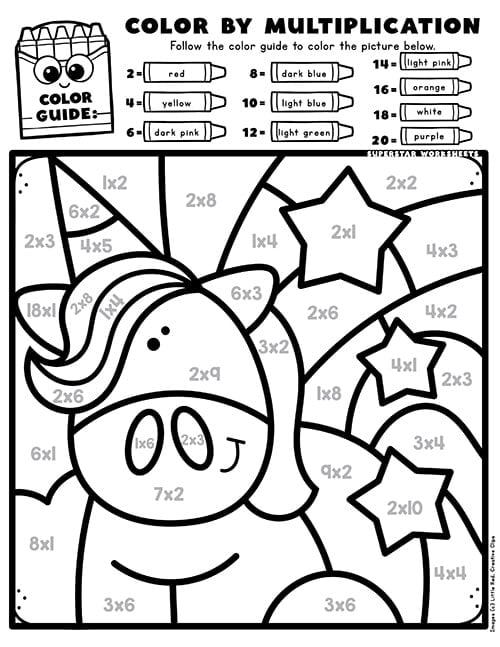
Color by Number (Math Edition)
Color by number activities are a classic, and they’re easily adaptable to math. Assign colors to different numbers or solutions to math problems. Students then color the corresponding areas based on their calculations.
Example: A worksheet features a picture of a butterfly. Each section contains an addition problem. The key is:
Students solve each problem and color the corresponding section red or blue.

Tessellations
Tessellations are patterns made up of repeating shapes that fit together without any gaps or overlaps. Creating and coloring tessellations is a fun way to explore geometry and spatial reasoning.
Example: Provide students with a template of a hexagon. Have them create a repeating pattern by tracing the hexagon multiple times on a page. Then, encourage them to color each hexagon in a unique way to create a visually stunning tessellation.

Symmetry Art
Symmetry is a fundamental concept in geometry, and creating symmetrical artwork is a great way to reinforce this concept.
Example: Give students a template of a butterfly with one wing drawn. They must complete the other wing to create a symmetrical butterfly. Then, they can color the butterfly using symmetrical patterns and designs.
Fractal Coloring
Fractals are complex patterns that repeat at different scales. Coloring fractals can be a mesmerizing and educational experience.
Example: Provide students with a pre-drawn Sierpinski triangle. Have them color each triangle in a different color or pattern. This activity introduces them to the concept of fractals and encourages attention to detail.
Geometric Designs
Creating geometric designs involves using various geometric shapes and patterns to create visually appealing artwork.
Example: Have students create a geometric design using a compass and straightedge. They can start with a circle and then add intersecting lines and arcs to create a complex pattern. Once the design is complete, they can color it using different colors and patterns.
Internal Link Suggestion: For more on geometric concepts, link to another article on your site about “Exploring Geometry Through Art” using the anchor text “geometric concepts.”
How to Implement Math Coloring Activities
Implementing math coloring activities is straightforward and requires minimal preparation. Here’s a step-by-step guide:
Pro Tip: Start with simple activities and gradually increase the complexity as students become more comfortable.
Tips for Success
To maximize the benefits of math coloring activities, consider these tips:
External Link Suggestion: Link to a resource like Khan Academy (https://www.khanacademy.org/) for additional math learning materials using the anchor text “Khan Academy.”
Examples of Math Coloring Activities by Grade Level
Here are some examples of math coloring activities tailored to different grade levels:
Elementary School (Grades 1-5)
* Grade 1-2: Simple addition and subtraction color-by-number worksheets with themes like animals or holidays.
Middle School (Grades 6-8)
* Grade 6: More advanced fraction and decimal activities. Introduction to geometric designs using compasses and straightedges.
High School (Grades 9-12)
* Grade 9-10: Complex geometric designs and tessellations. Exploration of the Mandelbrot set and other fractals.
Internal Link Suggestion: Link to another article on your site about “Math Resources for High School Students” using the anchor text “Math Resources.”
Resources for Math Coloring Activities
Numerous resources are available online and in print to help you create and implement math coloring activities. Here are some examples:
Call to Action: Explore these resources and start incorporating math coloring activities into your lessons today! Sign up for our newsletter to receive exclusive math activity ideas and resources.
Overcoming Challenges
While math coloring activities are generally well-received, you may encounter some challenges. Here are some common issues and how to address them:
Key Takeaway: By addressing these challenges proactively, you can ensure that math coloring activities are a positive and effective learning experience for all students.
The Future of Math Education: Embracing Creativity
Math education is evolving, and there’s a growing recognition of the importance of creativity and engagement. By incorporating coloring activities into math lessons, you can help students develop a deeper understanding and appreciation for the subject. As technology advances, we can expect to see even more innovative ways to combine math and art, creating exciting new learning opportunities for students of all ages. Embracing these creative approaches will not only make math more fun but also prepare students for the challenges and opportunities of the future.
Call to Action: Share your experiences with math coloring activities in the comments below! What are your favorite activities? What challenges have you faced? We’d love to hear from you.
Conclusion
Math coloring activities are a powerful tool for making math fun and engaging. By combining the visual appeal of coloring with the logical rigor of math, you can create a learning experience that is both enjoyable and effective. Whether you’re a teacher, parent, or student, incorporating coloring into your math lessons can help you unlock your inner artist and develop a deeper appreciation for the beauty and power of mathematics. So grab your coloring pencils and start exploring the wonderful world of math through art!
Final Call to Action: Subscribe to our blog for more tips and ideas on making math fun and engaging. Follow us on social media for daily inspiration and updates. Let’s make math a colorful and exciting adventure for everyone!


0 Comments