
Unleash Creativity and Learning with STEM Coloring Pages, Printables, and Hands-On Projects
Ignite a passion for science, technology, engineering, and mathematics (STEM) in your children with engaging coloring pages, printables, and hands-on projects. Learning doesn’t have to be confined to textbooks; it can be an exciting adventure filled with creativity, discovery, and problem-solving. This article will explore how to integrate STEM coloring pages and printables, homeschool science projects, early learning STEM activities, hands-on education, and problem-solving for kids to create a fun and enriching educational experience.

Why STEM Education is Crucial for Young Learners
STEM education is more than just memorizing facts and formulas. It’s about fostering critical thinking, creativity, and problem-solving skills that are essential for success in the 21st century. By introducing STEM concepts early, you’re equipping your children with the tools they need to navigate a rapidly changing world.
- Develops Critical Thinking: STEM activities encourage children to analyze information, evaluate solutions, and make informed decisions.
- Fosters Creativity: STEM is not just about logic and reason; it also encourages innovative thinking and creative problem-solving.
- Enhances Problem-Solving Skills: STEM projects challenge children to identify problems, develop solutions, and test their ideas.
- Prepares for Future Careers: STEM fields are growing rapidly, and a solid STEM foundation can open doors to a wide range of exciting career opportunities.
- Encourages Collaboration: Many STEM activities involve teamwork, teaching children how to work together to achieve a common goal.
- Reinforces Learning: Coloring pages can be used to review and reinforce concepts learned in other STEM activities.
- Sparks Curiosity: Engaging visuals can spark children’s curiosity and encourage them to ask questions about the world around them.
- Develops Fine Motor Skills: Coloring helps develop fine motor skills and hand-eye coordination.
- Provides a Creative Outlet: Coloring allows children to express their understanding of STEM concepts in a creative way.
- Space Exploration Coloring Pages: Journey to the stars with coloring pages of planets, rockets, and astronauts.
- Engineering Design Coloring Pages: Design and color bridges, buildings, and other engineering marvels.
- Coding Coloring Pages: Learn the basics of coding with coloring pages that illustrate algorithms and programming concepts.
- Math-Themed Coloring Pages: Practice math skills with coloring pages that incorporate addition, subtraction, multiplication, and division.
- Printable Science Experiments: Find simple science experiments that can be printed and followed at home, often including a coloring element.
- Encourages Experimentation: Projects encourage children to test their ideas and see what happens.
- Develops Observation Skills: Science projects require careful observation and data collection.
- Reinforces Learning: Projects help reinforce concepts learned in other science activities.
- Promotes Problem-Solving: Science projects often involve troubleshooting and finding solutions to unexpected problems.
- Crystal Growing: Grow your own crystals using borax, water, and a pipe cleaner.
- Planting Seeds: Plant seeds in a jar and observe the process of germination and growth.
- Building Simple Machines: Construct simple machines like levers, pulleys, and inclined planes.
- Creating a Terrarium: Build a miniature ecosystem in a jar and observe the interactions between plants, soil, and water.
- Exploring Electricity: Conduct simple experiments with batteries, wires, and light bulbs to learn about circuits.
- Enhances Spatial Reasoning: Activities like building blocks and puzzles help develop spatial reasoning skills.
- Promotes Creativity: STEM activities encourage children to think outside the box and come up with innovative solutions.
- Builds Confidence: Successfully completing STEM activities can boost children’s confidence and self-esteem.
- Encourages Collaboration: Many early learning STEM activities involve teamwork and cooperation.
- Playing with Puzzles: Solve puzzles to develop problem-solving skills and spatial reasoning.
- Exploring Nature: Take nature walks and observe plants, animals, and insects.
- Conducting Simple Experiments: Conduct simple experiments like mixing colors or making slime.
- Playing with Water: Explore the properties of water through activities like pouring, measuring, and floating objects.
- Using Construction Toys: Play with construction toys like LEGOs or K’NEX to build structures and explore engineering concepts.
- Promotes Active Learning: Hands-on activities encourage children to actively participate in the learning process.
- Makes Learning More Concrete: Hands-on activities make abstract concepts more concrete and easier to understand.
- Develops Problem-Solving Skills: Hands-on activities require children to think critically and find solutions to problems.
- Increases Motivation: Hands-on activities can increase children’s motivation to learn and explore new topics.
- Building Projects: Build structures, models, and prototypes to learn about engineering and design.
- Art Projects: Create art projects to explore creativity and self-expression.
- Cooking Activities: Cook and bake to learn about math, science, and nutrition.
- Gardening: Plant and care for plants to learn about botany and ecology.
- Field Trips: Visit museums, science centers, and other educational destinations to learn about different topics.
- Encourages Resilience: Learning to overcome challenges and setbacks can help children develop resilience.
- Develops Critical Thinking: Problem-solving requires children to analyze information, evaluate solutions, and make informed decisions.
- Promotes Creativity: Finding creative solutions to problems can encourage children to think outside the box.
- Prepares for Future Challenges: Strong problem-solving skills can help children navigate future challenges in school, work, and life.
- Coding Challenges: Participate in coding challenges to learn programming and problem-solving skills.
- Engineering Design Challenges: Design and build structures to meet specific criteria and solve engineering problems.
- Math Problems: Solve math problems to develop logical reasoning and problem-solving skills.
- Real-World Scenarios: Present children with real-world scenarios and ask them to come up with solutions.
- Escape Rooms: Participate in escape rooms to work together as a team to solve puzzles and escape.
- Explore Nature: Take nature walks and observe plants, animals, and insects.
- Conduct Simple Experiments: Conduct simple experiments in the kitchen or backyard.
- Build Things: Build structures, models, and prototypes using everyday materials.
- Solve Puzzles: Solve puzzles and brain teasers as a family.
- Read STEM Books: Read books about science, technology, engineering, and mathematics.
Key Takeaway: STEM education empowers children with essential skills for future success, fostering critical thinking, creativity, and problem-solving abilities.
The Power of STEM Coloring Pages and Printables
STEM coloring pages and printables are a fantastic way to introduce complex concepts in a fun and accessible manner. They can be used to reinforce learning, spark curiosity, and provide a creative outlet for children to express their understanding.

Benefits of Using STEM Coloring Pages:
* Introduces STEM Concepts Visually: Coloring pages can illustrate complex concepts in a simplified and engaging way.
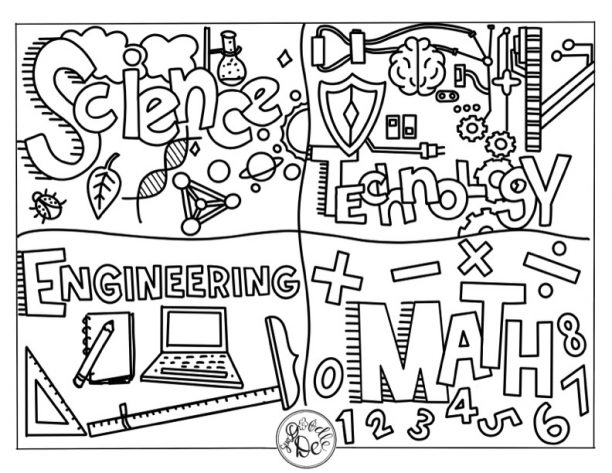
Types of STEM Coloring Pages and Printables:
* Anatomy Coloring Pages: Explore the human body with detailed coloring pages of organs, bones, and muscles.
Example: A coloring page featuring the solar system can introduce children to the names and order of the planets, sparking their interest in astronomy.
Actionable Tip: Search online for free STEM coloring pages and printables tailored to your child’s age and interests. Websites like Education.com, Crayola, and Teachers Pay Teachers offer a wide variety of options.
(Internal Link Suggestion: Link to another article on your site about “Free Educational Resources for Kids” using the anchor text “Free Educational Resources”)

Engaging in Homeschool Science Projects
Homeschool science projects offer a hands-on approach to learning that can make science come alive for children. These projects encourage experimentation, observation, and critical thinking, allowing children to learn by doing.
Benefits of Homeschool Science Projects:
* Hands-On Learning: Science projects provide a tangible way to learn about scientific concepts.
Types of Homeschool Science Projects:
* Volcano Eruptions: Create a model volcano and simulate an eruption using baking soda and vinegar.
Example: Building a model volcano allows children to understand the processes behind volcanic eruptions and the different types of volcanoes.
Actionable Tip: Choose homeschool science projects that align with your child’s interests and learning goals. Websites like Science Buddies and KiwiCo offer a wide range of project ideas and kits.
(External Link Suggestion: Link to ScienceBuddies.org using the anchor text “Science Buddies” to provide additional project resources.)
Fostering Early Learning STEM Skills
Early learning STEM is crucial for building a strong foundation for future STEM success. Introducing STEM concepts to young children through play-based activities can spark their curiosity and encourage them to explore the world around them.
Benefits of Early Learning STEM:
* Develops Problem-Solving Skills: STEM activities encourage young children to think critically and find solutions to problems.
Types of Early Learning STEM Activities:
* Building with Blocks: Use building blocks to create structures, explore shapes, and develop spatial reasoning skills.
Example: Playing with building blocks allows young children to explore shapes, sizes, and spatial relationships, laying the foundation for future geometry and engineering skills.
Actionable Tip: Incorporate early learning STEM activities into your child’s daily routine. Look for toys, games, and books that promote STEM concepts.
The Importance of Hands-On Education
Hands-on education is a powerful way to engage children in learning and make abstract concepts more concrete. By actively participating in activities, children are more likely to retain information and develop a deeper understanding of the subject matter.
Benefits of Hands-On Education:
* Engages Multiple Senses: Hands-on activities engage multiple senses, making learning more memorable and effective.
Types of Hands-On Education Activities:
* Science Experiments: Conduct science experiments to explore scientific concepts and principles.
Example: Building a model airplane allows children to learn about aerodynamics and engineering principles in a hands-on and engaging way.
Actionable Tip: Incorporate hands-on education activities into your child’s learning experiences. Look for opportunities to get them involved in projects, experiments, and other activities that promote active learning.
(Internal Link Suggestion: Link to another article on your site about “Fun Educational Activities for Kids” using the anchor text “Fun Educational Activities”)
Developing Problem-Solving Skills in Kids
Problem-solving for kids is a critical skill that can be developed through STEM activities and challenges. By encouraging children to tackle problems and find solutions, you’re helping them build confidence, resilience, and critical thinking skills.
Benefits of Developing Problem-Solving Skills:
* Builds Confidence: Successfully solving problems can boost children’s confidence and self-esteem.
Types of Problem-Solving Activities:
* Puzzles and Brain Teasers: Solve puzzles and brain teasers to develop logical thinking and problem-solving skills.
Example: Presenting children with a challenge to build a tower using limited materials can help them develop problem-solving skills as they experiment with different designs and techniques.
Actionable Tip: Encourage problem-solving for kids by providing them with opportunities to tackle challenges and find solutions. Offer support and guidance, but avoid giving them the answers directly.
(External Link Suggestion: Link to a resource like Khan Academy Kids using the anchor text “Khan Academy Kids” for additional problem-solving exercises.)
Integrating STEM into Everyday Life
STEM education doesn’t have to be confined to formal lessons or structured activities. You can integrate STEM concepts into everyday life by encouraging your children to explore the world around them, ask questions, and experiment with different ideas.
Ways to Integrate STEM into Everyday Life:
* Ask Questions: Encourage your children to ask questions about how things work and why things happen.
Example: When baking cookies, you can discuss the chemical reactions that occur when the ingredients are mixed and heated, turning a simple activity into a STEM learning opportunity.
Key Takeaway: Integrating STEM into everyday life can make learning more engaging and relevant for children, fostering a lifelong love of science, technology, engineering, and mathematics.
Conclusion
By incorporating STEM coloring pages and printables, homeschool science projects, early learning STEM activities, hands-on education, and problem-solving for kids into your child’s learning experiences, you can ignite their passion for STEM and equip them with the skills they need to succeed in the 21st century. Remember to make learning fun, engaging, and relevant to their interests. Encourage them to explore, experiment, and ask questions. With your support and guidance, your children can develop a lifelong love of STEM and become the innovators and problem-solvers of tomorrow. Embrace the journey of discovery and watch your children thrive in the exciting world of STEM!
Ready to spark your child’s STEM journey? Start today with a simple science experiment or a fun STEM coloring page. The possibilities are endless!


0 Comments