
Math Made Fun: Unleash Your Inner Artist with Coloring Activities
Math and coloring? At first glance, they might seem like an odd couple. Math often evokes images of complex equations and abstract concepts, while coloring brings to mind creativity, relaxation, and vibrant hues. However, when these two seemingly disparate worlds collide, something magical happens. Coloring can transform tedious math exercises into engaging and enjoyable activities, making learning more accessible and effective for learners of all ages. This article will explore the wonderful world of math made fun through coloring, revealing how this creative approach can unlock a deeper understanding and appreciation for mathematical concepts. Get ready to unleash your inner artist and discover the joy of learning with color!
Why Combine Math and Coloring? The Benefits Unveiled
The integration of coloring into math education offers a multitude of benefits that extend beyond mere entertainment. It’s a powerful pedagogical tool that caters to different learning styles and enhances cognitive development. Let’s delve into some of the key advantages:
- Reduced Math Anxiety: For many, math is a source of anxiety and frustration. Coloring provides a relaxing and enjoyable context, helping to alleviate these negative emotions and create a more positive learning environment.
- Enhanced Engagement: Coloring activities are inherently engaging, capturing students’ attention and motivating them to participate actively in the learning process. This increased engagement leads to better retention and understanding of mathematical concepts.
- Improved Fine Motor Skills: Coloring requires precise hand-eye coordination and control, which helps to develop and refine fine motor skills. These skills are essential for writing, drawing, and other important tasks.
- Visual Learning: Many individuals are visual learners, and coloring provides a visual representation of mathematical concepts. This visual aid can help to make abstract ideas more concrete and easier to grasp.
- Creative Expression: Coloring allows for creative expression, fostering imagination and individuality. This creative outlet can help students to develop a deeper connection with math and see it as more than just a set of rules and formulas.
- Reinforcement of Concepts: Coloring activities can be designed to reinforce specific mathematical concepts, such as number recognition, addition, subtraction, multiplication, division, fractions, geometry, and more.
- Differentiation: Coloring activities can be easily differentiated to meet the needs of diverse learners. Teachers can provide different levels of complexity and challenge to ensure that all students are appropriately engaged.
- Number Recognition: Reinforces the ability to identify and distinguish between different numbers.
- Color Association: Develops the connection between numbers and colors.
- Fine Motor Skills: Improves hand-eye coordination and control.
- Early Math Skills: Can be adapted to include simple addition or subtraction problems, where the answer determines the color.
- Addition and Subtraction: Reinforces basic addition and subtraction facts.
- Multiplication and Division: Helps students to memorize multiplication tables and division facts.
- Fractions and Decimals: Provides practice in adding, subtracting, multiplying, and dividing fractions and decimals.
- Problem-Solving Skills: Encourages students to apply their mathematical knowledge to solve problems.
- Shape Recognition: Reinforces the ability to identify and distinguish between different geometric shapes.
- Symmetry: Explores the concept of symmetry and its applications.
- Tessellations: Introduces the idea of tessellations, where shapes fit together without gaps or overlaps.
- Spatial Reasoning: Develops spatial reasoning skills, which are important for visualizing and manipulating objects in space.
- Coordinate System: Introduces the coordinate system and how to plot points.
- Graphing Linear Equations: Provides practice in graphing linear equations.
- Algebraic Concepts: Can be extended to include more advanced algebraic concepts, such as slope, intercepts, and systems of equations.
- Problem-Solving Skills: Requires students to use their problem-solving skills to determine the correct coordinates.
- Geometric Patterns: Explores geometric patterns and their mathematical relationships.
- Symmetry and Balance: Emphasizes the importance of symmetry and balance in design.
- Mindfulness and Relaxation: Promotes mindfulness and relaxation through the act of coloring.
- Creative Expression: Allows for creative expression and exploration of different color combinations.
- Choose a Mathematical Concept: Select a mathematical concept that you want to reinforce or introduce. This could be anything from basic addition to more advanced topics like trigonometry.
- Design the Image: Create an image that is visually appealing and relevant to the chosen concept. You can use free online tools, drawing software, or even hand-draw the image.
- Incorporate Math Problems: Integrate math problems into the image. For example, you could assign a different problem to each section of the image, or you could use the answers to the problems to determine the correct colors.
- Assign Colors: Assign a specific color to each answer or problem. Make sure to choose colors that are visually distinct and appealing.
- Create a Key: Create a key that lists the answers or problems and their corresponding colors. This will help students to easily identify the correct colors.
- Test the Activity: Before using the activity with students, test it yourself to ensure that the problems are accurate and the colors are clear.
- Provide Instructions: Provide clear and concise instructions to students. Explain how to solve the problems and how to use the key to determine the correct colors.
- Choose Age-Appropriate Activities: Select activities that are appropriate for the age and skill level of the students.
- Provide a Variety of Activities: Offer a variety of different types of coloring activities to keep students engaged and motivated.
- Make it Fun!: Emphasize the fun aspect of coloring and create a relaxed and enjoyable learning environment.
- Encourage Creativity: Encourage students to use their creativity and express themselves through color.
- Connect to Real-World Applications: Connect the mathematical concepts to real-world applications to make them more relevant and meaningful.
- Use High-Quality Materials: Provide students with high-quality coloring materials, such as crayons, colored pencils, or markers.
- Display Student Work: Display student work to celebrate their accomplishments and create a sense of pride.
- Incorporate Technology: Use technology to enhance the coloring experience. There are many online coloring tools and apps that can be used to create and complete math coloring activities.
- Elementary School: A study conducted in an elementary school found that students who used color by math facts activities showed significant improvement in their basic math skills compared to students who did not use these activities.
- Middle School: A middle school teacher reported that her students were more engaged and motivated to learn math when she incorporated geometric coloring activities into her lessons.
- High School: A high school math club used math mandala coloring as a fundraising activity. The students created and sold their own math mandala coloring books, raising money for club activities and promoting math education in the community.
- Homeschooling: Many homeschooling parents have found math coloring to be a valuable tool for teaching math to their children. They use a variety of coloring activities to reinforce concepts, make learning more fun, and cater to different learning styles.
- Online Websites: Numerous websites offer free and paid math coloring activities. Some popular options include:
- Education.com: Offers a wide variety of math coloring worksheets for different grade levels and topics.
- Teachers Pay Teachers: A marketplace where teachers can buy and sell educational resources, including math coloring activities.
- Pinterest: A great source of inspiration for math coloring ideas.
- Books: Many books are dedicated to math coloring activities. Look for books that are appropriate for the age and skill level of the students.
- Apps: Several apps offer interactive math coloring experiences. These apps can be a great way to engage students and provide them with immediate feedback.
- Create Your Own: As mentioned earlier, you can easily create your own math coloring activities using online tools, drawing software, or even hand-drawing.
- Anchor Text: “visual learning” – Link to a blog post on the benefits of visual learning in education.
- Anchor Text: “geometric shapes” – Link to a page with more in-depth information about geometric shapes and their properties.
- Anchor Text: “problem-solving skills” – Link to an article discussing strategies for improving problem-solving skills in mathematics.
- Link Text: “Education.com” – Link to https://www.education.com/ (Attribute: rel=”noopener noreferrer” and target=”_blank”)
- Link Text: “Teachers Pay Teachers” – Link to https://www.teacherspayteachers.com/ (Attribute: rel=”noopener noreferrer” and target=”_blank”)
- Include social sharing buttons (Facebook, Twitter, Pinterest) at the beginning and end of the article to encourage readers to share the content with their networks.
- Use a compelling image as the featured image for social sharing.
- Craft engaging social media posts with relevant hashtags to promote the article.

Types of Math Coloring Activities: A Kaleidoscope of Options
The beauty of math coloring lies in its versatility. There’s a coloring activity for almost every mathematical concept and skill level. Here are some popular types of math coloring activities:

Color by Number: The Foundation of Fun
Color by number is a classic coloring activity that introduces basic number recognition and color association. Each number is assigned a specific color, and students must color the corresponding areas of the picture accordingly.

Color by Math Facts: Mastering the Basics
Color by math facts takes the color by number concept a step further by incorporating basic math problems. Students must solve the problems and then use the answers to determine the correct colors.
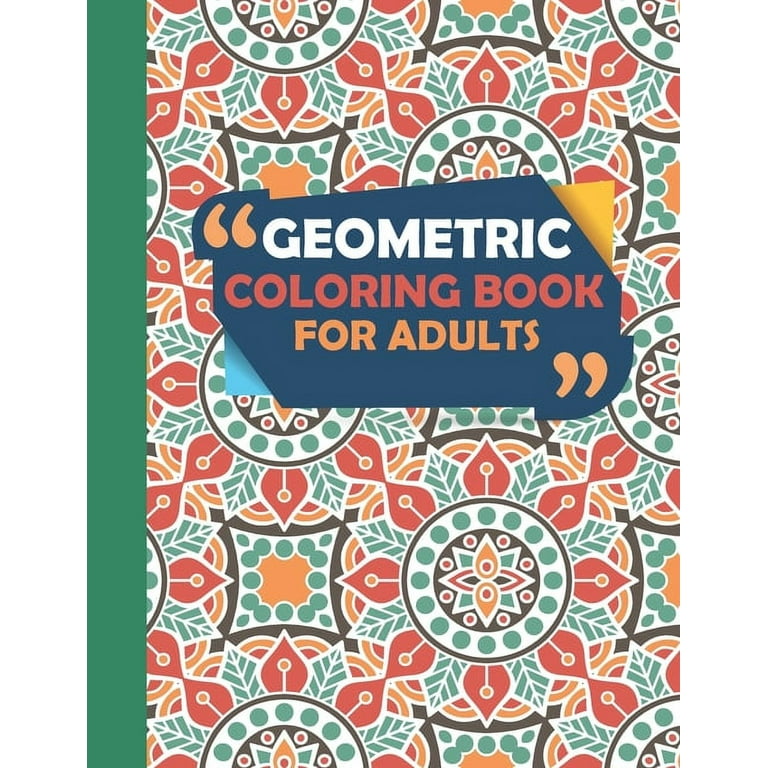
Geometric Coloring: Exploring Shapes and Patterns
Geometric coloring activities involve coloring different geometric shapes and patterns. These activities can help students to learn about the properties of shapes, symmetry, tessellations, and other geometric concepts.
Coordinate Graphing: Mapping the Math World
Coordinate graphing activities involve plotting points on a coordinate plane and then connecting the points to create a picture. These activities can help students to learn about the coordinate system, graphing linear equations, and other algebraic concepts.
Math Mandala Coloring: A Meditative Approach
Math mandala coloring combines the meditative benefits of mandala coloring with mathematical concepts. Mandalas are intricate circular designs that often incorporate geometric patterns and mathematical relationships.
Creating Your Own Math Coloring Activities: A Step-by-Step Guide
One of the best things about math coloring is that you can easily create your own activities tailored to specific learning objectives. Here’s a step-by-step guide to help you get started:
Tips for Maximizing the Fun and Learning
To make the most of math coloring activities, keep these tips in mind:
Real-World Examples and Case Studies: Coloring in Action
The effectiveness of math coloring has been demonstrated in numerous real-world examples and case studies. Here are a few examples:
These examples illustrate the versatility and effectiveness of math coloring as a learning tool. Whether you’re a teacher, parent, or student, math coloring can help you to unlock the joy of learning and develop a deeper understanding and appreciation for mathematics.
Resources for Math Coloring Activities: Where to Find the Fun
Ready to dive into the world of math coloring? Here are some resources to help you find engaging and effective activities:
Conclusion: Color Your Way to Math Success
Math doesn’t have to be a daunting subject filled with endless equations and abstract concepts. By integrating the joy of coloring, we can transform math into an engaging, accessible, and even therapeutic learning experience. From reducing math anxiety to enhancing fine motor skills and fostering creative expression, the benefits of combining math and coloring are undeniable.
So, grab your crayons, colored pencils, or markers, and embark on a colorful journey through the world of mathematics. Whether you’re solving basic arithmetic problems or exploring complex geometric patterns, coloring can help you to unlock a deeper understanding and appreciation for this fascinating subject. Embrace the power of color and discover the joy of learning with math coloring!
Internal Linking Suggestions:
External Linking Suggestions:
Social Sharing Optimization:


0 Comments