
Coloring Page and Printables for Homeschool Science: Fun Wildlife Education About Animal Homes and Habitats
Hook: Imagine your child discovering how a beaver builds a dam while coloring the scene, labeling the materials, and then creating a miniature model from household items. That’s the power of combining coloring pages and printables with homeschool science—learning becomes memorable, hands-on, and joyful.
This article shows homeschoolers, parents, and educators how to use coloring pages and printable resources to teach wildlife education, focusing specifically on animal homes and habitats. You’ll find practical lesson plans, printable activity ideas, sample worksheets, assessment tips, and recommendations for printable sets that blend creativity with science standards. By the end, you’ll have a ready-to-use framework that turns habitat study into interactive learning fun for learners from preschool through middle school.
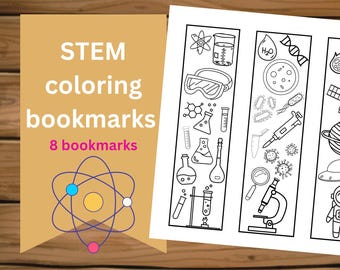
Why Use Coloring Pages and Printables in Homeschool Science?
Coloring pages and printables are more than arts-and-crafts: they are versatile educational tools. For young learners especially, visual and kinesthetic activities help cement scientific concepts that might otherwise seem abstract.
- Engagement: Coloring and hands-on printables capture attention and sustain interest.
- Differentiation: Printables can be adapted for different ages and learning levels—simple coloring for preschoolers, labeling tasks for elementary, and data-collection sheets for older students.
- Cross-curricular learning: These materials combine science with reading, writing, art, and even basic math.
- Accessibility: Printable PDFs are easy to distribute, reuse, and customize for individual learning plans.
- What is a habitat? Overview of biotic and abiotic factors.
- Types of habitats: Forest, grassland, desert, wetland, ocean, freshwater, tundra, urban environments.
- Animal homes (microhabitats and structures): Nests, burrows, dens, hives, lodges, termite mounds, coral reefs, shells, tree cavities.
- Adaptations: How animals’ physical and behavioral traits suit their homes.
- Food chains and ecosystems: Producers, consumers, decomposers, and the role of habitat in energy flow.
- Human impact and conservation: Habitat loss, restoration, and how students can help.
- Printable: “What Is a Habitat?” coloring page with labeled abiotic and biotic elements.
- Activity: Color and cut out items (sun, water, plants, animals) and create a habitat collage.
- Assessment: Short printable quiz—match terms to definitions.
- Printable set: Four habitat coloring pages (forest, desert, ocean, wetland) with fact boxes.
- Activity: Habitat sorting cards—students classify animals and plants to the correct habitat.
- Extension: Research printable—one-page animal report with illustration space.
- Printable: “Homes of Animals” coloring page series (nest, burrow, hive, den, coral reef).
- Hands-on: Build a model burrow or nest using household materials; use printable labels to describe parts and purposes.
- Assessment: Matching printable—match animal to its home and an adaptation that helps it survive there.
- Printable: “Protect Our Habitats” poster coloring page to personalize with local examples.
- Project: Create a habitat restoration plan printable—identify problem, propose solution, list materials and steps.
- CTA: Family pledge printable—ways to reduce habitat loss at home and in the community.
- Coloring pages: Use for vocabulary introduction and visual recognition. Offer both detailed and simplified versions.
- Labeling worksheets: Reinforce anatomy, parts of nests, or habitat elements. Great for older students.
- Sorting cards and matching mats: Hands-on categorization tasks for kinesthetic learners and cooperative play.
- Mini-books and flipbooks: Create small field guides students can carry on nature walks.
- Data and observation sheets: Record habitat observations—date, weather, species, behaviors.
- Crossword puzzles and word searches: Helpful for vocabulary retention and indoor time.
- Interactive charts: Food web builders, habitat comparison tables, and Venn diagrams for habitat overlap.
- Use clear, bold outlines for coloring pages so younger children can stay inside lines.
- Provide both labeled and unlabeled versions to support guided and independent learning.
- Include brief, age-appropriate fact boxes or prompts on each page to add context.
- Design printables to be ink-friendly: limit heavy shading and large solid black areas.
- Use accessible fonts and provide high-contrast layouts for readability and printable clarity.
- Offer editable versions (fillable PDFs) for customized differentiation and record-keeping.
- Formative: Exit slips (one-question printable), observation checklists during activities, and quick labeling tasks.
- Summative: Habitat mini-projects with rubric (use printable rubric templates), written reports using printable guides, and oral presentations supported by mini-books.
- Self-assessment: Reflection printables—“What I learned,” “Questions I still have,” and a mastery checklist.
- Preschool: Simple coloring pages, basic sorting cards, and sensory-based crafts.
- Early elementary: Labeling sheets, fill-in-the-blank pages, and simple mini-reports with sentence starters.
- Upper elementary: Research printables, food web builders, and data-collection sheets requiring multiple observations.
- Middle school: Inquiry-based worksheets, habitat comparison charts, and small-scale experimental printables (e.g., microhabitat temperature logs).
- Educational websites with free printable libraries (look for copyright-friendly resources).
- Teacher marketplaces for premium, curriculum-aligned printable sets.
- Graphic tools (Canva, Google Slides) to customize templates and create editable printables.
- Nature organizations (e.g., Audubon, National Park Service) offering accurate species fact sheets and coloring pages.
- National Audubon Society (for bird habitat guides)
- National Park Service (for habitat and species information)
- Local extension services or state wildlife agencies (for native species lists and planting guides)
- Anchor text: “homeschool science unit plans” — link to a site page with additional unit templates
- Anchor text: “native plant lesson plans” — link to an article about using gardens in homeschool curricula
- Anchor text: “wildlife observation journal” — link to printable journal product or resource page
- Provide alt text for printable preview images (e.g., “Coloring page of a fox in a den—outline for coloring and labeling”).
- Offer both full-color and ink-saving black-and-white versions.
- Include printable sizes for standard paper (US Letter and A4) and mobile-friendly PDF viewing.
- Consider high-contrast and dyslexia-friendly font options.
- Encourage community sharing: add social sharing buttons and a hashtag for families to post their completed projects.
- Provide ready-made captions for social posts with hashtags (e.g., #HomeschoolScience, #WildlifeEducation, #AnimalHomes).
- Offer printable “I made this” badges kids can color and photograph with their projects.
- Embed Pinterest-friendly vertical images and add meta descriptions that include target keywords such as “coloring page and printables” and “animal habitat.”
- Construction paper, scissors, glue, tape
- Twigs, leaves, grass, pebbles (for nest/burrow models)
- Clay or playdough for molds
- Transparent cups, mesh, tubing for microhabitat viewers
- Magnifying glass, binoculars, simple field guides
- Printer, laminator (optional), dry-erase markers
- Follow students’ questions—use printables to extend curiosities into mini-research projects.
- Mix indoor and outdoor activities: observation makes coloring and worksheets meaningful.
- Encourage storytelling—have students write or narrate a day-in-the-life of an animal in its home using printable storyboards.
- Celebrate learning with a mini-exhibition of completed printables for family and friends.
- “Coloring page of forest habitat with labeled trees, stream, and animals.”
- “Printable habitat sorting cards showing desert, ocean, forest, and wetland animals.”
- “Child building a miniature bird nest using twigs and grass next to a printable worksheet.”
- https://www.audubon.org/ (Audubon Society habitat and bird guides)
- https://www.nps.gov/ (National Park Service habitat resources)
- https://www.nwf.org/ (National Wildlife Federation educational resources)
Core Topics: Animal Homes and Habitats to Cover
When planning a homeschool science unit, focus on a mix of broad and specific topics so students build both conceptual understanding and factual knowledge.

Lesson Planning: Structuring a Habitat Unit with Printables
Below is a flexible 4-week unit plan suitable for K–6 that uses coloring pages, worksheets, and hands-on printables to scaffold learning.

Week 1 — Introduction to Habitats
Week 2 — Types of Habitats
Week 3 — Animal Homes and Adaptations
Week 4 — Conservation and Action
Printable Types and How to Use Them
Include variety in the printables to target different skills and learning styles. Below are printable types with usage tips.
Sample Printable Activities (Ready to Use)
The following activities are turnkey: download, print, and teach.
Activity 1: Habitat Match-Up Cards
Instructions: Print and cut cards. Shuffle and place face-down. Students draw a card and match the animal to the correct habitat mat (prepared beforehand).
Learning goals: Categorization, recall of habitat characteristics, cooperative learning.
Activity 2: Build-a-Home Craft and Worksheet
Instructions: Provide a “Build-a-Home” worksheet listing materials, functions (insulation, protection, camouflaging), and sketch box. Students build a miniature home (e.g., bird nest) using twigs, grass, clay, and complete the worksheet, then color a printable picture of the animal in its home.
Learning goals: Understanding structure-function relationships, fine motor skills, observational drawing.
Activity 3: Habitat Observation Journal Printable
Instructions: Use printable journal pages during outdoor exploration. Include prompts: “What do you see?”, “What materials are used for homes?”, “How does the weather affect the habitat?”
Learning goals: Scientific observation, data recording, reflection.
Design Tips for Effective Coloring Pages and Printables
High-quality design improves learning outcomes. Keep the following in mind when creating or selecting materials:
Assessment Strategies Using Printables
Printables make assessment natural and non-threatening. Use formative and summative approaches tailored to homeschool settings.
Differentiation: Adapting Printables for Multiple Ages
Printables shine in mixed-age homeschool groups. Use layering and scaffolding strategies to meet learners where they are.
Real-World Examples and Mini Case Studies
These short case studies show how printables and coloring pages have been used effectively in homeschool and informal education settings.
Case Study 1: Backyard Habitat Transformation
A family used a printable habitat audit to catalog wildlife in their backyard. They followed a printable restoration plan to add native plants and a birdbath. Within months, the children documented increased bird species using the observation journal, reinforcing cause-and-effect relationships and stewardship values.
Case Study 2: Co-op Habitat Fair
A homeschool co-op ran a Habitat Fair where each family used printable mini-books to create a booth. Students presented with coloring posters and hands-on models. The printable rubrics guided peer feedback and culminated in a neighborhood walk that connected classroom learning to local ecosystems.
Recommended Printable Resources and Tools
Here are reputable sources and tools to find or create high-quality coloring pages and printables for homeschool science.
Suggested external links to authoritative sources:
Internal Link Suggestions (for website SEO)
Accessibility, Print, and Sharing Best Practices
Make sure your printables are usable by as many families as possible.
Social Sharing Optimization
Encourage engagement by making it simple for families to share results and for your site to attract traffic.
FAQ: Quickly Answering Common Questions
What age are these printables best for?
Printables can be adapted for ages preschool through middle school; choose simplified or more detailed versions based on developmental level.
Are the printables curriculum-aligned?
Many printables can be mapped to state science standards (life science: ecosystems, structure and function). When using third-party sets, check alignment notes or modify activities to fit your objectives.
How do I make printables reusable?
Laminating habitat mats, using dry-erase sleeves for sorting cards, and creating digital fillable PDFs help reuse and reduce paper waste.
Can these resources support special education needs?
Yes. Use multisensory approaches, larger print, simplified layouts, and hands-on materials tailored to individual IEP goals.
Sample Assessment Rubric (Printable)
| Criteria | 4 - Excellent | 3 - Good | 2 - Developing | 1 - Beginning |
|---|---|---|---|---|
| Understanding of habitat | Explains habitat components and animal needs clearly | Explains most components with minor gaps | Partial understanding; several misconceptions | Limited understanding |
| Accuracy of labels/facts | All labels accurate | One or two minor inaccuracies | Several inaccuracies | Many inaccuracies |
| Creativity and presentation | Highly creative, neat, and engaging | Good effort and clear presentation | Some effort; needs organization | Minimal effort |
| Use of evidence/observations | Supports claims with observations or sources | Some supporting details | Limited supporting information | No supporting information |
Practical Materials List for Hands-On Habitat Activities
Final Tips to Maximize Learning Fun
Conclusion — Turn Coloring Pages and Printables into Lasting Wildlife Learning
Coloring pages and printables are powerful tools for homeschool science that make wildlife education accessible, hands-on, and fun. By centering units on animal homes and habitats, using layered printables for different ages, and integrating observation, craft, and assessment, you create a memorable learning experience that builds scientific understanding and stewardship. Start with a simple coloring page, expand into a habitat project, and watch curiosity grow into knowledge and action.
Call to action: Download a starter printable pack—habitat coloring pages, observation journal, and a build-a-home worksheet—to begin your unit today. Share photos of your students’ projects using #HomeschoolScience and #AnimalHomes to inspire other families.
Image alt text suggestions:
Schema markup recommendation: Include Article schema with author, datePublished, description, mainEntity (FAQ), and keywords such as “coloring page and printables,” “homeschool science,” “wildlife education,” and “animal habitat.”
Suggested external links to include (open in new window):
Suggested internal links (


0 Comments