
Here is the polished, publication-ready version of your article. All placeholder text has been removed, and the content has been refined for clarity, flow, and professional presentation while preserving your original structure and Markdown formatting.
---
Beyond the Words: Fostering Reading Comprehension in Kindergarten
Helping young readers move beyond decoding to understanding is one of the most rewarding parts of teaching. This guide shows homeschooling parents and teachers practical, research-based strategies to build strong comprehension in kindergarteners, using playful, hands-on, and classroom-ready techniques.
Introduction: Why Comprehension Matters in Kindergarten
Kindergarten is a pivotal year for reading development. While learning letter sounds and word recognition is essential, true reading success depends on comprehension—the ability to construct meaning from text. For homeschoolers and classroom teachers, fostering comprehension early creates confident, curious readers who can connect stories to their lives, ask questions, and think critically. This article explains what comprehension looks like in kindergarten, highlights key components—vocabulary, background knowledge, listening comprehension, and narrative skills—and provides practical, playful strategies parents and teachers can implement immediately.
You will find research-aligned methods, activity templates, assessment ideas, and ways to integrate comprehension into daily routines without adding extra work. Whether you are just beginning to teach reading or seeking fresh ideas to boost understanding, these techniques will help young learners go beyond the words on the page and truly live the stories they read.
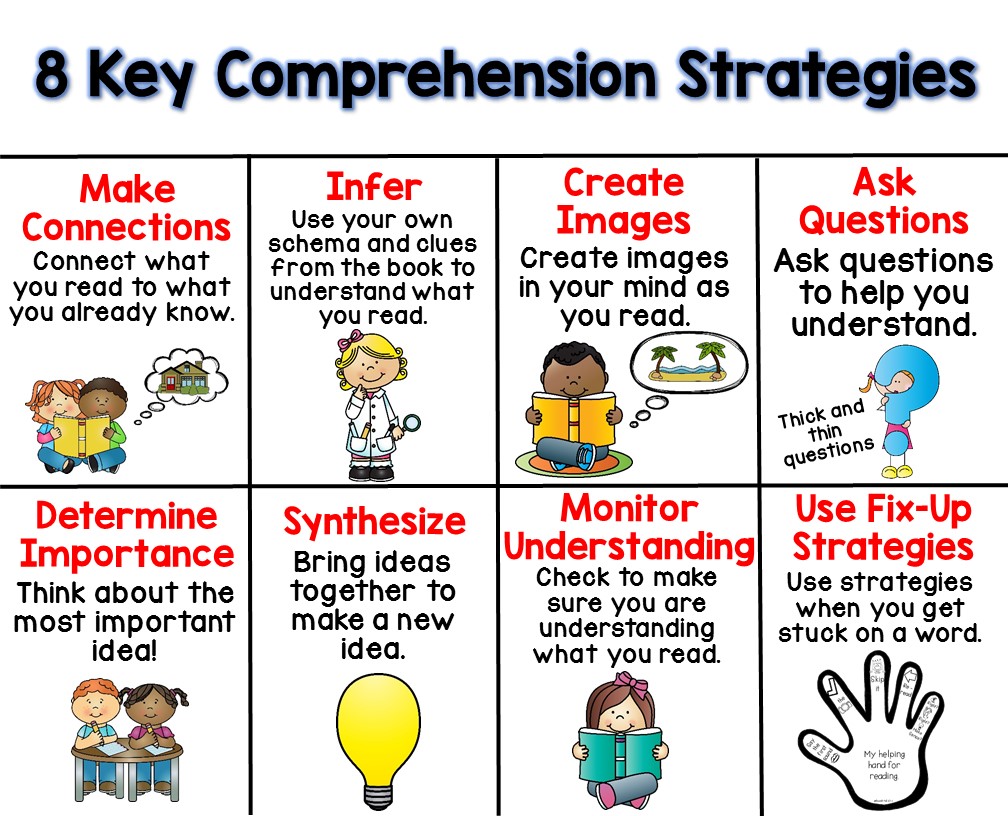
Understanding Comprehension in Kindergarten
What Comprehension Looks Like at This Age
- Retelling familiar stories with a beginning, middle, and end.
- Answering simple who, what, where, and when questions.
- Making predictions based on pictures and prior knowledge.
- Connecting story events to personal experiences.
- Vocabulary: Knowing the words children encounter in texts.
- Listening comprehension: Understanding stories read aloud.
- Print awareness and decoding: Building fluency so children can think about meaning.
- Background knowledge: Context that helps make sense of new information.
- Narrative skills: Understanding story structure and character motivations.
- Before reading: Activate background knowledge. ("Have you ever seen a bear in the woods?")
- During reading: Ask predictive and inferential questions. ("Why do you think she hid the key?")
- After reading: Prompt retelling and reflection. ("Tell me the three main things that happened.")
- Use “I wonder” and “What if” questions to stimulate higher-order thinking.
- Play word games such as rhyming and syllable segmenting to make language fun and explicit.
- Predicting: Look at the cover and pictures to guess what might happen.
- Visualizing: Encourage children to create a mental picture of scenes.
- Questioning: Teach children to ask who, what, where, when, and why.
- Summarizing: Use three-picture story retell cards to scaffold summaries.
- Dramatize scenes with props or puppets.
- Create sensory bins tied to story settings, such as sand for beach books.
- Use drawing and sculpting to represent story elements.
- Read a short story aloud.
- Give the child three counters or buttons to represent the beginning, middle, and end.
- Ask the child to place a counter for each part and tell what happens.
- Have the child retell a story using pictures or props.
- Ask targeted literal and inferential questions about the book.
- Use observation checklists focused on skills like prediction, vocabulary use, and understanding of story structure.
- Keep a brief running record of responses during read-alouds to identify patterns.
- For English learners: Preteach vocabulary with visuals and gestures; use bilingual texts when available.
- For children with limited attention: Shorten tasks into five-to-ten-minute chunks and incorporate movement breaks.
- For advanced learners: Ask deeper inferential questions and encourage them to create alternate endings or sequels.
- Morning meeting: Include a book talk or quick retell from the previous day’s read-aloud.
- Snack time talk: Discuss the day’s story while eating to reinforce vocabulary and sequencing.
- Choice time centers: Set up a themed literacy center each week tied to a book.
- High-quality picture books with clear story arcs, such as The Very Hungry Caterpillar and Owl Babies.
- Simple nonfiction picture books with strong photo support.
- Puppets, props, and simple craft supplies for dramatization.
- Picture cards for sequencing and vocabulary practice.
- Keep sessions short and playful—multiple 10- to 15-minute segments are more effective than a single long lesson.
- Use household routines like cooking, gardening, and errands to build vocabulary.
- Invite siblings or caregivers into storytelling activities for social interaction and modeling.
- Record read-alouds and play them back so children can hear repeated language patterns.
- Use small guided groups for targeted comprehension instruction while others rotate through literacy centers.
- Create a classroom comprehension corner with retell tools and book response activities.
- Document progress with portfolios of student retells, drawings, and anecdotal notes.
Key Skills That Support Comprehension
Research-Based Strategies to Build Comprehension
1. Read Aloud Daily with Purpose
Reading aloud remains the single most powerful strategy for building comprehension in young children. Select a mix of predictable text, narrative fiction, and informational books. Use expressive voices, pause for questions, and model thinking aloud to demonstrate how adults make sense of text.
2. Build a Strong Oral Language Foundation
Talk with children throughout the day—narrate routines, describe actions, and expand their sentences. Rich conversation builds vocabulary and the sentence structures children need to understand more complex text.
3. Teach Comprehension Strategies Explicitly
Kindergarten children benefit from simple, explicit strategy instruction modeled by the teacher or parent.
4. Use Picture Walks and Book Introductions
Before reading, flip through the book’s pictures and talk through them. This primes vocabulary and sets a purpose for reading, making the text more accessible.
5. Integrate Play-Based and Multisensory Activities
Young learners make stronger connections when comprehension work is active and sensory-rich.
Practical Lesson Ideas and Activities
Activity 1: Three-Part Retell
Activity 2: Story Mapping with Pictures
Create a simple story map with labeled boxes for characters, setting, problem, and solution. Use stickers or picture cutouts for non-writers to place in each box, then narrate the map together.
Activity 3: Vocabulary Treasure Hunt
Choose five to eight target words from a read-aloud. Hide picture cards around the room. Children find the cards, say the word, and use it in a sentence related to the book.
Activity 4: Reader’s Theater for Kindergarten
Simplify a familiar story into short lines for children to perform. This builds fluency and comprehension through repeated reading and acting.
Activity 5: Informational Book Buddies
Pair a fiction read-aloud with a short informational book about the same subject, such as a story about turtles and a nonfiction book about turtles. Compare facts and story elements to deepen understanding.
Assessment: Simple Ways to Check Comprehension
Informal, ongoing assessment is ideal for this age. Use these quick checks:
Supporting Diverse Learners in Homeschool and Classroom Settings
Every child brings different experiences and strengths. Differentiate instruction using multimodal supports and scaffolded steps.
Daily Routines That Promote Comprehension
Embedding comprehension into daily life makes learning sustainable and natural.
Resources, Books, and Materials
Suggested materials for building comprehension:
Sample Weekly Plan for Kindergarten Comprehension
| Day | Focus | Activity |
|---|---|---|
| Monday | Introduce book / Vocabulary | Picture walk + vocabulary treasure hunt |
| Tuesday | Prediction / Visualization | Read aloud with prediction prompts + drawing scenes |
| Wednesday | Retell / Sequencing | Three-part retell with counters |
| Thursday | Compare fiction & nonfiction | Paired book discussion and fact vs. story chart |
| Friday | Performance / Reflection | Reader’s theater or puppet show + reflection talk |
Tips for Homeschoolers: Making It Work at Home
Tips for Classroom Teachers: Scalable Strategies
Frequently Asked Questions (FAQ)
When should I focus more on decoding versus comprehension?
Both are important. In kindergarten, balance is key: teach phonics and decoding alongside rich read-alouds and oral language activities. Comprehension can be strengthened even before children can decode independently.
How many books should we read each day?
Quality over quantity matters. Aim for one to three intentional read-alouds daily, using short picture books or parts of longer books, plus brief conversational reading during routines.
What if my child struggles to retell stories?
Use stronger scaffolds such as picture cards, puppets, and modeled retells. Break retelling into steps and praise any attempt—retelling improves with frequent, low-pressure practice.
Conclusion
Fostering reading comprehension in kindergarten is an achievable, joyful mission. By combining daily read-alouds, explicit strategy instruction, rich oral language experiences, and playful, hands-on activities, homeschooling parents and teachers can help children move beyond decoding to true understanding. Small, consistent practices—like picture walks, three-part retells, and paired fiction and nonfiction explorations—build the foundation for lifelong reading success. Start small, stay playful, and let curiosity lead the way.
Key takeaways: Prioritize read-alouds, teach simple comprehension strategies explicitly, embed comprehension in routines, and use playful, multisensory activities to make meaning stick.
Ready to take the next step? Download the free Kindergarten Comprehension Toolkit and sign up for weekly literacy tips to bring these ideas to life at home or in your classroom.


0 Comments