
Unleash Creativity and Learning: Engaging STEM Coloring Pages, Projects, and Printables for Homeschooling
Are you looking for fun and engaging ways to introduce STEM concepts to your children? Do you want to spark their curiosity and encourage a love of learning? Look no further! Integrating hands-on activities, vibrant visuals, and creative problem-solving into your homeschool curriculum is easier than you think. STEM (Science, Technology, Engineering, and Mathematics) doesn't have to be intimidating. It can be an exciting adventure filled with discovery and wonder. This article will explore how you can use STEM coloring pages, printables, and projects to create a dynamic and enriching learning environment for your kids, fostering critical thinking and a lifelong passion for STEM fields.We'll dive into a treasure trove of resources, offering practical tips, project ideas, and printable templates that will transform your homeschool into a hub of innovation and exploration. Get ready to witness your children's eyes light up as they embark on thrilling STEM adventures!

Why STEM Education is Crucial for Early Learning
STEM education is more than just memorizing facts and formulas; it's about cultivating essential skills that will benefit children throughout their lives. By introducing STEM concepts early on, you're equipping them with the tools to think critically, solve problems creatively, and adapt to a rapidly changing world.- Critical Thinking: STEM activities encourage children to analyze information, evaluate evidence, and form logical conclusions.
- Problem-Solving: STEM challenges require kids to identify problems, brainstorm solutions, and test their ideas through experimentation.
- Creativity and Innovation: STEM fosters a mindset of exploration and invention, empowering children to think outside the box and develop novel solutions.
- Collaboration and Communication: Many STEM projects involve teamwork, teaching children how to communicate effectively, share ideas, and work together to achieve common goals.
- Real-World Application: STEM education connects classroom learning to real-world scenarios, helping children understand how science, technology, engineering, and mathematics impact their daily lives.
- Fine Motor Skills Development: Coloring helps improve fine motor skills, hand-eye coordination, and dexterity.
- Creativity and Imagination: Coloring allows children to express their creativity and imagination while learning about STEM topics.
- Relaxation and Stress Relief: Coloring can be a calming and therapeutic activity, helping children relax and focus.
- Introduction to Complex Concepts: Coloring pages can introduce complex STEM concepts in a simplified and age-appropriate way.
- Space Coloring Pages: Journey to the stars with coloring pages featuring planets, constellations, and spacecraft.
- Animal Coloring Pages: Discover the animal kingdom with coloring pages showcasing different species, habitats, and ecosystems.
- Math Coloring Pages: Practice math skills with coloring pages that incorporate addition, subtraction, multiplication, and division.
- Engineering Coloring Pages: Learn about engineering principles with coloring pages featuring bridges, buildings, and machines.
- Coding Coloring Pages: Introduce basic coding concepts with coloring pages that use symbols and patterns to represent code.
- Periodic Table Coloring Pages: Familiarize children with the elements of the periodic table through a visually engaging coloring activity.
- Science Lab Equipment Coloring Pages: Discover the tools of science with coloring pages of beakers, microscopes, and test tubes.
- Materials: Baking soda, vinegar, dish soap, food coloring (optional), empty plastic bottle, playdough or modeling clay.
- Instructions: Mold the playdough around the bottle to create a volcano shape. Pour baking soda into the bottle, add a squirt of dish soap and a few drops of food coloring (optional). Pour vinegar into the bottle and watch the volcano erupt!
- Homemade Lava Lamps: This experiment explores density and convection currents.
- Materials: Empty plastic bottle, water, vegetable oil, food coloring, Alka-Seltzer tablets.
- Instructions: Fill the bottle with water and add a few drops of food coloring. Pour vegetable oil into the bottle, leaving some space at the top. Break an Alka-Seltzer tablet into pieces and drop them into the bottle. Watch the lava lamp come to life!
- Growing Crystals: This experiment demonstrates the process of crystallization.
- Materials: Borax, hot water, jar, pipe cleaner, string.
- Instructions: Shape the pipe cleaner into a desired shape. Tie the pipe cleaner to a string and suspend it in the jar. Dissolve borax in hot water until it is saturated. Pour the borax solution into the jar, making sure the pipe cleaner is fully submerged. Let the jar sit undisturbed for several hours or overnight. Watch the crystals grow on the pipe cleaner!
- DIY Slime: This fun and gooey activity introduces the concept of polymers.
- Materials: Clear glue, liquid starch, food coloring (optional), glitter (optional).
- Instructions: Pour glue into a bowl. Add food coloring and glitter (optional). Slowly add liquid starch, mixing until the slime forms. Knead the slime until it is smooth and stretchy.
- Materials: Battery, battery holder, wires, light bulb, light bulb holder, switch (optional).
- Instructions: Connect the battery to the battery holder. Connect the wires to the battery holder and the light bulb holder. Connect the light bulb to the light bulb holder. Connect a switch (optional) to the circuit. Turn on the switch (if included) to complete the circuit and light up the bulb.
- Designing and Building a Bridge: This project challenges children to apply engineering principles to design and construct a functional bridge.
- Materials: Popsicle sticks, glue, string, weights.
- Instructions: Research different bridge designs. Sketch a design for your bridge. Use popsicle sticks and glue to build the bridge according to your design. Allow the glue to dry completely. Test the bridge by adding weights to see how much it can hold.
- Creating a Solar Oven: This project demonstrates the power of solar energy and the principles of heat transfer.
- Materials: Cardboard box, aluminum foil, plastic wrap, black construction paper, glue, tape, ruler.
- Instructions: Line the inside of the cardboard box with aluminum foil. Cover the top of the box with plastic wrap, creating a sealed window. Line the bottom of the box with black construction paper. Place food inside the box and set it in direct sunlight. Monitor the temperature inside the box and observe how the food cooks.
- Coding a Simple Video Game: This project introduces basic coding concepts and game development.
- Materials: Computer, internet access, Scratch or other coding platform.
- Instructions: Choose a coding platform like Scratch. Learn the basics of coding using tutorials and online resources. Design a simple video game with characters, obstacles, and goals. Write the code to control the game elements and create interactive gameplay. Test and refine your game until it is fun and engaging.
- Activity: Challenge children to build the tallest tower possible, a bridge that can hold a toy car, or a structure that resembles a real-world building.
- Exploring Water: Water play is a fun and engaging way to introduce concepts like volume, density, and buoyancy.
- Activity: Provide children with different containers, measuring cups, and funnels. Let them experiment with pouring, measuring, and comparing the volume of different liquids. Introduce objects that float and sink and discuss why some objects are more buoyant than others.
- Sorting and Classifying: Sorting and classifying activities help children develop critical thinking skills and learn to identify patterns and relationships.
- Activity: Provide children with a collection of objects, such as buttons, beads, or toys. Ask them to sort the objects by color, shape, size, or texture. Discuss the different categories and why they chose to sort the objects in a particular way.
- Nature Walks: Nature walks are a great way to explore the natural world and introduce concepts like plants, animals, and ecosystems.
- Activity: Take children on a nature walk and encourage them to observe the plants, animals, and insects they encounter. Collect leaves, rocks, and other natural objects. Discuss the different types of plants and animals, their habitats, and their roles in the ecosystem.
- Simple Machines: Introduce simple machines like levers, pulleys, and inclined planes through play.
- Activity: Use a seesaw to demonstrate the concept of a lever. Build a simple pulley system to lift objects. Explore inclined planes by rolling objects down ramps of different heights. Discuss how these simple machines make work easier.
- Activity: Use a programmable robot to navigate a maze, follow a set of instructions, or complete a specific task. This activity helps children develop problem-solving skills and learn the basics of coding.
- Building Structures with Straws and Marshmallows: This activity challenges children to design and build stable structures using limited materials.
- Activity: Provide children with straws and marshmallows and challenge them to build the tallest tower, the strongest bridge, or the most creative structure. This activity encourages problem-solving, creativity, and teamwork.
- Investigating Plant Growth: This activity explores the life cycle of plants and the factors that affect plant growth.
- Activity: Plant seeds in different conditions (e.g., with and without sunlight, with different amounts of water). Observe the growth of the plants over time and record your observations. Discuss the factors that are essential for plant growth.
- Exploring Chemical Reactions: Conduct simple chemical reactions, such as mixing baking soda and vinegar, to observe the changes that occur.
- Activity: Mix baking soda and vinegar in a bottle and observe the release of carbon dioxide. Discuss the chemical reaction that is taking place and the properties of the reactants and products.
- Designing and Building Simple Machines: Challenge children to design and build their own simple machines, such as levers, pulleys, or inclined planes.
- Activity: Research different types of simple machines and how they work. Design and build your own simple machine using readily available materials. Test your machine to see how it works and identify ways to improve its design.
- Encourage Brainstorming: Facilitate brainstorming sessions where children can generate ideas without judgment.
- Promote Experimentation: Encourage children to test their ideas and learn from their mistakes.
- Ask Guiding Questions: Instead of providing answers, ask questions that prompt children to think critically and find solutions on their own.
- Celebrate Effort and Persistence: Focus on the process of problem-solving, rather than just the outcome. Acknowledge and celebrate children's effort and persistence, even if they don't find the "right" answer.
- Construction Toys: Construction toys like LEGOs and building blocks encourage spatial reasoning and problem-solving.
- Board Games: Many board games require strategic thinking and problem-solving skills.
- Escape Rooms (DIY or Commercial): Escape rooms challenge children to solve puzzles and riddles to escape a themed room.
- Coding Challenges: Coding challenges require children to use logic and problem-solving skills to write code that solves a specific problem.
- Real-World Scenarios: Present children with real-world scenarios that require them to solve problems, such as planning a trip, organizing a fundraiser, or resolving a conflict with a friend.
By incorporating STEM into your homeschool curriculum, you're not just preparing your children for future careers; you're preparing them to be innovative thinkers, problem-solvers, and engaged citizens who can make a positive impact on the world.
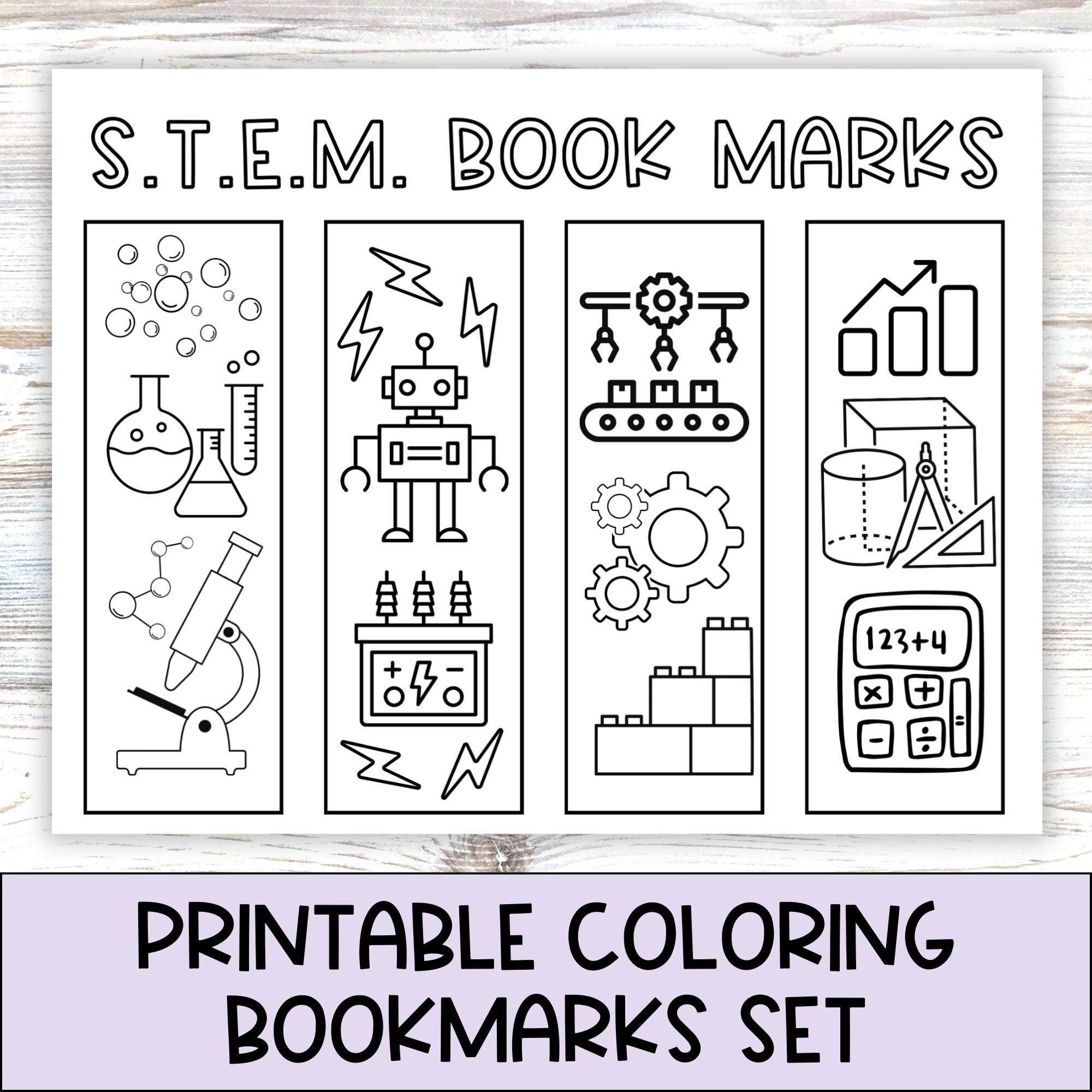
The Magic of STEM Coloring Pages and Printables
STEM coloring pages and printables are a fantastic way to introduce complex concepts in a fun, accessible, and visually appealing manner. They bridge the gap between learning and creativity, making STEM more engaging and less intimidating for young learners.
Benefits of Using STEM Coloring Pages
* Visual Learning: Coloring pages provide a visual representation of STEM concepts, making them easier for children to understand and remember.
Types of STEM Coloring Pages and Printables
* Anatomy Coloring Pages: Explore the human body with detailed diagrams of organs, bones, and muscles.Pro Tip: Search online for "STEM coloring pages and printables" to find a vast array of free and paid resources tailored to different age groups and interests. Websites like Teachers Pay Teachers, Education.com, and Crayola offer a wide selection of STEM-themed coloring pages.

Hands-On Homeschool Science Projects: Learning by Doing
Hands-on science projects are essential for bringing STEM concepts to life and fostering a deeper understanding of the world around us. By engaging in experiments and activities, children can actively explore scientific principles, test hypotheses, and develop critical thinking skills.Simple Science Experiments for Young Learners
* Baking Soda and Vinegar Volcano: This classic experiment demonstrates chemical reactions and the release of carbon dioxide.More Advanced STEM Projects for Older Children
* Building a Simple Electric Circuit: This project introduces basic electrical concepts and circuitry.Internal Link Suggestion: Link to another article on your site about "Essential Homeschool Supplies" using the anchor text "homeschool curriculum."
Early Learning STEM Activities: Planting the Seeds of Curiosity
Introducing STEM concepts at an early age can spark a lifelong love of learning and set the stage for future success. Even simple activities can help young children develop critical thinking skills, problem-solving abilities, and a curiosity about the world around them.STEM Activities for Preschoolers
* Building with Blocks: Blocks are a classic STEM toy that encourages spatial reasoning, problem-solving, and creativity.STEM Activities for Elementary School Children
* Coding with Robots: Introduce basic coding concepts using programmable robots like Bee-Bot or Dash.External Link Suggestion: Link to the official Scratch website (scratch.mit.edu) using the anchor text "Scratch coding platform".
Problem-Solving for Kids: Nurturing Resilience and Ingenuity
Problem-solving is a critical skill that empowers children to overcome challenges, think creatively, and develop resilience. By providing opportunities for problem-solving, you're equipping them with the tools to navigate complex situations and succeed in all areas of their lives.Strategies for Encouraging Problem-Solving
* Present Open-Ended Challenges: Offer challenges that have multiple solutions and encourage children to explore different approaches.Problem-Solving Activities for Kids
* Puzzles: Puzzles of all kinds, from jigsaw puzzles to logic puzzles, are excellent for developing problem-solving skills.Internal Link Suggestion: Link to another article on your site about "Fun Educational Games for Kids" using the anchor text "board games".
Conclusion: Inspiring the Next Generation of STEM Innovators
By incorporating STEM coloring pages, hands-on projects, and problem-solving activities into your homeschool curriculum, you can create a dynamic and engaging learning environment that fosters curiosity, creativity, and critical thinking. Remember, STEM education is not just about learning facts and formulas; it's about developing essential skills that will benefit children throughout their lives.Embrace the opportunity to spark your children's imagination, nurture their problem-solving abilities, and inspire a lifelong passion for STEM fields. With a little creativity and resourcefulness, you can transform your homeschool into a hub of innovation and exploration, empowering the next generation of STEM innovators to make a positive impact on the world. So, grab your coloring pencils, gather your materials, and get ready for a thrilling STEM adventure!
Call to Action: Sign up for our newsletter to receive exclusive STEM activity ideas, printable templates, and homeschool resources delivered straight to your inbox! Let's embark on this exciting journey of discovery together!


0 Comments