
Hands-On STEM Fun: Interactive Coloring Pages for Young Scientists at Home
Are you a homeschooling parent looking for engaging ways to introduce complex concepts to your curious little ones? Or perhaps you simply want to spark a love for discovery in your child right from your living room? Look no further than the exciting world of STEM coloring page and printables! Gone are the days when coloring was just about staying within the lines. Today, these vibrant activities are transforming into powerful tools for early learning STEM, offering a fantastic gateway to hands-on education that combines creativity with critical thinking.
Imagine your child not just coloring a butterfly, but labeling its life cycle stages, or illustrating a simple machine and understanding how it works, all while having a blast. This isn't just art; it's an immersive experience designed to ignite curiosity in science, technology, engineering, and math. We know how vital it is to foster problem-solving for kids from a young age, and interactive STEM printables provide the perfect, accessible platform. This article will guide you through the incredible benefits of incorporating these dynamic resources into your daily routine, showing you how to turn everyday coloring into extraordinary learning adventures right at home. Get ready to explore how these engaging printables can become your secret weapon for captivating homeschool science projects and beyond!

Why STEM Matters for Our Youngest Learners
The world around us is increasingly driven by STEM fields. Introducing these concepts early helps children develop a foundational understanding of how things work and encourages a mindset of inquiry and innovation. It’s not about turning every child into an engineer, but about equipping them with essential skills for a rapidly evolving future.

Building Foundational Skills Early
Early exposure to STEM principles through activities like interactive coloring pages helps children build crucial cognitive skills. They learn to observe, categorize, compare, and predict. These seemingly simple actions are the building blocks for more complex reasoning. More importantly, these activities naturally foster problem-solving for kids. When a child colors a diagram of a plant, they might encounter questions about its parts or how it grows, prompting them to think critically and seek answers. This early engagement nurtures a growth mindset, encouraging them to view challenges as opportunities for discovery rather than obstacles.
The Power of Play in Early Learning STEM
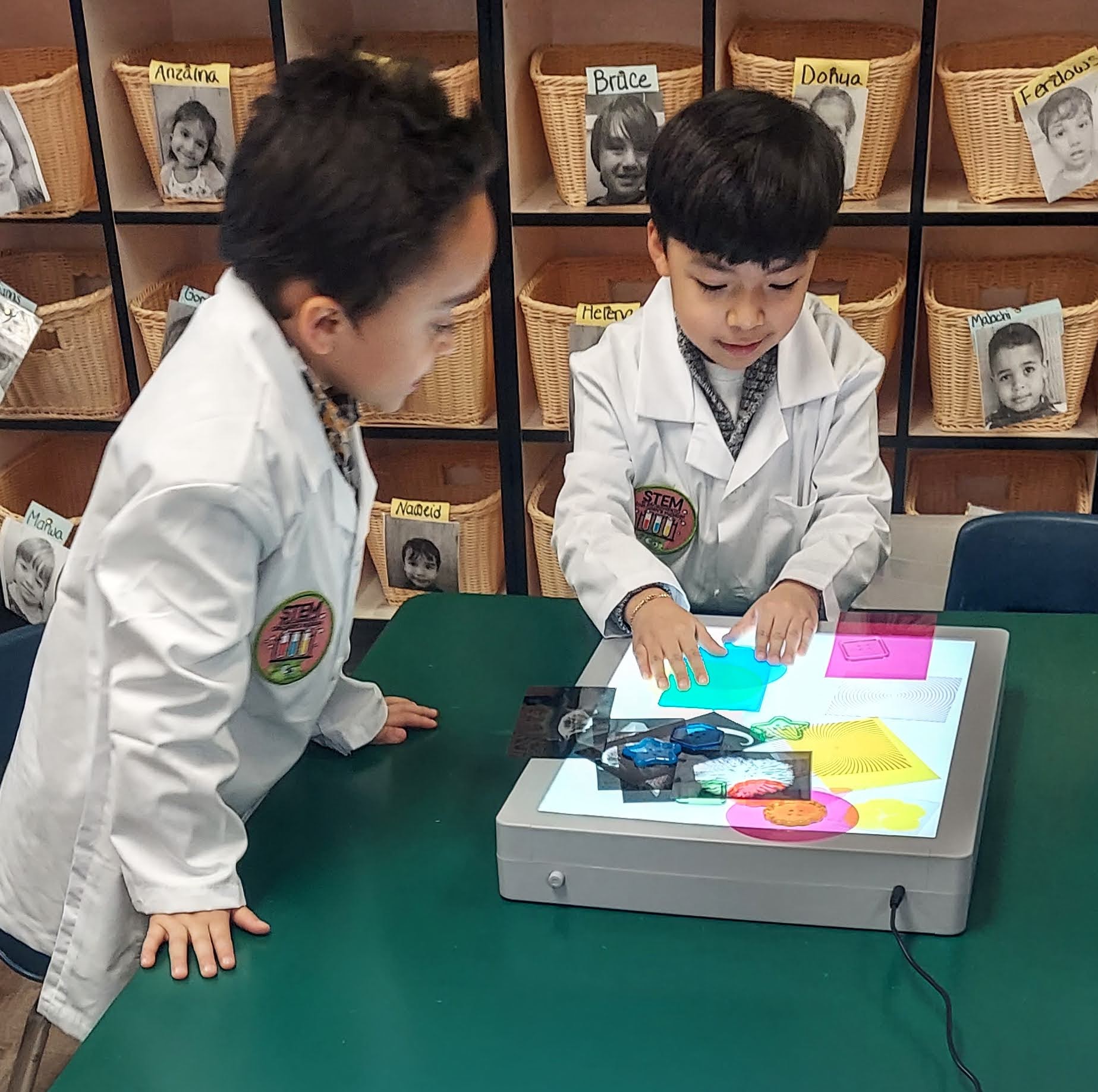
Children learn best when they are actively engaged and enjoying themselves. Play is not just recreation; it’s a vital component of development. By integrating STEM into playful activities like coloring, we make learning less intimidating and more approachable. This approach to hands-on education allows children to experiment, make mistakes, and learn from them in a low-pressure environment. When they’re having fun with a STEM coloring page and printables, they're more likely to absorb information and retain it, making the learning process natural and effective. Play-based learning also boosts creativity and imagination, which are essential for innovation in any STEM field.

Beyond Crayons: What Makes a STEM Coloring Page "Interactive"?
So, what exactly elevates a simple coloring page to an interactive STEM tool? It's all about adding layers of learning and engagement that go beyond mere aesthetic appeal. Interactive STEM coloring pages often include elements that prompt thought, discovery, and even further investigation.
These aren't just pictures to fill with color. They might feature diagrams with labels to fill in, simple experiments to illustrate, cut-and-paste components to build a model, or even QR codes that link to educational videos. The goal is to transform a passive activity into an active learning experience, making early learning STEM accessible and exciting.

Integrating Science Concepts with Color
Imagine a coloring page that depicts the water cycle. Children don't just color the clouds and rain; they might trace the path of water, label "evaporation" and "condensation," or draw what happens to water when it hits the ground. Other examples include:
- Plant Life Cycles: Coloring the stages from seed to flower, understanding photosynthesis.
- Animal Habitats: Coloring animals in their environments, learning about ecosystems.
- Human Anatomy: Coloring organs and understanding their basic functions.
- Weather Patterns: Illustrating different types of weather and their characteristics.
- Simple Machines: Coloring levers, pulleys, and wheels, and understanding how they make work easier.
- Basic Circuits: Illustrating a simple circuit with a battery, wires, and a light bulb, grasping the concept of electricity flow.
- Robotics: Designing and coloring their own robot parts, fostering imaginative thinking about technology and automation.
- Designing a Bridge: Coloring different bridge types and considering which might be strongest or most efficient.
- Building a Robot: Cutting out and assembling various robot components to understand how parts fit together.
- Architectural Design: Coloring different house styles and thinking about their structure and function.
- Counting and Number Recognition: Coloring a specific number of objects or matching numbers to quantities.
- Patterns and Sequences: Completing color patterns or identifying numerical sequences.
- Shapes and Geometry: Coloring and identifying 2D and 3D shapes, understanding symmetry.
- Measurement Concepts: Coloring objects according to size or length, introducing basic comparisons.
- The Plant Life Cycle Page: After coloring a detailed plant life cycle, grab some seeds (beans work great!), soil, and small pots. Plant the seeds together and observe them sprout and grow, comparing real-life stages to their colored diagram. You can even measure growth daily and record it!
- Simple Machine Blueprint: If your child colored a lever, take it a step further. Gather materials like a ruler and a pencil to create a real working lever. Experiment with different weights and fulcrum positions to understand how it helps lift objects.
- Circuit Diagram Exploration: Once they've colored a basic circuit, use a snap-circuit kit or simple components (battery, wires, tiny bulb) to build a real working circuit. This makes the abstract concept of electricity tangible and exciting.
- Geometric Pattern Challenge: After coloring a page with tessellations or repeating patterns, provide construction paper, scissors, and glue. Challenge your child to create their own repeating pattern or even a 3D geometric shape.
- "A child happily coloring an interactive STEM coloring page showing a plant life cycle."
- "Homeschooling parent and child working together on a STEM printable about simple machines."
- "Close-up of a hand coloring a complex geometric pattern on a STEM math printable."
- "Collection of colorful STEM coloring pages and crayons on a table, ready for learning."
- "A young girl proudly showing her completed STEM coloring page that illustrates a basic circuit."
- Facebook/Instagram: "Spark curiosity with our interactive STEM coloring pages! 🎨🔬 Turn screen-free time into hands-on learning for your young scientists at home. Perfect for early learning STEM and homeschool science projects! #STEMKids #HomeschoolScience #EarlyLearning #HandsOnEducation #KidsActivities"
- Twitter/X: "Level up coloring time! Our interactive STEM coloring pages make early learning STEM fun & engaging. Perfect for homeschool science projects & boosting problem-solving for kids. #STEM #KidsLearning #Homeschooling #ScienceForKids"
- Pinterest: "Interactive STEM Coloring Pages for Kids | Homeschool Science Projects | Early Learning STEM Activities | Hands-On Education for Preschoolers & Elementary | Problem-Solving Fun"
These activities make abstract scientific ideas tangible and memorable, laying a strong foundation for future science studies.
Technology Through Creative Expression
Technology might seem like a complex subject for young children, but interactive coloring pages can break it down into understandable visual concepts. They introduce the fundamentals without requiring screens or advanced devices, promoting hands-on education in a unique way.
Engineering Challenges on Paper
Engineering is all about design and problem-solving. STEM coloring pages can introduce these concepts by presenting visual challenges that encourage children to think like engineers.
These activities spark creativity and introduce the iterative process of design, a core principle of engineering.
Math Made Fun and Visual
Many children find math challenging, but interactive coloring pages can make it engaging and accessible. By incorporating mathematical concepts into a visual, artistic activity, children can develop a more intuitive understanding.
These visuals help children grasp abstract math concepts in a concrete way, building confidence and enjoyment.
Designing Your Own Homeschool Science Projects with Printables
One of the greatest advantages of STEM coloring page and printables for homeschooling families is their versatility. They aren't just isolated activities; they can be springboards for entire homeschool science projects that bring learning to life.
From Print to Practical: Activity Ideas
Let's look at how you can extend the learning from a simple printable into a full hands-on education experience:
These extensions transform a paper activity into a memorable, multi-sensory homeschool science project that truly fosters early learning STEM.
Encouraging Problem-Solving for Kids
When children move from coloring a concept to applying it in a practical setting, they naturally engage in problem-solving. They might encounter questions like: "Why isn't the light bulb turning on?" or "Why isn't my plant growing as fast as the diagram shows?" These moments are invaluable. They learn to troubleshoot, hypothesize, and test solutions, developing critical thinking skills that are essential for all aspects of life. This iterative process of trying, failing, and trying again is at the heart of genuine discovery and hands-on education.
The Benefits of Hands-On Education at Home
Bringing hands-on education into your home with STEM coloring page and printables offers a wealth of advantages for both children and parents. It creates a dynamic learning environment that is both effective and enjoyable.
Boosting Creativity and Fine Motor Skills
Coloring naturally enhances fine motor skills, hand-eye coordination, and dexterity – crucial for writing and other tasks. When combined with STEM concepts, it also ignites creativity, as children are encouraged to think outside the box, imagine new designs, and express their understanding visually. This blend of artistic expression and scientific inquiry is incredibly powerful for developing young minds.
Fostering Curiosity and a Love for Learning
When learning is fun and interactive, children are more likely to develop a genuine love for it. STEM coloring page and printables transform potentially dry subjects into exciting explorations. This approach nurtures their natural curiosity, encouraging them to ask "why" and "how," which are the hallmarks of a true scientist or innovator. This initial spark can lead to a lifelong passion for discovery and learning. For more ideas on how to keep the learning fun, consider exploring other engaging activities that blend play and education. (Internal link suggestion: yourwebsite.com/play-based-learning-ideas)
Accessible and Affordable Early Learning STEM
One of the biggest advantages for homeschooling families is the accessibility and affordability of these resources. Many STEM coloring page and printables are available for free online, or at a low cost, making early learning STEM achievable for any budget. They require minimal supplies – just paper, crayons or markers, and perhaps a few household items for extensions – making them a convenient option for enriching your child’s education without needing specialized equipment or expensive kits.
Tips for Maximizing Your STEM Coloring Page Experience
To truly unlock the potential of STEM coloring page and printables, a little intentionality goes a long way. Here are some friendly tips to make the most of your hands-on education journey at home:
Create a Dedicated STEM Zone
Designate a special corner or table in your home as the "STEM Zone." Stock it with your chosen printables, a variety of coloring tools, and perhaps some magnifying glasses, measuring tapes, or other simple science tools. A dedicated space signals that this is a place for discovery and exploration, making your homeschool science projects feel more official and exciting.
Ask Open-Ended Questions
Instead of just telling your child about the concepts, ask questions that encourage them to think and explain. For example, while coloring a picture of a bee pollinating a flower, ask: "What do you think the bee is doing here?" or "Why do you think flowers need bees?" This approach promotes critical thinking and deeper understanding, enhancing problem-solving for kids.
Extend the Learning Beyond the Page
As discussed, use the coloring page as a starting point. If they're coloring planets, watch a documentary about space. If they're coloring animals, visit a local zoo or read books about wildlife. The goal is to connect the two-dimensional activity to the real world, making early learning STEM concepts more concrete and memorable. Don't forget to look for local science museums or virtual field trips to enhance your learning! (External link suggestion: https://www.nasa.gov/kids/)
Celebrate Their Discoveries
Acknowledge and praise your child’s efforts and insights, not just the finished artwork. Celebrate their questions, their attempts to solve problems, and their new understandings. This positive reinforcement encourages them to continue exploring and reinforces their confidence in their own abilities as young scientists and engineers.
Frequently Asked Questions About STEM Coloring and Early Learning
Parents often have questions about how to best integrate STEM coloring page and printables into their homeschooling or daily routines. Here are some common inquiries:
Q: What age are STEM coloring pages best for?
A: Interactive STEM coloring pages are wonderfully versatile and can be adapted for a wide range of ages, typically from preschool (3-4 years old) through early elementary (up to 8-9 years old). For younger children, focus on simple identification, shapes, and colors. For older children, introduce more complex diagrams, labeling, and extensions into full homeschool science projects.Q: How do coloring pages teach complex STEM concepts?
A: They simplify complex ideas into visual, bite-sized pieces. By seeing, coloring, and sometimes labeling components, children can grasp foundational concepts like systems, cycles, and functions without being overwhelmed by text or abstract theories. The visual nature aids memory and understanding, making early learning STEM more accessible.Q: Can these replace traditional science experiments?
A: While STEM coloring page and printables are excellent for introducing and reinforcing concepts, they are best used as a complement to traditional hands-on education and experiments, not a replacement. They serve as a fantastic preparatory tool or a follow-up activity that solidifies understanding. Pairing them with real-world experiments creates the most comprehensive and engaging learning experience.Ready to Ignite Curiosity?
The journey of discovery begins with a single step, or in this case, a single stroke of a crayon. STEM coloring page and printables offer an incredibly effective, enjoyable, and accessible way to introduce your young scientists to the wonders of science, technology, engineering, and math. By transforming a simple creative activity into a powerful tool for hands-on education, you're not just filling time; you're building a foundation for critical thinking, creativity, and a lifelong love of learning.
These interactive resources are perfect for homeschool science projects, supplementing classroom learning, or simply enjoying quality educational time together. They empower children with problem-solving for kids skills and foster a natural curiosity about the world around them. So, gather your crayons, print out some exciting pages, and prepare to watch your child's imagination and intellect flourish.
Start your STEM adventure with our interactive coloring activities today and unlock a world of discovery right at your fingertips! (Internal link suggestion: yourwebsite.com/our-stem-coloring-printables)
*
Suggested Image Alt Text:
Social Sharing Optimization:


0 Comments