
Coloring Pages and Printables for Homeschool History: Teaching Famous Inventors, Time Periods, and Ancient Civilizations through Visual Learning
Introduction (What you'll learn)
Homeschooling history can be one of the most rewarding and memorable parts of a child’s education—and it becomes even more engaging when you add coloring pages and printables. In this article you'll learn how to build a visual, hands-on history curriculum that covers famous inventors, distinct time periods, ancient civilizations, and historical heroes. We'll show you lesson plans, printable ideas, assessment tips, and ways to adapt materials for multiple ages and learning styles. Whether you're a seasoned homeschool parent, a new educator, or a curriculum designer, you'll find practical, teacher-tested strategies and ready-to-use printable concepts to boost retention, spark curiosity, and make history more accessible and fun for visual learners.

Why Use Coloring Pages and Printables in Homeschool History?
Coloring pages and printables are more than just busywork; they are pedagogical tools that support memory, fine motor skills, vocabulary development, and content comprehension. Visual learning helps students organize information spatially and emotionally—making abstract or distant historical concepts tangible.

Benefits for Different Learners
- Visual learners remember timelines, maps, and faces better when they see and color them.
- Kinesthetic learners retain information by doing—cutting, pasting, and assembling printable timelines and dioramas.
- Auditory learners benefit when printables are paired with storytelling, narration, or read-alouds.
- Early learners develop literacy and fine motor control via labeling, tracing, and coloring tasks.
- Suggested inventors: Thomas Edison, Nikola Tesla, Marie Curie, Alexander Graham Bell, Leonardo da Vinci, George Washington Carver, Grace Hopper.
- Printable ideas: inventor portrait coloring pages, invention timeline strips, "Invention Match" cards (inventor ⇄ invention), simple patent-diagram cutouts, cause-and-effect worksheets.
- Activities: Build a simple telegraph or lemon battery; create an invention patent poster; host an "Invention Fair" where children present a colored printable prototype and share a one-minute explanation.
- Suggested periods: Prehistory, Ancient World, Classical Antiquity, Middle Ages, Renaissance, Age of Exploration, Industrial Revolution, 20th Century.
- Printable ideas: layered timelines (stackable pages for each era), time-period flashcards, "Day in the Life" coloring scenes, chart comparing daily life across periods.
- Activities: Create a giant wall timeline using colored printables; use timeline strips for sequencing exercises; role-play a historical day using colored costumes or masks from printables.
- Suggested civilizations: Mesopotamia, Ancient Egypt, Indus Valley, Shang Dynasty (China), Ancient Greece, Ancient Rome, Maya, Inca, Aztec.
- Printable ideas: maps to color and label, deity and hero portrait pages, architectural templates (pyramids, ziggurats, aqueducts), artifact cutouts (pottery, tablets, masks), activity packs for myths and daily life.
- Activities: Build a paper model of a ziggurat or a Roman aqueduct using templates; compare ancient inventions across regions with a printable Venn diagram; make a "museum exhibit" with colored artifact printables and information cards.
- Hook (5–10 minutes): Start with a striking image, a short video clip, or a thought-provoking question. Example: "How would life change if electricity disappeared overnight?"
- Explore (10–20 minutes): Present a printable coloring page or map to introduce key vocabulary and visuals.
- Explain (15–25 minutes): Read or present a short text, using the printable to label parts, annotate, or sequence information.
- Apply (20–40 minutes): Hands-on activity—complete a diorama, timeline, invention prototype, or comic strip using printables.
- Reflect & Assess (10–15 minutes): Use quick assessments such as exit tickets, a one-page labeled summary, or an oral presentation supported by the colored printable.
- Create tiered printables: simple coloring pages for young learners, more detailed diagrams and short research prompts for older students.
- Use the same printable across ages: kindergarteners color while middle-schoolers annotate and write captions.
- Incorporate choice boards where students pick from printable activities (map, timeline, biography, craft).
- Usage tip: Pair a portrait page with a biographical paragraph and two comprehension questions printed on the same sheet.
- Extension: Add a "Did you know?" bubble with a surprising fact to spark curiosity.
- Usage tip: Provide blank maps for students to label and shaded maps to show expansion or trade networks.
- Extension: Use transparent overlays to compare the same region across time periods.
- Usage tip: Have students color-code events by theme (political, scientific, cultural).
- Extension: Create a foldable timeline booklet that students add to as they progress through a unit.
- Examples: matching inventor to invention, artifact jigsaw puzzles, "Who Am I?" hero cards for a guessing game.
- Usage tip: Use these for review sessions, group learning, or mixed-age cooperative play.
- Usage tip: Have students curate a mini-museum exhibit using printables as labels and display cards.
- Assessment: Use a rubric that evaluates content accuracy, creativity, and presentation.
- Focus: ancient and medieval inventors and innovations (wheel, irrigation, papyrus, gunpowder).
- Printables: coloring portraits, invention icons, map of innovation origins.
- Project: Create an "Ancient Inventions" timeline booklet.
- Focus: Leonardo da Vinci, Gutenberg, steam engine, printing press.
- Printables: annotated sketches, cause-effect charts, build-a-press diagram.
- Project: Recreate a simple printing stamp and produce a printed "newspaper" page using printable templates.
- Focus: Edison, Tesla, Bell, Curie, and early 20th-century inventions.
- Printables: inventor biography sheets, invention patent illustrations, lab-notebook pages.
- Project: Inventor fair—students present a colored life-size portrait, the invention printable, and a one-paragraph explanation.
- Focus: Grace Hopper, Ada Lovelace, recent STEM innovators and ethical considerations of technology.
- Printables: timeline comparison, "Then vs Now" brochures, ethics debate cards.
- Project: Write and illustrate a short comic showing how an invention affects daily life, using printable panels.
- Exit tickets on printable slips (3 facts learned, 1 question).
- Quick matching or labeling sheets.
- Observation rubrics during hands-on activities.
- Portfolio of completed printables across the unit.
- Project rubric for dioramas, invention fair booths, or museum exhibits.
- Oral presentations using printables as scaffolds.
- Contents: portrait coloring, 3-word vocabulary strip, 5–7 sentence mini-bio, two comprehension questions.
- Objectives: identify the inventor, connect invention to impact, practice summarizing.
- Modifications: Kindergarten—label inventor and color; Middle school—add timeline placement and a short analysis question.
- Contents: fold-out pages for each era with icon coloring, key dates, and "big idea" captions.
- Objectives: synthesize themes across periods and practice sequencing.
- Modifications: Younger learners fill icons and color; older students add causes and consequences and connect to primary sources.
- Contents: outline maps, trade route overlays, city markers, landmark icons.
- Objectives: locate civilizations, understand trade and cultural diffusion.
- Modifications: Add research prompts for older learners to write short paragraphs about each site.
- Contents: labeled diagram template, materials-and-methods box, "Why it matters" summary area.
- Objectives: analyze how inventions solve problems and communicate technical information.
- Modifications: Have older students draft a simplified patent claim or an advertisement for the invention.
- Science: Recreate simple experiments related to inventions; use printable lab journals.
- Art: Study historical art styles and recreate them with printable color palettes and templates.
- Language Arts: Write diary entries from the perspective of a historical figure using printable stationery and prompts.
- Math: Measure scale models using printable grid templates; convert ancient measurements using printable conversion charts.
- Batch-create themed printable packs (10–20 pages) to use across months.
- Organize files by unit and age level in cloud storage for easy access and printing.
- Laminate frequently used pages (maps, timelines) for repeated use with dry-erase markers.
- Use heavier paper for project pages and thinner paper for coloring sheets to save ink.
- Print in black-and-white outlines to save color ink; include a full-color sample as an answer key or inspiration sheet.
- Provide labeled storage bins or folders for student portfolios of completed printables.
- Offer large-print and high-contrast versions of printables for visually impaired learners.
- Provide alternative text descriptions for digital printables used on tablets.
- Adapt written prompts to oral response options for non-readers or students with dyslexia.
- Public domain and educational resource sites: Library of Congress, Smithsonian Learning Lab (for images and primary sources).
- Quality printable marketplaces: Teachers Pay Teachers, Etsy (search for unit-specific packs).
- Free printable repositories: educational non-profits and homeschooling blogs with attribution-friendly printables.
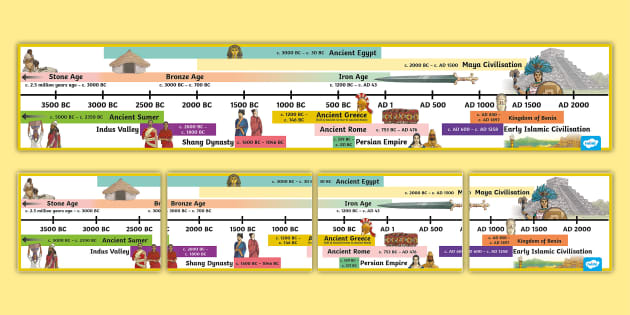
Core Topics to Cover with Printables: Famous Inventors, Time Periods, and Ancient Civilizations
Designing a homeschool history sequence using printables helps you target essential content while keeping lessons age-appropriate and engaging. Here are high-value topic groups and printable formats for each.

Famous Inventors
Focus on inventors who changed everyday life and provide cross-curriculum links to science, technology, and social context.

Time Periods (Broad to Specific)
Use printables to scaffold big-picture thinking—from prehistoric eras to modern history—so learners can place events and people in context.
Ancient Civilizations
Ancient civilizations are rich with imagery—ideal for coloring pages and hands-on printables that reinforce cultural literacy and geography.
Designing Lessons Around Visual Learning
To make printables truly effective, integrate them into lessons that use multiple modalities. Here’s a repeatable lesson framework you can use for any topic.
5-Step Visual-Learning Lesson Plan
Multi-Age and Differentiation Tips
Practical Printable Types and How to Use Them
Here are specific printable formats and quick-use guidance so you can implement them immediately.
Coloring Pages (Portraits, Scenes, Artifacts)
Use portrait coloring pages of famous inventors and historical heroes to build recognition and personal connection. Scenes and artifacts make abstract historical details accessible.
Maps and Geography Printables
Maps teach movement of people, trade routes, empire borders, and geographic features that shaped history.
Timelines and Sequencing Strips
Timelines help students grasp cause-and-effect and the relative order of events.
Interactive Printables: Puzzles, Matching Cards, and Games
Games increase engagement and retrievability.
Project Printables: Dioramas, Brochures, and Exhibit Cards
Project-based printables let students synthesize knowledge and practice presentation skills.
Sample Unit: Famous Inventors Across Time (4-Week Plan)
This ready-to-run unit shows how to use printables to teach inventors, the context of their inventions, and the broader historical periods they belong to.
Week 1: Introductions & Early Innovators
Week 2: Renaissance to Industrial Revolution
Week 3: Electricity, Communication, and Modern Science
Week 4: Contemporary Innovators & Reflection
Assessment Strategies Using Printables
Assessments should be varied and aligned to your learning goals: knowledge, skills, and creativity.
Formative Assessments
Summative Assessments
Sample Printable Templates and Descriptions (Use Immediately)
The following printable templates are described so you can create or search for ready-made options. Each template includes suggested learning objectives and modifications by age.
1. Inventor Portrait + Mini Bio Sheet
2. Layered Time-Period Foldable
3. Ancient Civilization Map Pack
4. Invention Patent Diagram Template
Integrating Cross-Curricular Connections
Printables allow easy integration with science, art, language arts, and math. Here are practical cross-curricular pairings:
Practical Tips for Creating and Using Printables
Use these tips to maximize value, save time, and keep materials organized.
Production and Storage
Print and Presentation Tips
Accessibility and Inclusion
Real-World Examples and Case Studies
Here are brief case studies showing how families and small co-ops have used printables to improve learning outcomes and engagement.
Case Study 1: The Miller Homeschool Co-op
Context: Weekly mixed-age history class (ages 6–12).
Approach: The co-op created a "Museum Monday" routine where students rotated through printable stations—map labeling, inventor portraits, and artifact craft tables.
Outcome: Increased retention measured by weekly quick quizzes; students reported higher enjoyment and looked forward to "museum" day.
Case Study 2: The Rivera Unit Study on Ancient Egypt
Context: One-month unit for a single homeschool family with students ages 8 and 13.
Approach: Layered printables included a coloring map, god/goddess portrait pages, printable papyrus paper for hieroglyph practice, and a pyramid diorama kit.
Outcome: Younger child improved fine motor skills and vocabulary; older child completed a research page and presented a 5-minute summary to relatives using printables as visual aids.
Resources: Where to Find and How to Credit Printables
Use a mix of free, paid, and self-made printables. Here are recommended sources and crediting best practices.

0 Comments