
Unleash Learning Fun: Coloring Pages, Printables, and Playful Math for Homeschooling
Homeschooling offers a fantastic opportunity to tailor education to your child’s unique learning style and interests. But let's be honest, keeping things engaging and exciting can sometimes feel like a challenge. Fear not! This article is packed with creative ideas and resources to transform your homeschool math lessons into an adventure, using the power of coloring pages, printables, and the magic of learning through play. We'll explore how these tools can boost number recognition, problem-solving skills, and overall math confidence. Get ready to ditch the worksheets and embrace a world of colorful, hands-on learning!
Why Embrace Playful Learning in Homeschool Math?
Traditional math instruction often relies heavily on rote memorization and repetitive drills. While these methods have their place, they can sometimes leave children feeling bored and disconnected from the subject matter. Playful learning, on the other hand, taps into a child's natural curiosity and desire to explore, making math more enjoyable and memorable.Here's why incorporating playful learning is a game-changer:
- Increased Engagement: When learning feels like play, children are more likely to be actively involved and motivated to participate.
- Deeper Understanding: Hands-on activities and real-world applications help children grasp mathematical concepts more intuitively.
- Reduced Math Anxiety: Playful learning can alleviate the stress and anxiety often associated with math, fostering a positive attitude towards the subject.
- Enhanced Creativity: Integrating art, games, and storytelling into math lessons encourages creative thinking and problem-solving.
- Improved Retention: Learning through play helps solidify knowledge and improve long-term retention.
- Number Hunt: Create or find coloring pages with hidden numbers. Ask your child to find and color all instances of a specific number.
- Color-by-Number: Use color-by-number pages where each number corresponds to a specific color. This reinforces number recognition while also developing fine motor skills.
- Dot-to-Dot: Connect-the-dot pages that form numbers are a fun way to practice number sequencing and recognition.
- Number-Themed Scenes: Look for coloring pages that depict scenes related to numbers, such as a page with five apples or ten balloons.
- Color-by-Answer: Create color-by-number pages where each section is labeled with a math problem. Children solve the problem and then color the section according to the answer.
- Math Fact Mazes: Design mazes where children must solve math problems to find the correct path through the maze. The answers can then be used to determine the colors for a corresponding coloring page.
- Equation Coloring: Provide coloring pages with various shapes or patterns. Within each shape, write a math equation. Children solve the equation and color the shape based on the answer.
- Math Bingo: Create bingo cards with numbers or math problems. Call out numbers or equations, and have children mark them off on their cards.
- Matching Games: Design matching games where children must match numbers to their corresponding quantities or math problems to their solutions.
- Board Games: Create simple board games where players move along a path by solving math problems or answering math-related questions.
- Card Games: Adapt classic card games like "Go Fish" or "War" to incorporate math concepts. For example, in "Go Fish," children could ask for a card that adds up to a specific number.
- Counting Bears: Use counting bears to teach basic counting, addition, and subtraction.
- Base Ten Blocks: Use base ten blocks to teach place value and multi-digit operations.
- Pattern Blocks: Use pattern blocks to explore geometry, fractions, and tessellations.
- Tangrams: Use tangrams to develop spatial reasoning skills and explore geometric shapes.
- Cuisenaire Rods: Use Cuisenaire rods to teach number relationships, fractions, and algebra.
- Cooking and Baking: Use cooking and baking to teach fractions, measurement, and ratios.
- Shopping: Take your child grocery shopping and have them calculate the cost of items, compare prices, and estimate the total bill.
- Building and Construction: Use building blocks or construction toys to teach geometry, measurement, and spatial reasoning.
- Gardening: Use gardening to teach measurement, area, and perimeter.
- Travel: Use travel to teach time zones, distances, and map reading.
- Create Engaging Scenarios: Develop story problems that are relevant and interesting to your child. Use characters and situations that they can relate to.
- Use Visual Aids: Accompany story problems with visual aids, such as drawings or diagrams, to help children visualize the problem and understand the information.
- Encourage Discussion: Discuss the story problem with your child, asking them questions to help them identify the key information and determine the best approach to solve it.
- Break Down Complex Problems: Break down complex story problems into smaller, more manageable steps.
- Provide Opportunities for Practice: Provide plenty of opportunities for your child to practice solving story problems.
- Monopoly: Teaches money management, addition, and subtraction.
- Yahtzee: Teaches probability, addition, and strategic thinking.
- Connect Four: Teaches strategic thinking and pattern recognition.
- Checkers: Teaches strategic thinking and problem-solving.
- Chess: Teaches advanced strategic thinking and planning.
- War: Teaches number comparison and greater than/less than concepts.
- Go Fish: Teaches number matching and memory skills.
- Crazy Eights: Teaches number sequencing and strategic thinking.
- Blackjack: Teaches addition and probability.
- Poker: Teaches probability, strategic thinking, and decision-making.
- Hopscotch: Modify hopscotch to incorporate math problems or number sequences.
- Sidewalk Chalk Math: Use sidewalk chalk to create math problems or games on the driveway or sidewalk.
- Scavenger Hunt: Create a math-themed scavenger hunt where children must solve math problems to find clues.
- Nature Math: Use natural objects, such as leaves, rocks, and sticks, to teach counting, sorting, and measurement.
- Water Balloon Math: Write math problems on water balloons and have children solve them before throwing the balloons.
- Be Patient and Encouraging: Math can be challenging, so be patient and encouraging with your child. Celebrate their successes and offer support when they struggle.
- Make it Fun: Incorporate games, activities, and real-world examples to make math learning more enjoyable.
- Focus on Understanding: Emphasize understanding concepts rather than memorizing formulas.
- Provide Opportunities for Practice: Provide plenty of opportunities for your child to practice their math skills.
- Connect with Other Homeschoolers: Connect with other homeschoolers to share ideas, resources, and support.
- Tailor to Your Child's Learning Style: Adapt your teaching methods to suit your child's unique learning style.
- Don't Be Afraid to Seek Help: If you are struggling to teach math, don't be afraid to seek help from a tutor or online resources.
Key Takeaway: Playful learning transforms math from a chore into a captivating adventure, fostering a love for learning and deeper understanding.

Coloring Pages & Printables: A Colorful Gateway to Math Skills
Coloring pages and printables are versatile and accessible tools that can be seamlessly integrated into your homeschool math curriculum. They offer a fun and engaging way to reinforce key concepts, develop fine motor skills, and spark creativity.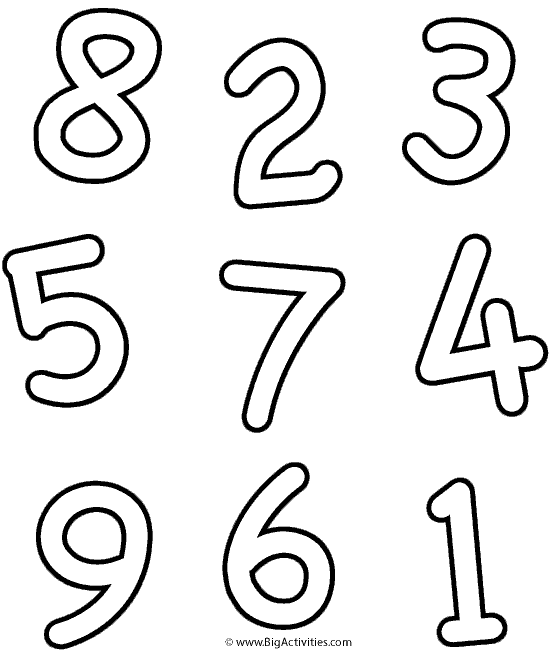
Number Recognition Coloring Pages
Number recognition is the foundation of all mathematical understanding. Coloring pages that feature numbers can help children visually identify and associate them with their corresponding quantities.Example: A coloring page featuring a friendly monster with each of its ten tentacles labeled with a number. Children can color each tentacle a different color, reinforcing number recognition and counting skills.

Math Facts Coloring Pages
Once your child has a solid grasp of number recognition, you can use coloring pages to reinforce basic math facts, such as addition, subtraction, multiplication, and division.Example: A coloring page with a picture of a spaceship. Each section of the spaceship contains an addition problem (e.g., 3 + 2, 1 + 4). If the answer is 5, the child colors the section blue. This reinforces addition facts in a fun and engaging way.
Printable Math Games
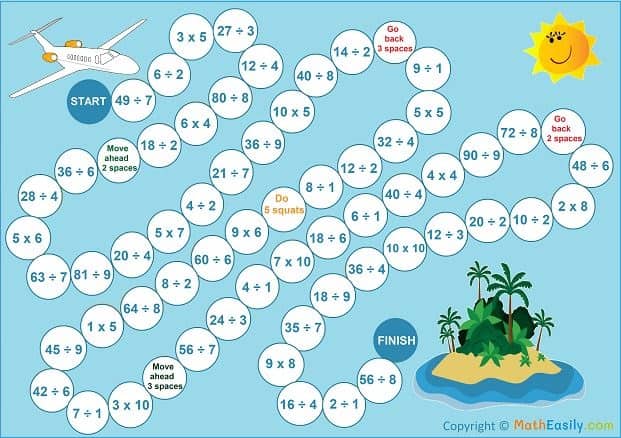
Printables aren't just for coloring! They can also be used to create interactive math games that bring learning to life.Example: A printable "Mathopoly" board game where each space represents a different math challenge. Players roll a dice and move around the board, completing the challenge on each space they land on. This could include solving a word problem, answering a math fact, or completing a counting activity.
Internal Link Suggestion: Link to a blog post on creating your own printable math games using [relevant keyword: DIY homeschool resources].
Hands-On Activities to Enhance Problem-Solving Skills
Problem-solving is a crucial skill that extends far beyond the realm of mathematics. By engaging in hands-on activities, children can develop critical thinking skills, learn to approach challenges creatively, and build confidence in their abilities.Manipulatives: Building Blocks for Understanding
Manipulatives are physical objects that children can use to represent mathematical concepts. They provide a concrete way to visualize abstract ideas, making them easier to understand.Example: Using base ten blocks to represent the number 123. Children can physically see and manipulate one hundred block, two ten rods, and three unit cubes, reinforcing their understanding of place value.
Real-World Math
Connecting math to real-world situations helps children see its relevance and practicality. It also makes learning more engaging and meaningful.Example: While baking cookies, ask your child to measure out the ingredients, such as 1/2 cup of flour or 1/4 teaspoon of salt. This provides a practical application of fractions and measurement.
Story Problems: Weaving Narratives into Math
Story problems, also known as word problems, present mathematical concepts within the context of a narrative. They encourage children to think critically, analyze information, and apply their math skills to solve real-world scenarios.Example: "Lily has 12 apples. She gives 5 apples to her friend Tom. How many apples does Lily have left?" This simple story problem introduces the concept of subtraction in a relatable context.
External Link Suggestion: Link to a website offering free printable story problem worksheets, such as [relevant website: Math Playground].
Learning Through Play: Games and Activities That Make Math Fun
Games and activities are a fantastic way to make math learning enjoyable and engaging. They provide opportunities for children to practice their skills in a low-pressure environment, while also developing important social and problem-solving skills.Board Games
Board games can be a fun and effective way to reinforce math concepts.Example: Playing Monopoly can help children learn about money management, as they buy properties, collect rent, and make financial decisions.
Card Games
Card games offer a versatile and portable way to practice math skills.Example: Playing "War" with a standard deck of cards can help children learn to compare numbers and understand the concepts of greater than and less than.
Outdoor Math Games
Take math learning outdoors with these fun and active games.Example: Create a hopscotch grid with math problems in each square. Children must solve the problem correctly before hopping to the next square.
Internal Link Suggestion: Link to a blog post detailing outdoor math game ideas for different age groups using [relevant keyword: homeschool outdoor activities].
Tips for Success: Creating a Positive Math Learning Environment
Creating a positive and supportive learning environment is essential for fostering a love of math in your child.Key Takeaway: A positive and supportive learning environment is crucial for fostering a love of math and building confidence in your child's abilities.
Conclusion: Embrace the Joy of Learning Math!
Homeschooling provides a unique opportunity to make math learning a fun, engaging, and meaningful experience for your child. By incorporating coloring pages, printables, hands-on activities, and playful games, you can transform math from a dreaded subject into a captivating adventure. Remember to be patient, encouraging, and adaptable, and most importantly, embrace the joy of learning together!By implementing these strategies, you'll not only help your child develop strong math skills but also foster a lifelong love of learning. So, grab your crayons, printables, and manipulatives, and get ready to embark on a colorful and exciting math journey!
Call to Action: Download our free collection of printable math coloring pages and games to get started today! Sign up for our newsletter for more homeschool tips and resources.


0 Comments